
What actually drives removals costs in East Leeds

Why East Leeds moves cost what they do — the real, local factors

Property types and their local effects

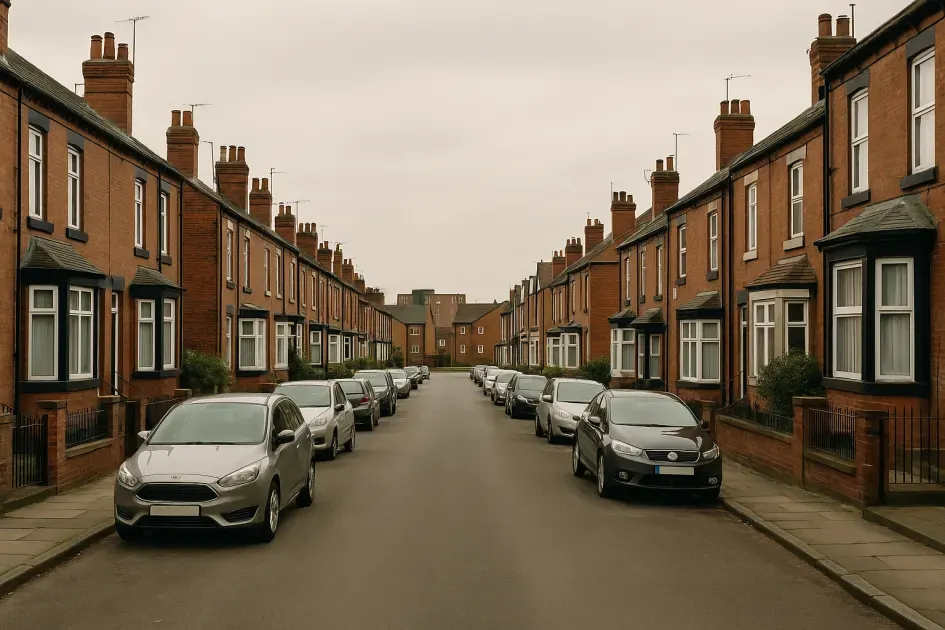
East Leeds contains a varied mix of housing: tight Victorian terraces in older neighbourhoods, inter-war and post-war semi-detached suburbs, low-rise flats around parade roads, and pockets of recent new-build on the eastern outskirts. Each has practical implications for time and cost. For example, a terrace with an on-street pavement that drops away directly in front of the house typically forces additional carrying distance from vehicle to front door. That extra handling commonly adds 20–40% to on-site labour time versus a semi with a driveway. Upper-floor flats without a lift in East Leeds are another frequent driver — stair carries slow the whole job and often add 10–25% in labour costs compared with ground-floor moves.

When you are ready to move from cost research to the main move page, start with removals in East Leeds.

Access constraints you will actually face here

Access in East Leeds is not uniform. Inner areas often have narrow, terraced streets and terraced frontages that make door-to-kerb loading difficult; newer estates tend to have cul-de-sacs and tight turning circles that prevent long lorries from getting close. Some blocks of flats require prior booking for the communal lift or have restricted moving hours set by the management company. These local constraints increase loading time, may require permit applications, and can force use of shuttle runs between a legal parking space and the property — every shuttle adds both time and mileage costs.

You will often need to consider For a fuller cost picture, read this alongside hidden moving costs in East Leeds and property access challenges in East Leeds. at the same time.

For a broader regional view, see moving costs in Leeds.

Vehicle limitations and practical outcomes

Large removals vehicles are efficient when they can park directly outside a property. In East Leeds, however, long-wheelbase trucks are often limited by street width or junction geometry. Where the truck cannot be positioned adjacent to the property, smaller vans performing a shuttle operation are used to ferry boxes and furniture. That multiplies handling events and increases total vehicle hours and fuel — a real, measurable cost. Additionally, some newer estate roads have low kerbs or narrow entrances that require a shorter wheelbase and sometimes prohibit vehicle-mounted tail lifts, changing the equipment mix and cost profile.

Crew size and how East Leeds layouts change it

How many movers are needed depends on more than volume — in East Leeds it depends on layout. A three-bedroom semi with level access can often be handled by a two- or three-person crew; a similar-sized property in a terraced street with no nearby parking or numerous internal stairs will typically require an extra pair of hands to keep the schedule and avoid damage. Flats with long internal corridors, secure foyers or timed lift access generally need an additional mover for logistics and to speed the process — labour is billed by the hour, so each extra crew member raises the cost linearly.

Time factors: day of week, time of day and seasonal peaks

East Leeds costs rise at predictable peaks. Weekend moves and end-of-month dates are in high demand and typically carry a premium of 15–30% because crews and vehicles are scarce. Weekday rush hours on arterial routes into and out of the east of the city (notably during school run times) increase travel and loading time; moves scheduled outside of the 08:00–09:30 and 15:00–16:30 windows generally proceed faster and therefore cost less. Bank holidays and long weekends also attract higher rates due to limited availability of staff and any additional parking or permit complications.

Operational friction that adds time — and therefore cost

Specific frictions that repeatedly increase real-world costs in East Leeds include: long carries from truck to property (often on terraces), queueing for lifts or waiting for booked loading bays, navigating estate cul-de-sacs with limited turning room, and having to shuttle belongings across busy arterial roads to reach allocated parking. Each of these increases the on-site hours billed; because removal costs are overwhelmingly driven by time and labour rather than boxes, eliminating even one friction point can noticeably reduce the final price.

How this differs from other parts of Leeds

Compared with central Leeds, East Leeds generally has fewer congestion charge-style restrictions and cheaper parking but more properties with long carries (older terraces) and tight estate layouts (new builds with cul-de-sacs). Compared with outer-edge villages, East Leeds often presents more on-street parking pressure and higher likelihood of permit or management-company rules for flats. Those local differences are why moving costs for similar-sized properties can vary significantly across the city — in East Leeds the balance between carry distance, street access and vehicle positioning is often the deciding factor.

Practical planning points for East Leeds moves

Plan for permit or loading bay booking if the property sits on a narrow street or in a block of flats; allow extra time for shuttle runs on terraces and cul-de-sacs; avoid school-run and commuter peak windows where possible; and factor in additional crew time for stair carries or long internal corridors. For a local overview of costs across Leeds, see /removals/leeds/moving-costs, and for common additional charges specific to East Leeds check /removals/leeds/east-leeds/hidden-costs. For local service details and neighbourhood-specific notes refer to /removals/leeds/east-leeds.

Move size Typical range What usually affects it
Studio / small 1-bed £140–£280 short kerb frontage on tightly parked residential streets, often requiring loading from a side street rather than directly outside and limited on-street stopping.
1–2 bed flat £260–£480 Carry distance, stair cycles, lift access and van positioning.
2–3 bed home £420–£780 Furniture volume, loading distance, disassembly needs and timing pressure.

East Leeds removals — common cost questions

Practical answers to the specific cost drivers you’ll meet in East Leeds. For broader Leeds-wide comparisons see /removals/leeds/moving-costs and for extra charges see /removals/leeds/east-leeds/hidden-costs.

Property type matters in East Leeds because housing stock varies from narrow Victorian terraces in inner suburbs to inter-war semis and new-build estates near employment parks. Terraced houses on tight streets usually increase carry distance and loading time — expect 20–40% extra in labour time compared with a ground-floor semi. Flats above shops or in low-rise blocks without a lift typically add 10–25% to the job time because items must be carried down staircases, while new-build estates with allocated parking and level access often reduce handling time but can introduce turning and vehicle-placement delays in cul-de-sacs.

Yes. East Leeds has a mix of street types: older neighbourhoods with narrow frontage and modern estates with tight turning circles. On-street parking close to terraced properties is often limited, forcing longer carries or a shuttle vehicle. Some residential blocks require parking permits or advance booking of loading bays; arranging these increases admin and may add hourly charges. All this increases onsite time, which is a direct cost driver.

Vehicle size is a direct cost factor. Large long-wheelbase removals lorries can struggle on narrow terraced streets and estate cul-de-sacs common in parts of East Leeds; where a big truck cannot park near the property, shuttle loading with a smaller vehicle is necessary — that adds mileage and handling time. Conversely, if level access and wide roads are available (for example around newer developments east of the ring road), a single larger vehicle can complete the job faster and more cheaply.

Timing affects both travel time and onsite productivity in East Leeds. Weekends, end-of-month slots and bank holidays are high demand, commonly adding 15–30% to the usual cost. Weekday mornings and afternoons overlap with school runs and commuter peaks on the A64/A63 approaches, increasing delays for loading vehicles and travel between addresses. Early-mid weekday slots outside rush hours typically give the best balance of speed and price.

Crew size is driven by access and the contents. Terraces with narrow staircases or houses with tight internal turns need extra staff to keep pieces moving safely — often an extra pair for heavier loads, which raises labour hours. Flats without lifts or properties with long external carry routes require more hands to move quickly and reduce damage risk. Specialist lifts or vehicle-mounted hoists may be required for large sofas or wardrobes where stairs are impossible; hiring such equipment is a notable, location-specific cost.

Share the access reality early, confirm where the van can stop, and flag anything unusual about the route inside the property. In East Leeds, accurate planning is usually the cleanest way to keep the job close to expectation.