
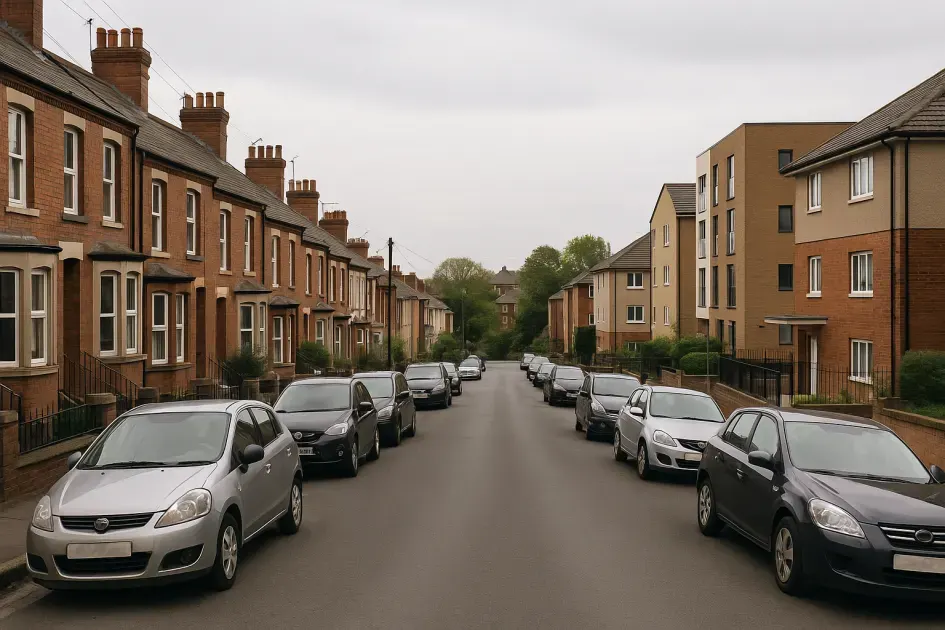
Caerphilly sits where a compact historic town meets steep valley roads and newer suburban developments. That mix creates predictable, physical cost drivers for full-house, flat and office removals: the shape of the property, how crews can get to it, and how vehicles can be used on the day. The bullet points below explain how those local realities translate into time and money.
Each common Caerphilly property type changes handling time and equipment needs.
When you want the primary move page rather than just cost research, start with removal service in Caerphilly, then use moving costs in Cardiff for the wider area view.
You will often need to consider For a fuller cost picture, read this alongside hidden moving costs in Caerphilly and property access challenges in Caerphilly. at the same time.
Real access constraints here mean extra planning and sometimes extra cost:
Two vehicle realities that raise costs locally:
Crew composition is chosen around the property and access realities:
Local timing matters because it interacts with congestion, parking availability and council rules:
Operational friction is the accumulation of small, local constraints that add measurable time on the day:
Compared with wider-avenue neighbourhood of central Cardiff, Caerphilly’s mixture of dense historic streets, steep valley approaches and compact newer estates changes the balance between vehicle size, crew size and handling time. Central Cardiff might allow direct truck access on many streets; in Caerphilly the same property footprint often yields longer carries, more stair work, or a need for shuttle runs — all concrete reasons prices differ.
To manage costs: identify your property type and access constraints early; check whether you have a driveway or on-street loading space; and allow time to arrange any local parking suspensions through the council. For details about local services and booking information see the general Caerphilly removals overview at removal service in Caerphilly and the wider Cardiff pricing context at moving costs in Cardiff. For hidden extras that commonly appear on invoices in the area, see hidden moving costs in Caerphilly.
| Move size | Typical range | What usually affects it |
|---|---|---|
| Studio / small 1-bed | £140–£280 | courtyard access and narrow approaches and permit and short-stay controls around the town centre and station affecting loading duration. |
| 1–2 bed flat | £260–£480 | Carry distance, stair cycles, lift access and van positioning. |
| 2–3 bed home | £420–£780 | Furniture volume, loading distance, disassembly needs and timing pressure. |
Below are practical answers to questions we see most often from people moving in Caerphilly. Each answer ties directly to the town's real-world layout, access constraints and local parking rules.
Property type has a big effect. A one- or two-bedroom flat above shops on Caerphilly High Street typically takes longer because of stairs, tight hallways and deliveries via the street — expect higher labour time per item. By contrast, a semi-detached house on an outer estate with driveway access lets larger vehicles park at the door, cutting carry distance and time. Terraced houses near the castle or in older streets often have no off-street parking and narrow pavements, increasing loading time and sometimes requiring parking bay suspensions that add cost.
In Caerphilly town centre and some residential streets, you may need a temporary bay suspension or permission to stop on double-yellow lines while loading. The Caerphilly borough council process for suspensions or temporary loading zones can take a few days and carries an administration and cone/suspension fee — arranging it short notice can add a courier/arrangement charge from the operator. If you skip a suspension, crews can waste time moving vehicles to avoid tickets, which increases labour costs on the day.
Stair carries in older flats or maisonettes above shops in Caerphilly can increase handling time by 30–100% compared to a ground-floor move. Large items (sofas, wardrobes) may need more crew or specialist equipment, turning what would be a 3–4 hour job into a 5–7 hour one. That added time shows up directly on the invoice because of extra staff hours and slower loading rates.
Caerphilly’s combination of a compact, historic town centre, steep streets rising into the valleys and modern cul-de-sacs on the outskirts creates mixed access conditions. Historic terraces and High Street flats restrict vehicle access and increase carry time, while new-build estates with tight turning circles often block large lorries from reaching front doors and require shuttle loads. Those specific access frictions — not present to the same degree in wider-street neighbourhoods of central Cardiff — are what pushes costs up locally.
Share the access reality early, confirm where the van can stop, and flag anything unusual about the route inside the property. In Caerphilly, accurate planning is usually the cleanest way to keep the job close to expectation.
In many cases, yes. A quieter weekday slot can reduce waiting and make access more predictable, especially where factors such as a468, town-centre approaches build up around school start, finish periods and weekday commuter pressure tend to create friction at busier times.