
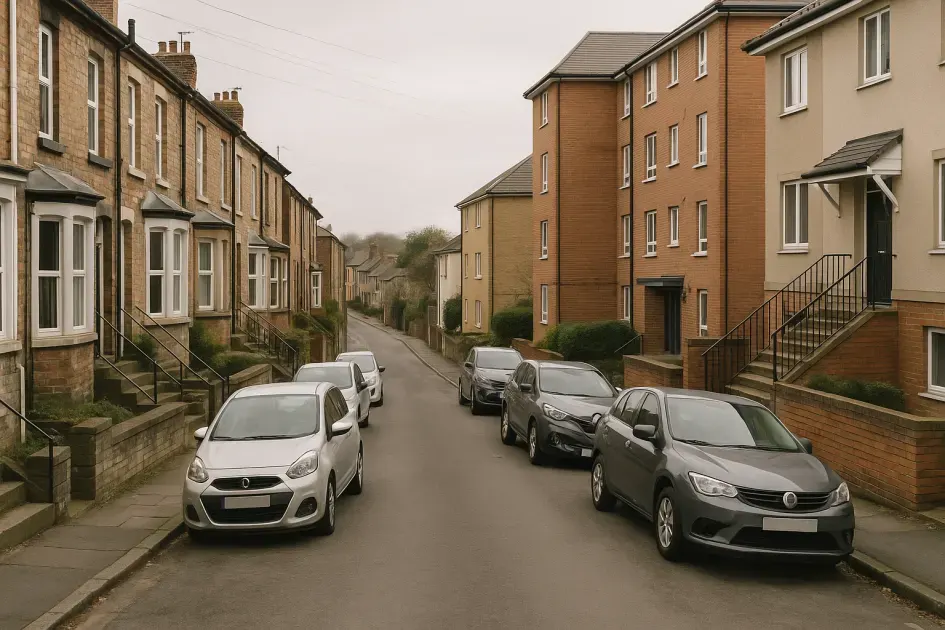
Caerphilly’s mix of historic town centre streets, council estates on steep slopes and new-build cul‑de‑sacs creates very specific operational challenges. These translate into measurable time and cost impacts when moving a full house, flat or office — not abstract warnings but real operational frictions that affect crew size, vehicle positioning and schedule risk.
removals in Caerphilly is the main booking page for checking availability, pricing and move details in one place.
For a broader regional view, see moving costs in Cardiff.
Unexpected charges are easier to avoid when you compare this page with moving costs in Caerphilly and property access challenges in Caerphilly.
Crews book time and vehicles for a given window. In Caerphilly common delay sources are: late validation of tenancy checkouts in the town centre, utility engineers running late on rural lanes, or queues caused by school drop‑off around local primaries. Each hour a crew waits because access hasn’t been granted or loading is blocked is usually charged as waiting time. On tight inner‑town streets where parking is limited, a late start often cascades into overtime because parking further away increases loading time.
Many properties close to Caerphilly Castle, the High Street and nearby terraces sit beside short‑stay bays or residents‑only zones. The council operates pay‑and‑display car parks and permit schemes; blocking a bay without an authorised suspension risks fines that must be paid by the customer. If a temporary suspension is needed to keep the vehicle at the door, this requires advance application and sometimes a fee — failure to arrange this means crews either park illegally (and risk penalties) or park further away, increasing carry distance and manpower time.
Outlying neighbourhoods and some in‑town streets in Caerphilly are built on hills. Properties on higher streets or in estates with limited kerbside access often force crews to shuttle items over uneven pavements or steep paths. Long carries increase the number of trips, slow packing/unpacking, and make more manpower necessary. For example, having to shuttle heavy furniture from a legal parking place 50–100 metres away on a steep lane will typically add one or more labour hours compared with kerbside access.
Many terrace houses and older flats have narrow staircases and doorways. In practice this can mean dismantling beds, sofas and wardrobes on‑site, or using more movers to hand‑carry bulky items safely. Small communal lifts in blocks often cannot accept large mattresses or wardrobes, meaning extra pivoting, time and extra steps. Labour cost rises because movers work slower to manoeuvre items safely and because items split into smaller loads take additional handling time.
The A469 and A468 corridors and the approach roads into Caerphilly town can be congested at peak times. Additionally, narrow one‑way streets around the historic core and temporary closures for community events or maintenance frequently appear on short notice. These conditions increase vehicle arrival uncertainty and can force an unplanned reschedule. When a van cannot reach a property at the booked time, crews may need to perform multiple shuttle runs or return another day — both outcomes add cost and disrupt tightly scheduled moves.
If a move overruns the allocated time because of access or traffic, there are two typical financial consequences: overtime rates for the crew, and the potential need to rebook a second day if a tenancy handover or office opening time cannot be met. In Caerphilly, where weekends and evenings may be the only available windows for narrow‑street loading, a late finish can force higher weekend rates or repeat visits—each increases the overall invoice by labour, vehicle hire and mileage.
To reduce hidden costs, plan around known Caerphilly-specific constraints: check whether the property is on a steep access lane or within a residents'parking zone, identify likely loading points near the Castle or High Street, and avoid peak commuter and school-run periods on the main approach roads. If a large vehicle cannot reach the property, expect shuttle time and extra labour charges; if a permit or bay suspension is required, allow time to obtain it in advance.
For fuller cost context see the area removals overview at removals in Caerphilly and the Cardiff moving-costs guide at moving costs in Cardiff. For Caerphilly-specific pricing scenarios, also review moving costs in Caerphilly.
Answers to the most frequent practical queries about where additional charges come from during moves in Caerphilly, so you can plan time and budget more accurately.
Possibly. Caerphilly town centre around the Castle and many residential streets have time-limited bays, pay-and-display spaces or residents' permit zones managed by the council. If a removal vehicle needs to occupy a bay long‑term or park on double yellow lines to shorten a carry, a temporary suspension or permit from Caerphilly County Borough Council is often required; without it crews may have to park further away, adding labour time and carry distance—or risk a parking fine.
Older terraces and traditional stone houses near the town and estates with flats commonly have narrow stairwells and lifts that won’t take large items. When items must be carried down several flights by hand or split to fit a small lift, extra movers and time are needed. That increases labour hours on the bill, as manual carries are slower and more physically demanding than a direct ground-floor load.
Waiting charges usually kick in when a removal crew is delayed past an agreed start or completion window. In Caerphilly common causes are courier or utility appointments overrunning, late property handovers from landlords or solicitors, and queues for loading in busy streets near the High Street or school run peaks—each hour of delay is billed to cover crew time and vehicle hire.
Many Caerphilly suburbs and new-build cul-de-sacs have limited turning space for large removal vehicles. If the vehicle must park several streets away and crew carry items over long distances or down steep lanes, that increases labour time and the likelihood of requiring additional crew or multiple shuttle trips, all of which push the price up.
They can. Peak congestion on the main approaches (for example during commuter and school-run times), temporary roadworks or restrictions around events at Caerphilly Castle can cause major delays. If a removal slot is time-sensitive—end of tenancy or a deadline for keys—significant traffic delays increase the risk of overrun or the need to rebook a second day, both of which add to cost.
Absolutely. When the internal path is longer than expected, every trip takes more time, and moving jobs are made of many repeated trips. The arithmetic becomes rude very quickly.