
Why Newhaven’s buildings and streets matter for removals

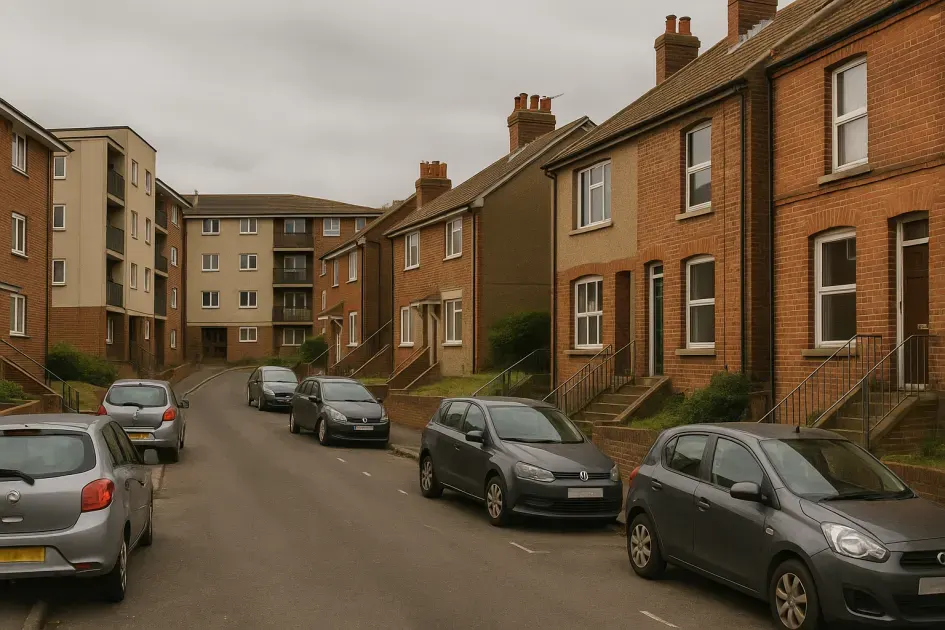
Newhaven is a compact port town with a mix of older terraces, inter-war and post-war housing, and recent waterfront developments. Those different property types create distinct physical constraints that directly affect how removals teams plan work, the equipment they bring and how long a move actually takes.

Terraced housing: tight exteriors, tight interiors

The town centre contains many Victorian and early 20th-century terraced houses with narrow pavements, shallow front gardens and small doorways. On-street parking is often limited to short bays or resident-only spaces, so a legal-sized removal lorry cannot always park immediately outside. Internally, original staircases can be steep, narrow and without turning landings. The combined effect is longer manual carry distances from vehicle to front door, slower handling of large furniture, and extra time to pad and negotiate corners. Practically, this means additional labour hours and potential need for smaller shuttle vehicles for the last 20–50 metres, which increases cost compared with an uninterrupted kerbside loading bay.

removals in Newhaven is the main booking page for checking availability, pricing and move details in one place.

Access issues usually sit alongside other planning points, so compare this page with moving guide for Newhaven and hidden moving costs in Newhaven.

For a broader regional view, see access and property guide for Brighton.

Flats and apartments: lifts, stairs and shop-front conversions

Several Newhaven properties are flats above shops or conversions of older houses. Many of these lack passenger-sized lifts or have lifts that are unsuitable for large wardrobes and beds. Even where lifts exist, they may have weight or size limits and strict rules about protection and booking times. Removals teams frequently face stair-only access, requiring more staff and longer carry times per item. In practice, moves into top-floor flats without lifts can double or triple handling time compared with ground-floor moves, and that will be reflected in operational scheduling and price.

Narrow roads, parking limitations and the harbour effect

Side streets off the A259 and the lanes near the harbour are often too narrow for wide removal vehicles to manoeuvre easily. The proximity of the ferry, dockside industry and frequent HGVs means loading areas are sometimes blocked or subject to temporary restrictions. On-street restrictions—resident bays, pay-and-display machines and single-yellow lines—are common, and local councils require bay suspensions or permits where a vehicle must park in a restricted area. If a suspension isn’t arranged in advance, crews must park further away and carry goods across longer distances, which increases both time and labour costs and raises the risk of delays on the day.

Suburban semis versus dense terraces: different frictions

Moving to a semi-detached house in Newhaven’s outskirts is usually more straightforward: many semis have drives or off-street parking and wider doorways. However, suburban properties can also produce friction—long garden paths, narrow side gates, steps down to lower-level back gardens or restricted access for large vehicles down unmade lanes. Dense terraces deliver the opposite trade-off: shorter driving times but much more intensive manual handling. Removal planning needs to account for which layout applies; the same crew and vehicle configuration won’t be efficient for both.

New builds and modern developments: convenience with caveats

New waterfront developments and recent build schemes in Newhaven often provide allocated parking, secure loading bays and service lifts, reducing carry distances. Yet these conveniences come with rules: controlled vehicle access, height or weight restrictions for underground garages, and strict scheduling for service lifts. Some estates require advance notice to estate management or a booking for the service lift on the day. Failing to confirm access can cause hold-ups and unexpected wait times, impacting the total hourly cost of the move.

Real-world implications for time, cost and planning

Every physical constraint in Newhaven translates into measurable operational friction. Examples of typical impacts:

  • Carry distance: an extra 30–50 metres of carry from a legal parking bay to a terraced front door can add an hour or more of labour depending on item size.
  • Stairs vs lifts: stair-only access for a three-bedroom home can add several hours and require more crew, increasing cost compared with similar properties that have a suitable lift.
  • Parking permits: applying for a temporary bay suspension or permit from the local council has a lead time and fee; not obtaining one usually forces smaller-shuttle vehicle use and longer total hours.
  • Traffic and timing: ferry and HGV peaks on coastal routes can add unpredictable driving time—planning an earlier start in Newhaven often reduces delays.

How to factor Newhaven’s constraints into move planning

Practical steps driven by Newhaven’s physical layout: allocate extra handling time for terraced and converted properties; check if lifts exist in flats and confirm size/weight limits; request parking bay suspensions or arrange permit parking early; allow contingency for coastal and ferry-related traffic. For detailed local access considerations and a broader checklist, see the general access guide for Brighton-area removals at access and property guide for Brighton.

For a house or flat move within Newhaven, the town-level information and specific access notes on the main Newhaven page are useful starting points: removals in Newhaven. For timing and step-by-step practical advice specific to Newhaven moves, consult the local moving guide at moving guide for Newhaven.