
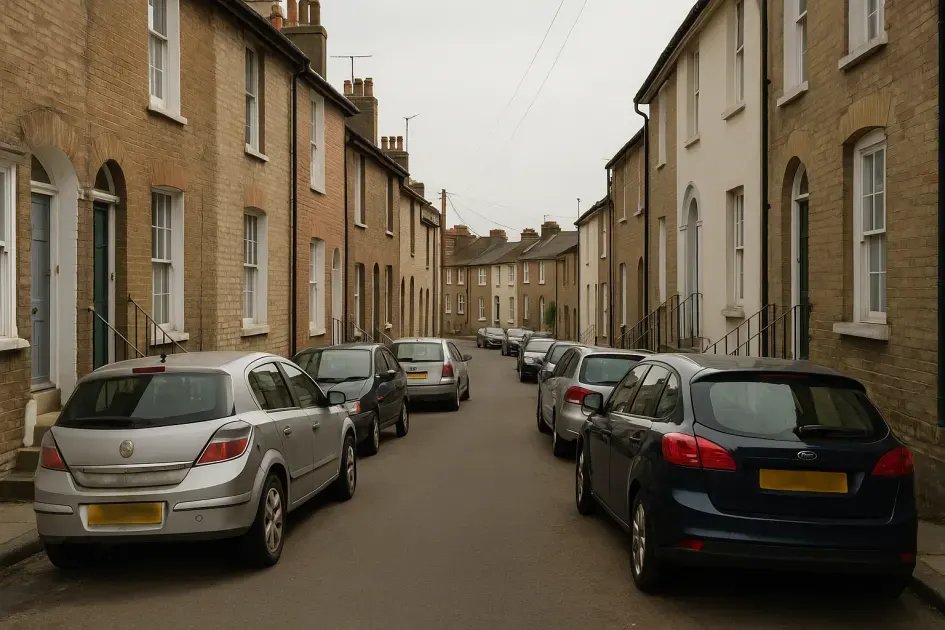
Understanding the physical constraints of Lewes properties

Lewes is a compact, historic market town set in a valley on the edge of the South Downs. The town’s mix of narrow medieval streets, Victorian terraces, converted flats above shops and modern estate developments creates a patchwork of access challenges that directly affect removal logistics, timings and costs. Read the local removals overview at /removals/brighton/lewes or the broader access considerations at /removals/brighton/access-and-property-guide for more context.

Terraced housing: tight internal layouts and external access limits

Many of Lewes’s central terraces are listed or date from the 18th and 19th centuries. Internally, staircases are often steep, narrow and split over small landings. Externally, frontages sit close to the pavement with little or no kerbside space. The upshot for a move is predictable operational friction: larger items may need partial or full disassembly, stair carries take longer and protection of delicate listed interiors is necessary. Because parking adjacent to these streets is limited, removal vehicles frequently have to stop on a nearby side road or in a residents’ bay, turning what might be a short carry into a longer shuttle that increases loading time and labour costs.

When you need the main move page rather than property detail alone, start with removals in Lewes and use access and property guide for Brighton for the broader regional picture.

You will often need to consider For the problems that tend to appear with awkward access, look at moving guide for Lewes and hidden moving costs in Lewes too. at the same time.

Flats and apartment conversions: no-lift realities and long carries

Converted flats above shops, attic conversions and purpose-built blocks all exist in Lewes, but lift access is far from guaranteed in older buildings. Expect: long carries across communal landings, tight corridors and doors that restrict what can be carried whole. Ground-floor flats with steps up from the pavement or basement flats with external steps by the river require careful planning for trolleys and protection. When a lift is present it is often small; even then, service lift booking windows and building management rules can govern when a move can take place. All of these factors translate into longer on-site time and potential need for additional manual handling resources.

Narrow roads, parking controls and event-related closures

Lewes town centre features narrow streets with limited passing room. Many areas operate a residents’ parking scheme or controlled parking zone, and designated loading bays are few. For larger removal vehicles, this can mean parking further away and using shuttle runs. Practical implications include an increase in vehicle turnaround time, extra crew hours, and in some cases the need to apply for short-term parking suspensions or loading permits. Plan well ahead where possible — Lewes Bonfire Night and other local events cause full street closures and require months’ advance planning to avoid failed moves or last-minute reroutes.

Suburban versus dense layouts: trade-offs in Lewes

Outlying suburbs and estate areas around Lewes typically provide wider roads and more on-street parking, which reduces vehicle access friction. However, suburban properties can bring longer carry distances from designated parking bays to front doors, especially in cul-de-sacs and modern estates with parking courts. Dense town-centre properties give short door-to-door distances when parking is available, but in practice parking is constrained and stair/street limits increase handling time. When scheduling a move in Lewes it’s critical to weigh shorter carries against likely parking restrictions and vice versa.

New builds versus older properties: a contrast in operational friction

New-build developments on Lewes’s edges usually have straight kerbs, wider turning circles and allocated parking, making lorry access simpler. Yet many estates place parking at the end of streets or in communal courts; such layouts demand repeated short carries and increase labour input. Older properties in the town core pose the reverse problem: usually minimal carry distance if a vehicle can stop close, but high likelihood of stairs, tight doorways and fragile surfaces that slow handling and require extra protective measures. Both scenarios impact total move time and pricing differently — one by driving vehicle logistics, the other by driving manual handling time.

Real-world implications for time, cost and planning

  • Carry distance: every extra 10–20 metres of nonstop carry in Lewes can turn a single-load job into multiple shuttle runs; factor this into labour estimates.
  • Loading time: narrow streets, loading restrictions and needing to break down items add to on-site hours — allow contingency for at least an extra hour on top of baseline estimates for town-centre moves.
  • Vehicle choice and access: large removal lorries may be unsuitable for tightly packed streets; smaller vehicles with more trips increase crew time and cost.
  • Permits and parking suspensions: where on-street parking isn’t available, short-term suspensions or permit applications may be required — build application lead time into the plan.
  • Event days and seasonal peaks: Lewes’s calendar (Bonfire Night in November is the most significant) brings planned road closures and heavy pedestrian flows — avoid these dates if possible or secure permits and alternative access well in advance.

Next steps for practical planning

Survey the property’s external approach, note staircases and door widths, check likely vehicle stop locations and confirm any local parking restrictions. For a detailed rundown on general access considerations around Brighton and the surrounding towns see /removals/brighton/access-and-property-guide. For Lewes-specific moving timings and a checklist tailored to the town’s layout consult /removals/brighton/lewes/moving-guide and the local removals overview at /removals/brighton/lewes.