Why demand patterns matter
When bookings stack onto the same days, crews have less room to absorb problems. A key delay, a missed permit or a busy lift at the first address can push every later arrival back. That is why high-demand periods often feel slower even before traffic is considered.
The biggest issue is that access pressure rises at the same time as booking pressure. Streets fill earlier, bays are harder to secure and managed buildings have fewer workable slots left. If you are planning a move, choosing the right day can be one of the easiest ways to avoid delays on the day.
Midweek dates tend to be more forgiving because there is usually more space in the schedule, more choice over start time and a better chance of getting legal parking close to the entrance.
Typical Swansea demand cycle
| Period | Operational effect in Swansea |
|---|---|
| Weekends | Reduced booking flexibility, stacked start times and busier kerbside parking near terraces and flats, which makes small overruns harder to recover from. |
| End of Month | Tenancy changeovers cluster keys and inventories, creating later starts, more overlap at loading bays and a higher risk of delays carrying into the rest of the day. |
| Summer / Student Areas | Term changes produce short bursts of concentrated moves, especially near shared housing, which makes legal parking scarcer and loading windows tighter. |
| Midweek (Non-peak) | Wider slot availability, earlier starts and more predictable routing outside school-run and commuter peaks. |
Eight Swansea timing drivers
1) How weekend bookings reduce start-time flexibility
Weekend demand is strong because most people want to move outside work hours. That means fewer easy alternatives if the first slot slips or the van cannot get close to the door.
2) Why end-of-month tenancy cycles cluster moves
Month-end creates pressure because key releases, tenancy checkouts and building handovers happen at the same time. Fixed timings make the whole day less flexible.
3) How student-area turnover creates seasonal spikes
Student lets and shared houses often change over in narrow windows. Streets get busier with vans and legal spaces disappear earlier, which lengthens the carry from bay to door.
4) Why school-run traffic increases scheduling risk
School-run periods reduce route reliability and make approach roads more stop-start. The effect is not just slower driving; it also makes arrival into a good parking gap less likely.
5) How commuter traffic changes route predictability
Peak commuter flows can make small delays hard to recover from on multi-stop days. Once a crew loses time early, later appointments become tighter and less forgiving.
6) Why building booking rules reduce available slots
Flats with bay reservations or lift rules already offer limited workable times. Under demand pressure, those times get taken sooner, so late changes become harder to absorb.
7) How narrow residential streets increase timing sensitivity
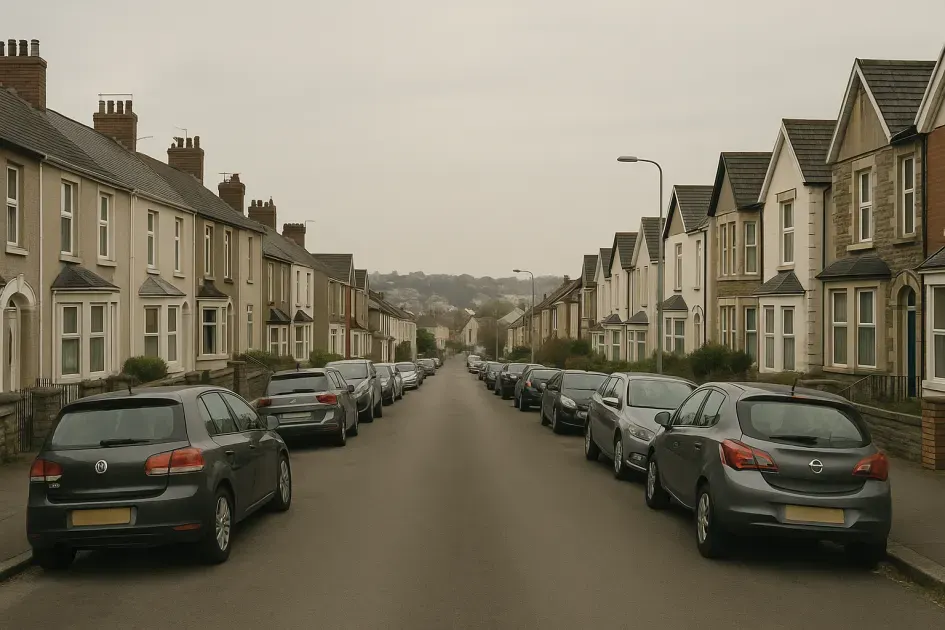
Terraced areas are more timing-sensitive because parking is often the first thing to disappear. A slightly later arrival can turn a short carry into a much longer one.
8) Why mixed-density neighbourhoods produce uneven demand
Areas with terraces, shared houses and apartment blocks can create bursts of activity that are uneven from one street to the next. One road may be manageable while the next is overloaded with vehicles and access conflicts.
Scenario modelling
Scenario A: Midweek, flexible start for a house-to-house move with driveway parking. Early arrival avoids the busiest windows and keeps loading straightforward.
Scenario B: Saturday flat move on a permit parking street. The crew spends longer securing a legal space, so the carry is slower and the buffer for the rest of the day gets smaller.
Scenario C: Month-end student-area move between shared houses. Key timing, busy streets and limited parking all combine, so even a short local route can overrun. One place this pattern becomes visible is man and van services in Landore.
Practical scheduling checklist
- Weekend clustering → Request the earliest feasible start to secure kerb space before streets fill.
- End-month key releases → Confirm keys 24 hours early and plan a standby slot if access shifts.
- Permit streets → Arrange a visitor permit or suspension and, where allowed, hold the space the evening before.
- Student-area turnover → Avoid peak check-in days or choose a midweek slot with wider buffers.
- School-run peaks → Schedule arrivals outside 08:00–09:30 and 14:30–16:00 to improve route predictability.