
The best time to move in Longton depends on local demand patterns, nearby traffic pressure and building access behaviour. This page is about timing windows that reduce friction, rather than relying on generic advice that ignores how the area actually behaves.
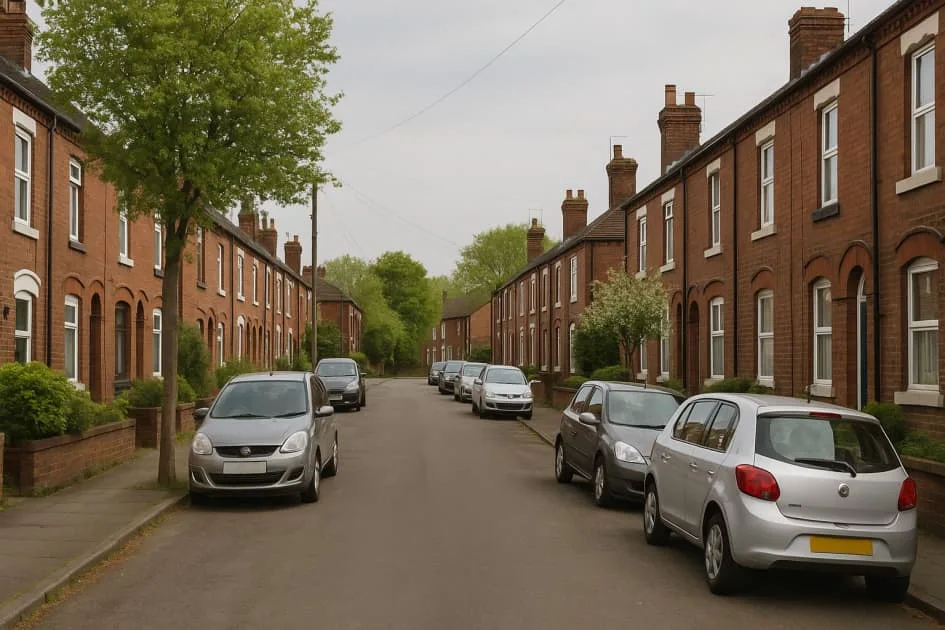
Longton tends to be shaped by red-brick Victorian terraces around Longton town centre with narrow front paths and direct pavement access, interwar semis in Weston Coyney and Blurton edges with short drives and side-gate garden access and post-war estate houses around Bentilee and Dresden with cul-de-sac layouts and shared parking courts. For timing, that matters because that local housing mix often brings short-kerb frontage on older terrace streets often means loading from one or two houses away, variable lift access and rear entries on some town-centre properties are reached from service lanes with limited van turning space, so the best slot is usually the one that gives the crew the cleanest access window rather than just the quietest road on paper.
Moves here are shaped by building reality, not just the postcode. In Longton, practical factors like permit or short-stay restrictions around the town centre can limit loading windows on weekdays and terrace streets with continuous kerbside parking often require side-street loading rather than stopping outside and weekday commuter pressure and the strand, market street, town-centre approaches tighten up around school-run, shopping hours shape how the day actually unfolds.
That matters whether you are arranging a studio move, a flat relocation or a larger household shift with vetted and approved drivers available through the platform. Clear planning protects time, and time is what usually protects the budget.
A straightforward job in Longton can still slow down when building access is sequential rather than parallel. One person may be waiting at an entry point while another handles the van, or the team may need to coordinate around lift use, side-street loading or a longer internal walk from courtyard to entrance. Those are ordinary local realities, not unusual complications.
That is why this page works best as part of a clear planning path. The moving guide is the main hub for this area. For one closely related angle, see Hidden Costs. For a second supporting issue, review Property Challenges. For broader regional context, see the Stoke On Trent macro guide. When you are ready to connect local planning back to the full service page, return to the Longton man and van page. For comparison with other cities, see our national moving guides.
Use this page as a planning layer, then use the Longton man and van page when you want to request the actual service. Support pages should clarify planning factors rather than duplicate the booking page. That way lies cannibalisation and other structural issues.
Common questions about timing a move in Longton to reduce friction.
Earlier weekday starts are often easier because they give more room to load before local pressure builds. The exact sweet spot in Longton depends on the street pattern and building type.
Often, yes. Midweek can mean quieter access, more stable building behaviour and fewer competing demands on nearby roads.
Apartment moves should be timed around building rules as much as street conditions. Where lifts, reception desks or access permissions are involved, those rules often decide the smoothest slot.
As soon as the date is fixed. Late timing decisions are one of the easiest ways to invite avoidable friction into the move.
Often, yes. In areas influenced by weekday commuter pressure and the strand, market street, town-centre approaches tighten up around school-run, shopping hours, weekends can mean less predictable stopping and more loading friction than people expect.
Yes. Nearby events, nightlife or major local activity can reshape how smoothly a move runs. In Longton, timing is a logistics decision, not decorative calendar theatre.