
What matters operationally
Reliable route planning is about more than picking the shortest drive. You need to know how traffic behaves at the chosen time, whether the final approach allows a legal stop, and how far items will travel once the van arrives. A direct route that ends with a long carry or a missed loading bay often performs worse than a slightly longer approach with cleaner access. That is why route planning and loading planning should be treated as one decision, not two separate tasks.
How to plan around restrictions
Check likely peak periods on the A500 and A50, then confirm the precise stopping arrangement at both properties. If the move depends on a timed bay, a service lift or concierge access, build the whole schedule around that point. Add buffer between travel and unloading so minor delays do not wipe out the access slot. Clean-air and access rules in Stoke-on-Trent are best handled by verifying stopping permissions and using the approach that keeps the carry shortest. Those access constraints feed directly into how moving costs are shaped by access and time. That is visible in areas such as man and van services in Burslem. One practical example appears in man and van services in Crewe.
Eight route-planning variables in Stoke-on-Trent
Traffic timing patterns
The A500 and A50 carry heavy commuter flow, and event periods can increase pressure further. Planning outside those peaks protects arrival times and keeps more of the day available for actual handling. The timing side of that is explored further in when Stoke On Trent moves tend to take longer.
Central access constraints
One-way sections, pedestrianised streets and short-stay loading arrangements can slow the final approach. Knowing the correct entry and exit streets in advance prevents last-minute loops.
Kerbside loading conditions
Permit streets and timed bays determine where the van can stop and for how long. The closer and more stable that position is, the faster every loading cycle becomes.
Building access limitations
Service lifts, key-fob entry, concierge rules and booked loading bays all change how quickly the crew can work once the van arrives. Unclear building access often creates idle time.
Route predictability and delays
Roadworks and closures on feeder routes can make a normal journey unreliable. Keeping a second viable approach ready protects the schedule when the first route breaks down.
Vehicle suitability and access
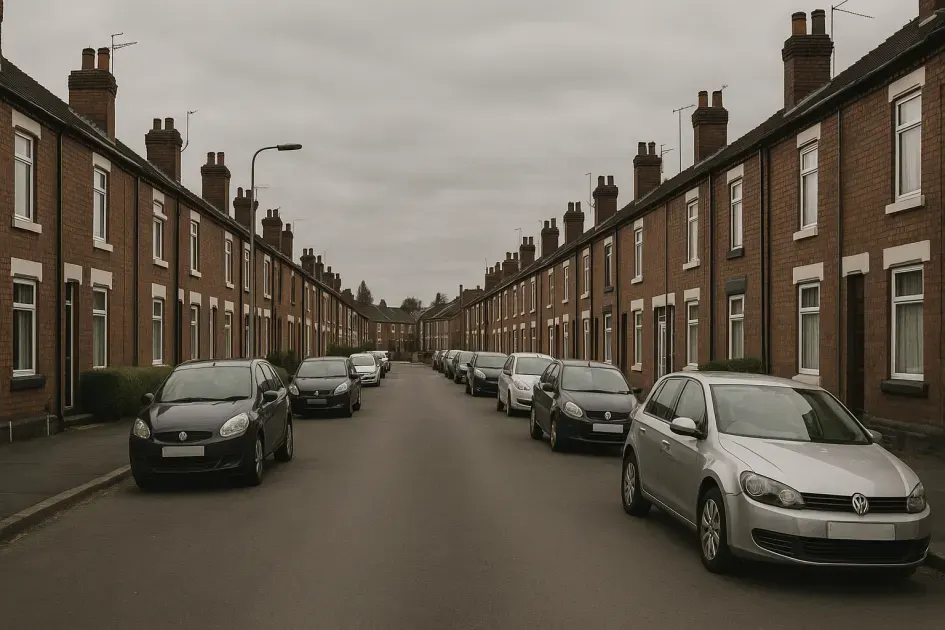
Tight terrace streets do not always suit taller or larger vans. Matching vehicle size to the final access point can save more time than simply increasing load capacity.
Parking and permit constraints
Resident permits and short-stay restrictions can force longer carries if not arranged properly. Early planning keeps the working window productive instead of reactive.
How clean-air or charge-zone rules affect moves in Stoke-on-Trent
No active clean-air or charge zone currently applies in Stoke-on-Trent. Even so, central stopping restrictions, one-way systems and timed loading bays still influence route choice and arrival timing. This helps you avoid delays on the day because the route is built around practical access, not just the sat-nav estimate.
Practical route-planning examples
Example 1: Terrace street near Longton with permit parking. A visitor permit and a quieter A50 arrival window keep the carry shorter and the loading pace steadier.
Example 2: Hanley apartment with a managed loading bay. Booking the bay and lift in advance turns a potentially awkward arrival into a controlled unloading window.
Example 3: Two-stop move during roadworks near the A500. A prepared fallback route avoids wasted loops and helps preserve the later access slot.
Example 4: Narrow street in Burslem with parked cars on both sides. A more suitable van size and a planned approach from the wider end reduce manoeuvring time.
Example 5: Event day near the stadium. Timing the departure outside the heaviest inbound flow keeps the whole schedule more stable.
Practical route-planning checklist
- Permit or timed bay limits → Secure permits or a dispensation and line arrival up with the legal loading window.
- One-way or pedestrianised streets → Set the exact approach and exit roads before departure.
- Managed building access → Confirm lift, bay and key access so the crew can start moving items immediately.
- Unknown carry distance → Check the kerb-to-door route in advance and bring the right handling kit.
- A500/A50 unpredictability → Prepare an alternate route so a closure does not wipe out the unloading slot.
Apply neighbourhood context
Street width, parking control and building management vary by area, so the best route is the one that protects access at the final few metres, not just the one with the shortest driving time.
We provide man and van services across the wider area, including man and van services in Stone and man and van services in Biddulph, with bookings managed through one centralised platform using verified local operators.