What matters operationally
The most useful route plan is not always the shortest one. It is the one that arrives at the right time, through the cleanest approach, with a legal place to stop when the van gets there. In Stevenage, that often means balancing A1(M) traffic risk against town-centre restrictions, one-way loops and building procedures. This helps you avoid delays on the day. The timing side of that is explored further in when Stevenage moves tend to take longer. That is visible in areas such as man and van services in Bishops Stortford. One practical example appears in man and van services in Hitchin.
How to plan around restrictions
Check the final approach as carefully as the main road leg. A route can look simple until the last few hundred metres involve timed bays, resident parking, a one-way loop or a height limit at the destination. Confirm loading arrangements at both ends, build in sensible buffer time, and line up any building access such as keys, concierge notice or lift reservations before the van sets off. On local moves, most lost time comes from the handover between driving and loading rather than the drive itself.
Eight route-planning variables in Stevenage
Traffic timing patterns
Commuter traffic around the A1(M) junctions, Gunnels Wood Road and major roundabouts can widen journey times significantly. A well-timed departure often protects the working window better than trying to make up time later.
Central access constraints
Town-centre one-way systems, pedestrian-priority areas and controlled access roads can turn a direct drop into a looping approach. Pre-checking the legal route avoids wasted minutes and awkward re-positioning.
Kerbside loading conditions
Timed bays, restricted kerbs and short loading windows shape how quickly the first items can move. Where the permitted stop is limited, staging inside the property becomes much more important.
Building access limitations
Goods-lift schedules, key collection, loading bay bookings and concierge sign-ins can all slow the handover from road to building. If those details are not ready, the crew waits even if the drive went perfectly.
Route predictability and delays
Incidents on the A1(M) or works on connecting roads can push a carefully planned job off time. A backup route and a realistic buffer are often what keep the move stable.
Vehicle suitability and access
A larger van may suit the load but still be the wrong choice for the final approach if turns are tight or a height limit sits near the destination. Vehicle fit should be checked against access, not just volume.
Parking and permit constraints
Resident parking controls can remove the closest stopping point during key hours. Where that applies, visitor permits or a pre-planned legal alternative stop are essential to avoid last-minute shuttling.
How clean-air or charge-zone rules affect moves in Stevenage
No active clean-air or charge zone currently applies in Stevenage. Central moves are still shaped by timed loading bays, one-way systems, temporary works and building management rules. Focus planning on the legal loading point, access timing and a workable backup route so the move stays on schedule.
Practical route-planning examples
Example 1: Flat-to-house move scheduled after the morning peak with a confirmed loading point. The crew stages boxes by the lift so the limited kerb time is used efficiently.
Example 2: Town-centre apartment with a timed bay and reserved goods lift. Arrival is built around the loading window, avoiding loops through one-way access roads.
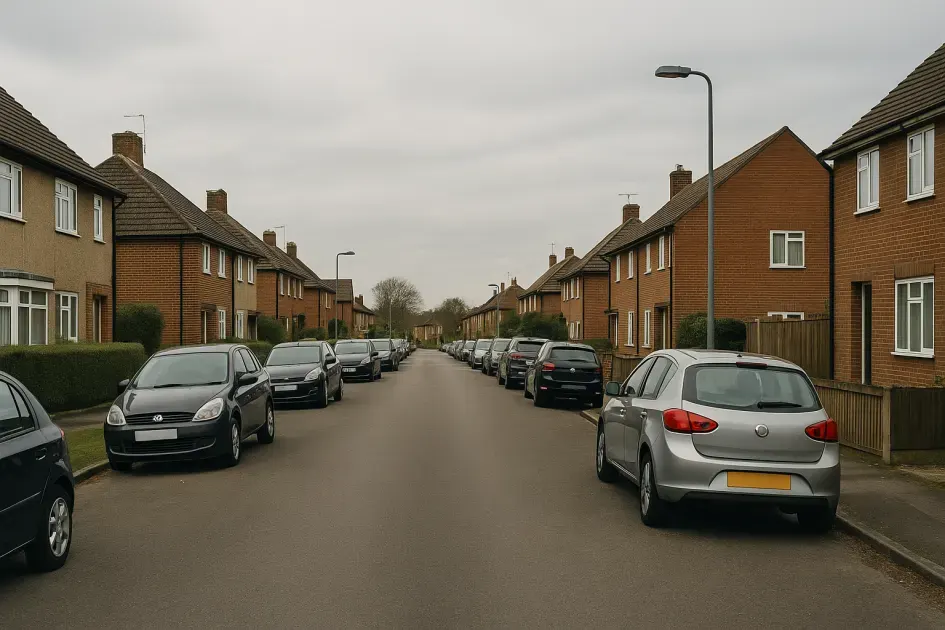
Example 3: Terrace street with resident bays. A visitor permit holds the closest legal space, and a trolley route is planned in case another vehicle blocks the frontage.
Example 4: Industrial estate pickup timed outside shift-change traffic. A fallback route is ready if the A1(M) slows and the destination needs an updated arrival time.
Example 5: House-to-flat move where a surface bay is used instead of a height-restricted car park. The longer carry is offset by a stable stopping point and continuous trolley flow.
Practical route-planning checklist
- Timed loading bays → Confirm the hours and align arrival tightly to the permitted window.
- Resident parking controls → Arrange a visitor permit or plan the nearest legal loading point in advance.
- Building lift sharing → Reserve the goods-lift slot and stage items near the lift before the van arrives.
- A1(M) incident risk → Keep a fallback route ready and add buffer time where destination access is fixed.
- Long carry risk → Measure the kerb-to-door route early and bring dollies or ramps so the pace stays consistent.
Apply neighbourhood context
Street layout, parking controls and building types vary across nearby areas, so route planning works best when it is tailored to the specific destination rather than treated as a generic cross-town drive.