How moving conditions vary across Stevenage
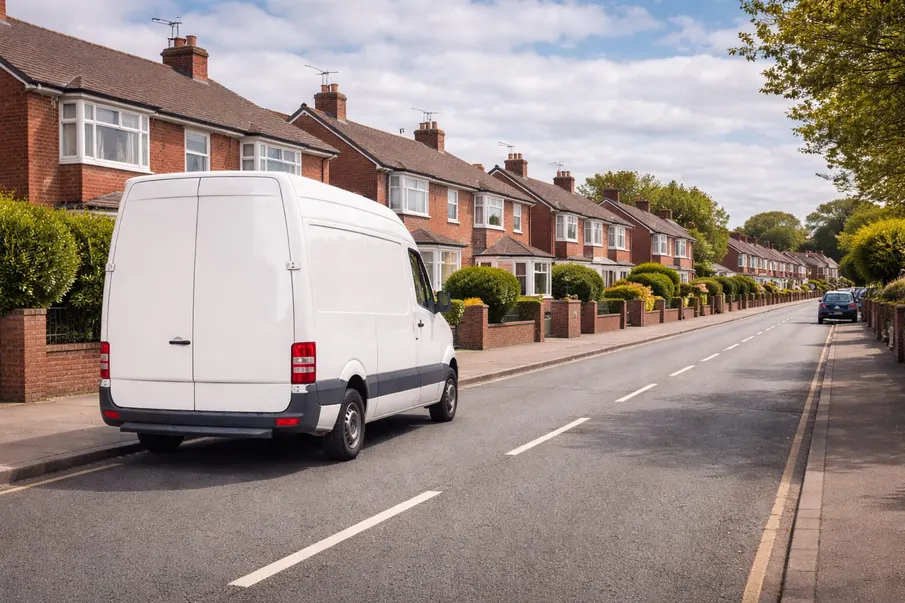
Stevenage combines Old Town terraces, post-war estates with cul-de-sacs and driveways, and apartment developments closer to the station and town centre. Those settings create very different loading conditions. A terrace with limited kerb space may mean a 20 metre carry past parked cars, while a semi with a clear driveway can cut the same job down to short, clean trips. In practice, loading time usually outweighs driving time on local moves. The route-planning side is covered in Stevenage route and loading access planning. A contrasting neighbourhood pattern appears in man and van services in Welwyn Garden City.
Neighbourhood access patterns
Old Town roads often bring tighter frontage parking, narrower approaches and less room to line a van up square to the door. Around newer apartment buildings, access can be easier physically but more controlled, with loading bays, lift bookings or concierge procedures shaping the working window. Outer estates usually make kerbside loading simpler, although school-run traffic and busy roundabouts can still affect arrival timing. If you are planning a move, this is what usually matters most: how close the van can stop and whether that position can be held long enough to keep loading continuous. The pricing effect of those conditions is clearer in how these conditions affect moving costs.
Property and loading differences
Ground-floor houses with a driveway are usually the most straightforward because crews can work in short, steady cycles. Maisonettes and walk-up flats slow things down through repeated stair carries, tighter turns and more care around walls and bannisters. Apartment blocks with large lifts can work well, but only when the lift is available and the route from bay to lobby is direct. Rear access paths, shared courtyards and split-level entrances all add extra handling. Small access constraints repeated across dozens of items are what usually stretch the day.
How to choose the right planning approach
Match the plan to the tightest point on the job. Where parking is uncertain, focus first on permits, legal stopping points and the shortest carry route. Where a building uses reserved lifts or timed bays, align arrival closely to that slot and stage boxes near the exit beforehand. On tighter streets, a smaller van parked closer can outperform a larger vehicle parked further away. On suburban roads with clear drive access, the better gain often comes from room-by-room sequencing and keeping furniture ready to go.
City-wide baseline: time drives outcomes
Across Stevenage, moving time is shaped less by the map and more by the route from van to front door. Parking availability sets the starting point, housing density affects kerb competition, building access determines whether trips stay simple or become stop-start, and route reliability protects or erodes the working window at each end. Most delays come from access constraints rather than distance. When those access points work well, crews keep a steady rhythm; when they do not, even a short move across town can become a longer day.
Eight variables that change moving time locally
1) How permit parking delays loading
Residents bays can force the van away from the entrance or into a timed stop that needs closer monitoring. That adds walking distance on every trip and breaks the loading rhythm. A valid permit or dispensation usually matters more than shaving a minute off the drive.
2) Why terrace streets limit van positioning
On tighter streets, parked cars and narrow carriageways leave little room to align the van cleanly. Crews may need to unload at an angle, work around bollards or carry furniture further before they even reach the path. Bulkier pieces feel that restriction first.
3) How building layout alters carrying distance
Long corridors, split-level entrances and stair turns all add time that is easy to underestimate. A few extra metres per trip does not sound much, but over a full load it becomes a meaningful extension to the schedule.
4) Why managed buildings introduce lift booking delays
Loading bays and lifts can make a move efficient, but only when the slot is available and the building process is ready. Miss the window, wait for another resident, or arrive before keys are released, and unloading quickly becomes stop-start.
5) How street width affects van access
Cul-de-sacs, tighter estate corners and older roads can limit larger vans. Where turning room is poor, crews may need to stage from a wider road or use a smaller vehicle to stay closer to the property.
6) Why route predictability changes travel time
Stevenage routes that look short on paper can still fluctuate around the A1(M) junctions, major roundabouts and school traffic. That matters most when the destination uses a booked bay or lift and the arrival time cannot drift far.
7) How loading bay rules affect unloading speed
Town-centre buildings can impose height limits, timed access or registration checks before unloading starts. If any of that is missed, crews may have to re-park and double-handle part of the load.
8) Why neighbourhood traffic patterns delay moves
School-run congestion and peak traffic reduce manoeuvring space just when a crew needs to hold a good loading position. Even brief interruptions at the kerb can stretch the working window and put pressure on the next address.
Practical planning checklist
- If residents bays control kerb access, arrange the permit or dispensation before the van arrives and keep the stopping point as close as possible.
- If a flat uses lift or bay reservations, confirm the slot, any vehicle limits and entry instructions, then stage items near the lobby or front door.
- If the street is tight, choose the van size for access first and volume second, especially where a closer stop saves repeated long carries.
- If traffic around roundabouts or schools affects your route, build the start time around quieter periods rather than trying to recover time later.
- If the carry is long, use dollies and smaller, manageable boxes to keep loading speed consistent from first trip to last.
Scenario examples
Example 1: Studio in a suburban cul-de-sac with driveway access, small van, one mover. Direct loading keeps trips short, so the move runs steadily with very little wasted motion.
Example 2: One-bedroom terrace off Old Town High Street, medium van, two movers. Parking sits 25 to 30 metres away, so the job slows through repeated carries and more careful handling of larger pieces.
Example 3: Two-bedroom maisonette to a town-centre apartment, medium van, two movers. The destination lift and bay are booked, so the whole unloading phase depends on arriving inside a controlled window.
Example 4: Three-bedroom semi across town, long wheelbase van, three movers. Driveway access helps at one end, but school-run congestion near major roundabouts makes the travel leg less predictable.
Example 5: Three-bedroom terrace to central high-rise, Luton van, three movers. Tight origin parking, a height-limited destination bay and a timed window create a staged unload and a longer overall finish.
Apply neighbourhood context
Different parts of Stevenage create different planning conditions: Old Town terraces often need more careful van positioning, suburban estates tend to make kerb access easier, and central apartments may depend on loading bays and lift reservations. Parking layouts, housing density and building access rules vary across different parts of Stevenage. The guides below explain the practical moving considerations for each neighbourhood. All of these neighbourhood differences feed into the wider city-wide pattern covered on Stevenage man and van services.