In Westminster, property layout often matters more than distance. Mansion blocks, portered developments, basement conversions, and narrow mews streets introduce access friction that changes how quickly a team can load and unload. Understanding the building mechanics helps you plan realistic timing from the start.
For service availability and booking details, see man and van services in Westminster.
Common across Marylebone, Pimlico, Victoria and Paddington, mansion blocks often include long corridors, controlled entrances, and service lift rules. Lift bookings may require advance notice and moves may be restricted to set weekday windows.
Corridor carry distance and lift coordination are the main time drivers — not floor area alone.
Concierge teams oversee access and common areas. Sign-in procedures, lift padding requirements, and fixed moving windows can introduce waiting time if arrival is not aligned with building policy.
Basement and lower-ground properties often involve repeated stair cycles and tight turns. Bulky items such as sofas or appliances increase handling time where stair geometry is constrained.
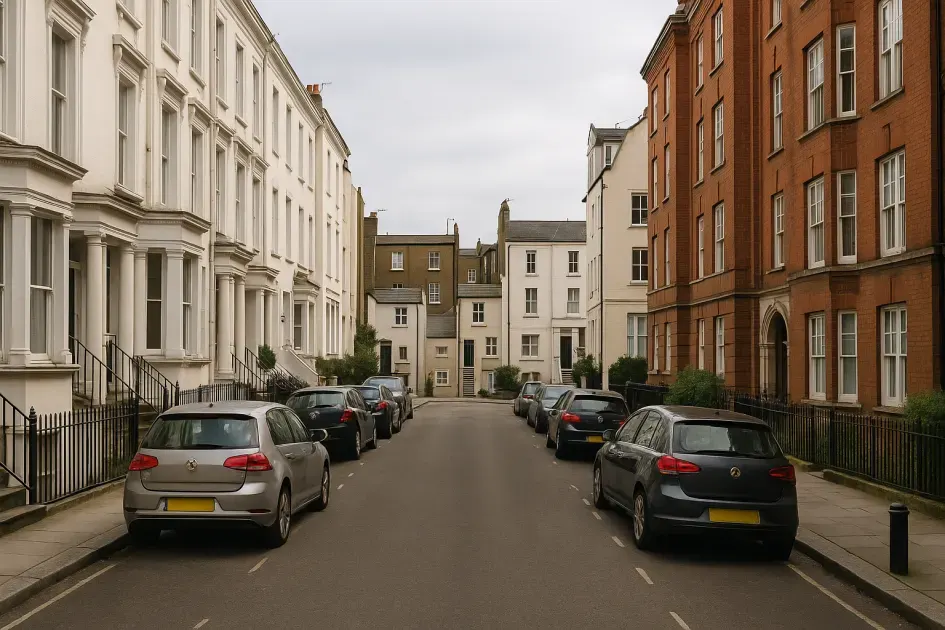
Mews locations are typically narrow with limited turning space. Even when stopping is permitted, the van may need to load from a slightly offset position, increasing carry distance.
The link is simple: access friction increases time, and time drives total cost. Lift waiting, corridor carry distance, stair handling, and restricted loading windows extend booked hours.
For typical price ranges and examples, see our moving costs in Westminster guide. For the most common delay triggers that extend booked time, see our hidden moving costs in Westminster page.
For the street-level access layer — bay types, CPZ hours, and suspension options — see our Westminster parking permits and access guide.
For how Westminster compares with other boroughs in terms of density and restriction levels, see the London borough comparison guide.
Plan a Westminster MoveCommon questions about Westminster building layouts, access rules, and how property type influences moving time.
Mansion blocks in areas such as Marylebone, Pimlico, Victoria and Paddington often involve long internal corridors, controlled entrances, and service lift rules. Even when the flat is small, corridor carry distance and lift coordination can extend handling time.
If lift bookings are required or moves are restricted to fixed weekday windows, waiting time can become the main delay driver.
Yes. Basement and lower-ground flats typically involve repeated stair cycles and tighter stair geometry. Bulky items such as sofas, wardrobes and appliances increase handling time where turns are narrow.
Even a modest inventory can take longer if each carry requires multiple flights.
Mews streets are often narrow with limited turning space and constrained kerbside stopping. The van may need to load from a slightly offset position or stage items carefully to avoid blocking access.
If the nearest legal stopping point is not directly outside, repeated longer carries increase overall time.
Yes. In Westminster, street access and building access work together. A lift booking window is less useful if the van cannot stop close enough to load efficiently.
See our Westminster parking permits guide to plan the kerbside layer in advance.
They affect cost mainly through time. Lift waiting, corridor carry distance, stair handling and restricted loading windows extend booked hours.
For typical ranges and examples, see our moving costs in Westminster guide, and for common delay triggers see our hidden moving costs page.
Westminster combines dense mansion blocks, portered developments, basement conversions and tightly controlled kerbside space. Access coordination tends to play a larger role here than in more suburban boroughs.
For a wider city-level comparison, see the London borough comparison guide.