Moving costs in Islington are usually driven by time — how long loading, travel and unloading takes once real-world constraints are factored in. Streets with Controlled Parking Zones, tight access on residential roads, and higher-density flats around areas like Angel, Highbury and Canonbury can all change the total duration.
Islington is a borough where cost swings rarely come from mileage. They come from kerb practicality, repeated carry distance, and building handling time. This page focuses on the local cost drivers that matter most in Islington and how to plan around them at street level.
For the wider city context, see man and van in London.
Parking and stopping practicality is the biggest swing factor in Islington because it decides carry distance. If the van cannot load close to the entrance, every box and item takes longer to move and the handling cycle slows. Those extra seconds are repeated many times, which is often what pushes a booking beyond plan.
This risk increases on streets with higher parking density, fast turnover, or limited tolerance for a van holding position. If the van has to stop further away, or reposition mid-move, the job becomes stop-start and the time loss compounds.
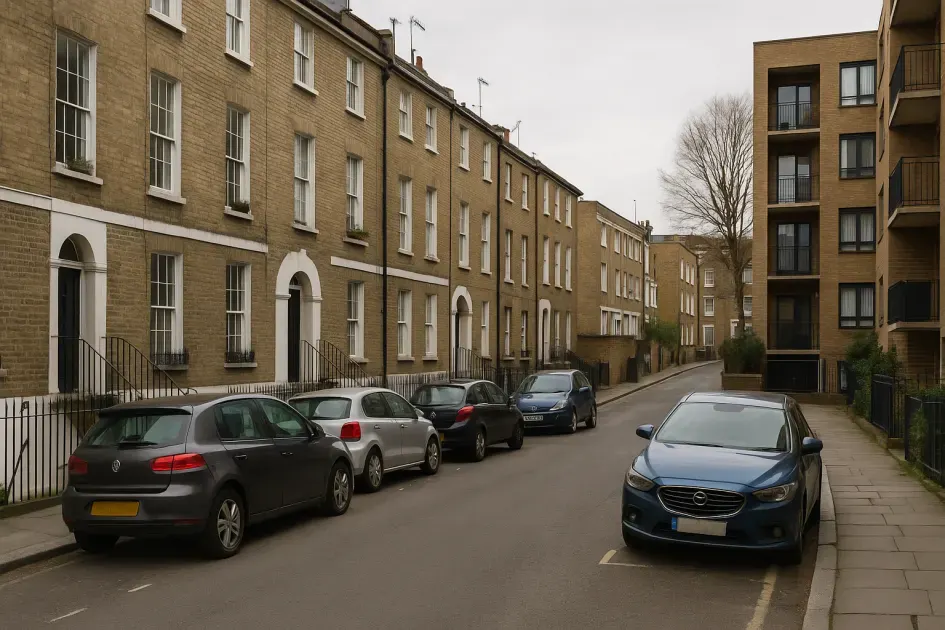
In Islington, street behaviour varies by “type”: busy corridors (where circulation and short stops are common), residential grids (calmer but often tightly parked), and managed block zones (where the entrance-to-flat route is long even when the van is nearby). A move near a main corridor can overrun because the loading position is unstable; a move on a quiet street can overrun because the van cannot get close enough to reduce carry cycles.
If you are unsure what applies on your street, use our Islington parking permits and suspensions guide.
Building handling time is the second major driver. Islington housing stock includes Georgian and Victorian terraces, conversions into multiple flats, mansion-style blocks, and newer apartment developments. Stairs, tight communal halls, narrow turns on landings, raised entrances, and internal door sequences can all slow the carry cycle.
Even when the street is easy, internal handling can dominate the job: long corridors and multiple controlled doors can add more time than the travel segment. In flats, lift availability and building rules can also introduce “waiting time” that is hard to predict if it is not planned for.
See property challenges in Islington for the access patterns that commonly slow moves down.
Timing affects both travel and loading conditions. Even short distances can take longer during busier periods, but the bigger Islington effect is often street interruption: more circulation, more short stops, and less tolerance for a van holding position for loading. Midweek mornings tend to be steadier for travel and give a cleaner loading window than weekend peaks.
If you are planning around a fixed handover time, leaving a buffer often prevents avoidable overruns. A move that starts slightly late is more likely to lose its best loading window, which can force longer carries and slower cycles later in the job.
For timing guidance specific to the borough, see best time to move in Islington.
For London-wide demand context, see the London moving costs guide.
If you are ready to plan your move, start here: man and van in Islington.
Quick answers to common questions about moving costs and the real-world factors that affect total time in Islington, from kerb access to building layout.
Time is the main driver. In Islington, costs usually increase when loading takes longer than expected because of parking constraints, repeated carry distance, stairs in conversions, long communal corridors, lift waiting, or interrupted loading cycles.
Short travel distances do not guarantee short jobs. If the handling route is slow or the van cannot remain in a stable loading position, total duration rises — and that is what most often pushes a move beyond plan.
Yes. Kerb access directly affects carry distance and loading speed. If the van cannot load close to the entrance, every trip takes longer and the handling cycle slows.
On denser Islington streets, repositioning mid-move can also add time. Where appropriate, planning permits or suspensions in advance can help protect a workable loading window and reduce avoidable delays.
Often. Islington includes period terraces, flat conversions, mansion-style blocks and modern apartments. Narrow staircases, tight landings, raised entrances and long corridors can add handling time compared with straightforward ground-floor access.
In managed buildings, lift availability and access rules can have more impact on duration than the road journey itself.
They can be. Weekends often bring higher demand and busier street conditions in mixed-use areas. Increased kerb turnover and footfall can make it harder to maintain a stable loading position.
If a weekend date is necessary, starting earlier and allowing buffer time reduces the risk that small interruptions extend the overall move.
The most useful details are floor level, number of stairs, lift size and availability, entrance layout, parking constraints, and any building time restrictions. These determine realistic handling time.
Sharing accurate access information early allows the move duration to be planned around actual constraints rather than assumptions.
Handling time is usually more important. In a dense borough like Islington, repeated carry cycles, stairs and corridor distance often add more time than the road journey itself.
Protecting loading access and reducing internal friction typically has a bigger impact on total cost than shaving a small amount off travel distance.