Property Challenges When Moving in Hackney: Access, Stairs and Layouts

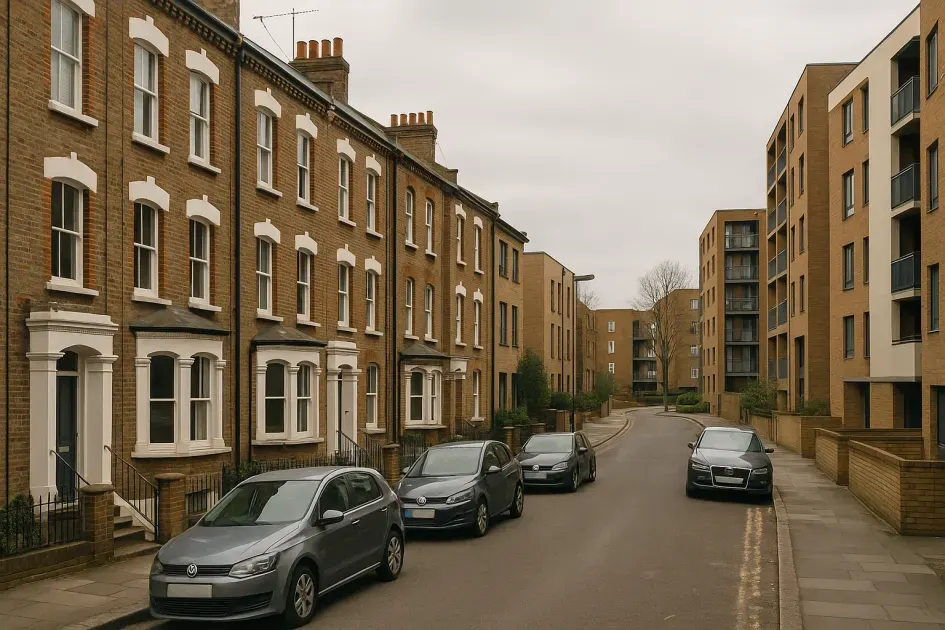
Hackney’s housing stock is dense, compact and highly varied. From Victorian terrace conversions around London Fields and Clapton to warehouse-style apartments near the Regent’s Canal, building layout — not travel distance — is usually what determines how smoothly a move unfolds.

In this borough, most delays are caused by the route between the van and the front door: raised thresholds with iron railings, narrow Victorian staircases, shared entrances in ex-local authority blocks, lift coordination in Dalston Junction developments, or steep basement access near Stoke Newington Church Street. Because man and van pricing is time-based, access friction affects cost by extending total duration.

For the London-wide overview, see man and van in London.


Stairs and upper-floor terrace conversions

Much of Hackney’s housing consists of converted Victorian and Edwardian terraces. Around London Fields, Clapton and Stoke Newington, upper-floor flats commonly involve two or three tight stair runs with narrow landings.

These staircases were not designed for modern sofa dimensions. Bulky furniture often requires careful angling through sharp turns, reducing continuous carrying speed. Each pause adds incremental time across the entire loading cycle.

Where no lift exists, the entire move becomes stair-dependent. In dense terrace grids, this is one of the most consistent duration multipliers.


Raised entrances, railings and tight internal geometry

Raised ground floors with iron railings are common across Hackney’s terrace streets. Access may involve a short external step sequence followed by a narrow entrance corridor.

Even when the van is positioned close to the kerb, internal geometry can slow movement: compact hallways, steep half-landings and tight room-to-room transitions. These constraints reduce carrying rhythm and extend handling time.

Measuring larger items and planning partial disassembly in advance reduces repeated manoeuvring attempts.


Residential blocks, shared entrances and lift coordination

Hackney includes ex-local authority blocks and newer mid-rise developments, particularly around Dalston Junction and Haggerston. These buildings often require intercom access, concierge clearance or pre-booked lift windows.

Delays tend to occur when:

  • The lift is not reserved during the agreed time window
  • Access fobs or codes are not immediately available
  • Service entrances differ from the visible front entrance
  • Move-in hours are restricted to narrow daytime slots

When lift waiting time is introduced, unloading becomes segmented rather than continuous. In a time-based booking, that segmentation directly influences duration.


Flats above shops and high street access

Around Stoke Newington Church Street and other busy local centres, flats above retail units are common. Access is often via rear service corridors, shared stairwells or secondary entrances not visible from the front.

Kerbside stopping on busier roads may also be restricted or time-limited. If the vehicle cannot stop adjacent to the correct entrance, carry distance increases quickly.

Where kerb access is uncertain, review Hackney parking permits and CPZ guidance before moving day.


Basement and garden-level flats

Basement flats in terrace streets often involve steep external steps, narrow side returns or confined light-well access.

Although the vertical distance may be short, reduced headroom and awkward turning space slow movement of larger items. In repeated loading cycles, these small slowdowns accumulate.


Warehouse conversions and canal-side developments

Developments near the Regent’s Canal and Haggerston typically offer lift access, but introduce longer communal corridors and shared loading bays.

When lift windows are coordinated, these moves can be efficient. When coordination is unclear, waiting cycles begin. In dense Hackney developments with high rental turnover, compressed booking windows increase this risk.


Why property layout matters more in Hackney

Compared with outer boroughs that include private driveways and wider suburban streets, Hackney properties rely almost entirely on kerbside positioning combined with compact internal routes.

In lower-density areas, minor access issues may add a few minutes. In Hackney’s tighter grid, repeated stair carries, corridor coordination and kerb positioning constraints can multiply across dozens of loading trips. That multiplication is what influences total duration.

For cost context, see typical moving costs in Hackney and hidden moving costs.


Planning your Hackney move

Share detailed access information upfront: floor level, lift availability, the likely kerb position, and any management rules. When the practical route from street to room is clear, the booking window is far more likely to reflect true duration. Start here: man and van in Hackney.


Hackney Property Challenge FAQs

Detailed answers to common questions about stairs, conversions, lift access and compact layouts when moving within Hackney.

Often, yes. Many Hackney flats sit within Victorian and Edwardian terrace conversions, particularly around London Fields and Clapton, where upper floors involve tight staircases and narrow landings.

Repeated stair carries slow the loading rhythm. Across dozens of trips, those small slowdowns accumulate and extend total duration.

In newer developments near Dalston Junction or canal-side blocks in Haggerston, lifts may need to be reserved within specific time windows. If a lift is unavailable when unloading begins, waiting cycles can start.

Confirming lift reservations and any management requirements early helps prevent segmented unloading that consumes booked hours more quickly.

Basement and garden-level flats are common in terrace streets. Access may involve steep external steps, narrow side returns or limited turning space at the entrance.

Although the vertical distance may be short, constrained geometry slows movement of bulkier items and increases handling time.

Raised ground floors with iron railings are typical across many Hackney streets. External steps combined with compact entrance corridors reduce continuous carrying speed.

While each adjustment may only add seconds, repeated across an entire move they can meaningfully affect overall duration.

Yes. Terrace conversions often include tight turns between rooms and narrow stairwells not designed for modern furniture dimensions.

Measuring door frames, stair widths and landing clearance helps determine whether partial disassembly is needed before moving day, reducing repeated manoeuvring attempts.

In most Hackney moves, pricing is based on the time booked. Additional stair flights, longer internal carry routes and lift coordination extend handling duration.

When loading and unloading take longer than expected, the move may use more of the booked hours. Property layout therefore influences cost indirectly through time.