Give the usable entrance alongside the postal address. The price discussion needs the prepared goods and the work from their room to the van, followed by delivery into the receiving room.
On this page
Locate the door that releases the goods
Ask the occupier which door the team should use and who can open it. Give the unit, flat or room identifier, floor, stairs and internal turns. If the entrance is on another street, name that street and keep the full postal address too.
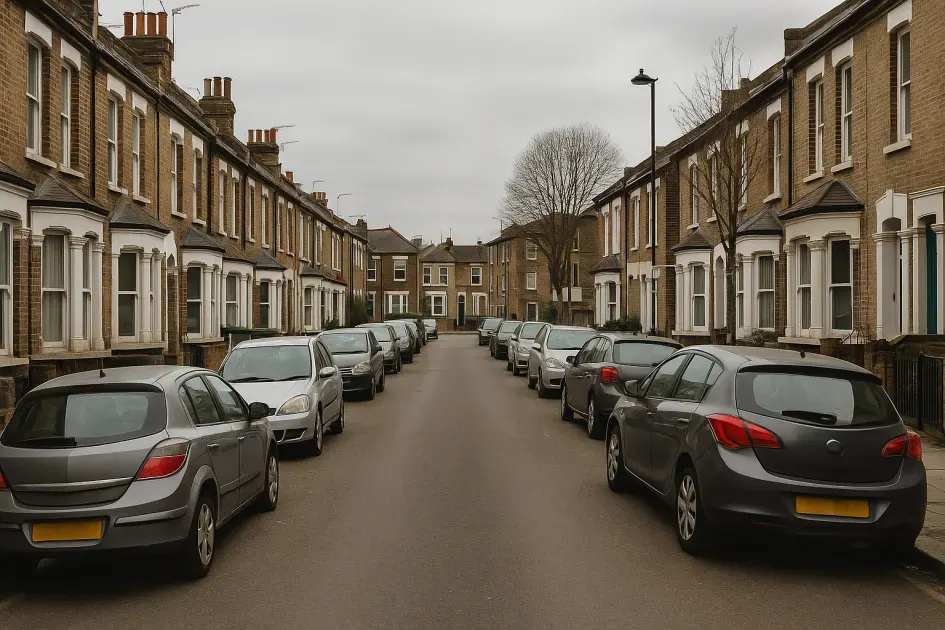
Hackney’s Mare Street account identifies historic town-centre buildings, but your own premises need their route checked. A business name or broad frontage does not establish a usable goods entrance, upper-floor route or release contact.
Price the complete prepared load
List every furniture piece, box and loose part, including belongings held away from the main collection room. Measure bulky pieces in their travelling form and agree who completes preparation. Count detached sections and packing when selecting vehicle space.
Give date, booked time and selected carrying help for the same complete work when comparing prices. A modelled local example has its own assumptions; use How pricing works to understand your booking inputs.
Join the approach to both carrying routes
Check the current vehicle approach separately from the lawful stop and permission to enter the premises. The approach-and-loading record helps resolve those distinct arrangements. Give the carry from the confirmed position to the release room.
Ask the recipient to check the prepared furniture into the final room, including doors, floors and any confirmed lift or building appointment. Select help for both ends using the inside-premises route sheet.
The usable goods door is on another street
Illustrative example: a customer collects a desk, chair and boxes from a unit near Mare Street. The occupier identifies a release door on another street, measures the internal turn and confirms the prepared load.
The customer records that approach and carry as well as the postal address. The recipient checks the new doorway before vehicle space and carrying help are selected.
Keep a release-door quote brief
- Postal address and actual release entrance.
- Prepared goods, dimensions and loose parts.
- Release contact, floor and internal route.
- Confirmed approach, lawful stop and collection carry.
- Receiving room, access and selected help.
Use the release handover checklist and London quote guide to finish the brief.
Common questions
Can I give only the postal address for a unit collection?
Add the actual release door, its street if different, the room and floor, and the person admitting the team. Keep the full postal address with those instructions.
Can I use a nearby move’s price as my quote?
Treat modelled or previous prices as illustrations. Your prepared load, both routes, date, selected help and booked time need their own quote.
Sources and further detail
Practical planning for the actual addresses. Historic built context does not establish present permission; examples are illustrative.
Ready to plan your Hackney Central move?
Bring the complete inventory, access record and confirmed appointments together to check the service and your move price.
Plan and price your Hackney Central move