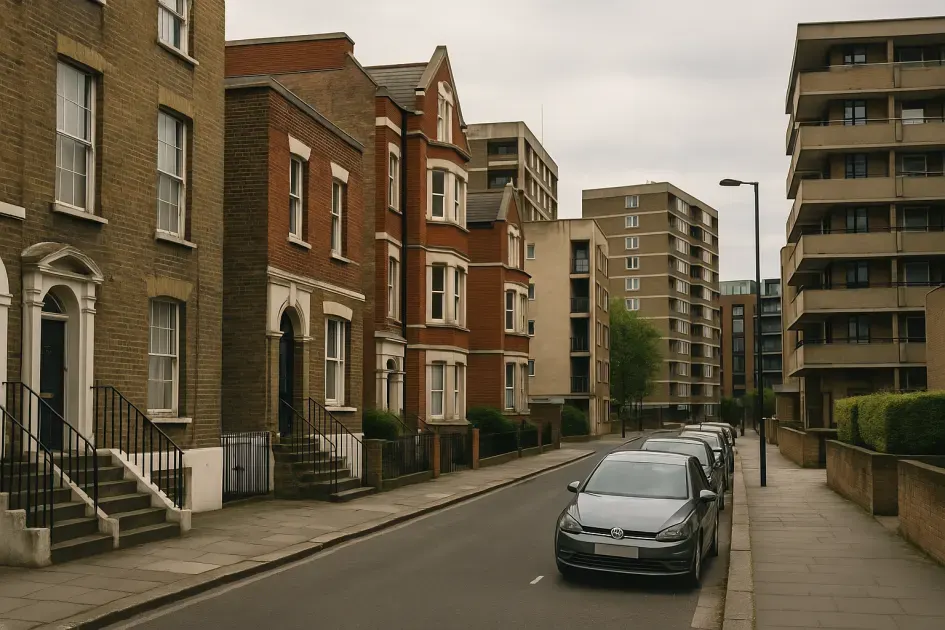
Camden’s housing stock is varied and often compact. From period terraces to mansion blocks and modern apartments, each building type presents different access considerations on moving day.
Most moving delays are not caused by distance between addresses. They’re caused by the route between the van and your front door.
A common Camden pattern is a short street distance but a long internal distance: raised entrances, narrow stair turns, shared hallways and longer corridors that repeat time on every trip.
For London-wide moving info and service context, see man and van in London.
Many Camden properties involve multiple stair flights, particularly in converted Victorian and Edwardian houses. Some older buildings do not have lifts.
Stairs increase handling time. Heavier items such as sofas, wardrobes and appliances require careful manoeuvring, which can extend loading and unloading duration.
If a lift is available, confirm booking requirements with building management in advance.
Period properties often feature narrow entrances, tight stairwells and sharp internal turns. Even when parking is straightforward, interior constraints can slow the process.
Measuring large furniture in advance reduces surprises. Items sometimes need partial disassembly to navigate compact spaces.
Camden includes larger residential blocks where lift coordination, concierge clearance and time-slot restrictions apply.
Delays often occur when:
Planning lift windows and notifying management in advance helps prevent waiting time on the day.
A 2-bed flat in a Camden conversion may only be a few steps from the street, but if it’s top floor with a narrow stair turn and a shared entrance, each carry run slows down. Add a short wait for access or lift use at the destination, and the job can extend without any “extra items” being added.
Properties located above retail units often have rear or side access points. These may involve service staircases or shared corridors.
These locations also tend to have more active kerbside turnover (deliveries and short stops), so timing and a realistic loading position matter more than the distance on the map.
Street-level parking can be more restricted on busier roads. If you’re unsure about kerb access, review Camden parking permits and CPZ guidance before moving day.
Camden includes many basement and lower-ground-floor flats. Access may involve steep external steps, narrow side returns or limited lighting.
While distance to the van may be short, vertical access and awkward routes can increase handling time.
Narrow side returns and tight turns at the bottom of steps can make bulky items awkward to manoeuvre, so planning the route and protecting edges helps avoid slowdowns.
The primary cost driver in most moves is time. Additional stairs, longer internal distances and restricted access increase loading duration.
For broader cost context, see typical moving costs in Camden and hidden moving costs.
Providing clear details about floor level, lift availability and access constraints helps create a more accurate plan. Start here: man and van in Camden.
Answers to common questions about building access and layout issues when moving in Camden.
Yes. Many Camden properties are converted Victorian or Edwardian houses with multiple stair flights and no lift. Each additional flight increases handling time, particularly for heavier items such as sofas, wardrobes and appliances.
The effect is cumulative: even a short vertical route repeated multiple times can extend the overall job duration.
Some mansion blocks and larger residential buildings in Camden require lifts to be reserved in advance or restrict move-in hours. If the lift is unavailable on arrival, unloading may pause while access is arranged.
Confirming lift windows, concierge requirements and loading entrances before moving day reduces waiting time.
Basement and garden-level flats often involve steep external steps, narrow side returns or tight turns at the bottom of staircases. While the van may be close to the entrance, the vertical and internal route can slow the process.
Planning the carry path in advance helps reduce repeated manoeuvring and unnecessary delay.
Converted period buildings frequently include shared hallways, raised entrances, narrow stair turns and longer internal corridors. A move that appears simple from the street can involve a surprisingly extended internal route.
This “short street, long internal distance” pattern is one of the most common time multipliers in Camden moves.
Yes. Measuring doorways, stairwells and tight corners reduces the risk of last-minute disassembly or blocked access. This is particularly important in older Camden properties where entrances and staircases are compact.
Advance measurement supports smoother loading and avoids unnecessary time loss on the day.
Property layout affects how long loading and unloading take. Additional stairs, longer internal distances and restricted access increase handling time, even if the travel distance between addresses is short.
Because most man and van pricing is time-based, managing these access details early helps keep the move within the planned duration.