What matters operationally
Route predictability comes from aligning travel windows with quieter periods and locking in workable access at each stop. Traffic timing influences whether you can approach via efficient arterials or need to divert through slower residential roads. Loading access then sets the real handling time: a near-door stop with a clear path and lift access keeps the van turning quickly, while a distant bay, long carry or stair-only entrance extends each leg. These factors compound across the day, so small access gains at both ends meaningfully reduce total moving duration. Those access constraints feed directly into how moving costs are shaped by access and time. The timing side of that is explored further in when Leicester moves tend to take longer.
How to plan around restrictions
Check route timing on the ring road and central approaches the week of the move and again on the morning itself, then choose entry streets that allow legal set-down as close to the door as possible. Timed loading bays, central drop-off limits and building procedures should be treated as fixed constraints, not something to solve on arrival. Confirm concierge hours, lift reservations, loading-bay slots and any vehicle height limits, then stage items to match the access window. Add a modest buffer between addresses to absorb lift queues or a detour without losing the next slot. That is visible in areas such as man and van services in Clarendon Park.
Eight route-planning variables in Leicester
Traffic timing patterns
Commuter peaks and school-run periods create bottlenecks on main approaches and around busy junctions. Planning arrivals outside these peaks keeps driving steadier, preserves kerbside options and reduces stop-start delay before loading begins.
Central access constraints
Pedestrian-priority streets, bus gates and one-way systems can block direct approaches or limit where a van can set down. Mapping the final stretch in advance helps avoid last-minute loops and protects the closest legal loading point.
Kerbside loading conditions
Timed bays, short-stay limits and double-yellow restrictions determine how long the vehicle can remain in place. When a bay window is short, pre-staging items near the exit and assigning clear loading roles keeps the slot productive from the first minute.
Building access limitations
Concierge hours, lift bookings, loading-bay slots and key handovers all govern how quickly crews can work. If access is shared with other occupants, queueing becomes part of the job, so arrival times and fallback plans matter.
Route predictability and delays
Unplanned detours, missed turns into restricted streets or last-minute bay changes trigger extra loops and handling time. Pre-checking signage and holding a practical fallback route helps keep the schedule intact.
Vehicle suitability and access
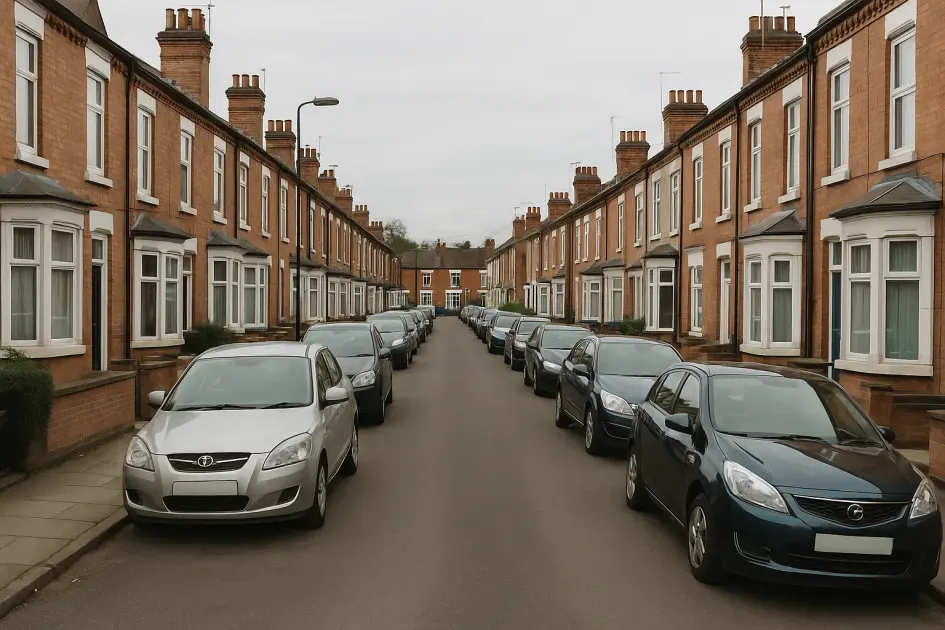
Street width, turning circles and height restrictions dictate vehicle choice. On narrower terraces or lower structures, a shorter or lower van can stop closer to the door and keep handling more efficient.
Parking and permit constraints
Permit-only zones and residents’ bays may require a visitor permit or an agreed alternative loading point. Confirming permit availability at both addresses avoids being forced into a distant, time-consuming stop.
How clean-air or charge-zone rules affect moves in Leicester
There is currently no active clean-air or charge zone in Leicester. Central moves are still shaped by timed loading bays, pedestrian-priority areas, bus gates and managed-building access. Plan around those controls, verify the final approach streets and match vehicle size to any loading-bay limits to keep the move dependable.
Practical route-planning examples
Example 1: Terrace on a permit-only street near the centre: secure a visitor permit from the address, approach via the ring road and choose the closest legal stop to limit kerb-to-door carry.
Example 2: City-centre flat with a managed loading bay: confirm the bay slot and vehicle height, pre-stage items by the lift and route in via streets that allow direct entry to the bay.
Example 3: Upper-floor flat without a lift: allocate extra time for stairs, use trolleys for longer corridors and prioritise a close legal set-down to offset the slower internal handling.
Example 4: School-run area in Clarendon Park: schedule arrival between peaks, use side-street approaches identified in advance and hold a fallback kerbside location if frontage is blocked.
Example 5: Match day near King Power Stadium: avoid pre- and post-event surges, arrive earlier with a protected loading window and keep a secondary exit route ready to bypass local closures.
Practical route-planning checklist
- Permit-only frontage → Arrange a valid visitor permit and display it before unloading to prevent relocation mid-load.
- Timed loading bay → Arrive inside the window, pre-stage items at the exit and assign roles to start loading immediately.
- Narrow or busy street → Use a shorter vehicle or alternative legal bay to reduce re-circling and long carries.
- Managed building access → Confirm lift and loading slot, height limits and entry procedure; share ETA with concierge.
- Event traffic or roadworks → Check live maps on the morning of the move and keep a ring-road alternative ready.
Apply neighbourhood context
Street width, parking controls and local traffic rhythms differ across Leicester neighbourhoods, so align vehicle choice and arrival windows with the exact streetscape at each address. One practical example appears in man and van services in Evington.