Why demand patterns matter
When many moves target the same dates, early slots disappear first. Crews start later, parking near entrances is scarcer and building loading bays are harder to secure. That compresses the day, so any extra carry from kerb to door or time spent navigating narrow streets adds more delay than usual.
Demand clusters also amplify operational risk. If a morning job overruns because of stairs without lifts or a longer-than-expected carry, the afternoon start slides with it. Flexibility, such as choosing midweek, avoiding school-run windows or accepting broader arrival windows, improves reliability by spreading the pressure and opening more access options. When demand tightens, it can change timing and pricing on Leicester moves. Most delays come from access constraints rather than distance once the day is tightly booked. This helps you avoid delays on the day.
Typical Leicester demand cycle
| Period | Why demand rises | Operational effect on scheduling |
|---|---|---|
| Weekends | Most tenants prefer weekend key handovers and time off work | Reduced booking flexibility, fewer early starts, tighter loading windows and busier parking near entrances |
| End of Month | Tenancy cycles align; many leases end or begin together | Stacked schedules, increased overrun risk, building bay slots book early and less tolerance for delays |
| Summer / Student Areas | Student lets renew and shared houses turn over in short bursts | Seasonal spikes, route congestion near campuses, longer carries from full streets and fewer mid-morning options |
| Midweek (Non-peak) | Fewer synchronised moves and more open calendars | Broader start-time choices, better parking access, improved route predictability and better buffer control |
Eight Leicester timing drivers
1) How weekend bookings reduce start-time flexibility
With many moves targeting Saturday and Sunday, early slots go first. Parking near doors fills quickly, forcing longer carries and pushing later arrivals even further back.
2) Why end-of-month tenancy cycles cluster moves
Leases change together, so keys, loading bays and lifts all come under pressure at once. Small overruns are harder to absorb and often spill into the next booking.
3) How student-area turnover creates seasonal spikes
Shared houses in areas like Clarendon Park turn over in summer. Streets crowd with vans and parked cars, reducing kerb access and extending loading time.
4) Why school-run traffic increases scheduling risk
Morning and mid-afternoon congestion near schools slows routes and reduces arrival accuracy. That makes it easier to miss preferred access windows at the destination.
5) How commuter traffic changes route predictability
Arterials into and out of the centre tighten during rush hours. Reduced predictability means larger buffers are needed, which limits how many addresses fit neatly into one day.
6) Why building booking rules reduce available slots
Managed blocks often require lift or bay reservations. Peak days sell out early, leaving only awkward windows with less room for recovery if anything slips.
7) How narrow residential streets increase timing sensitivity
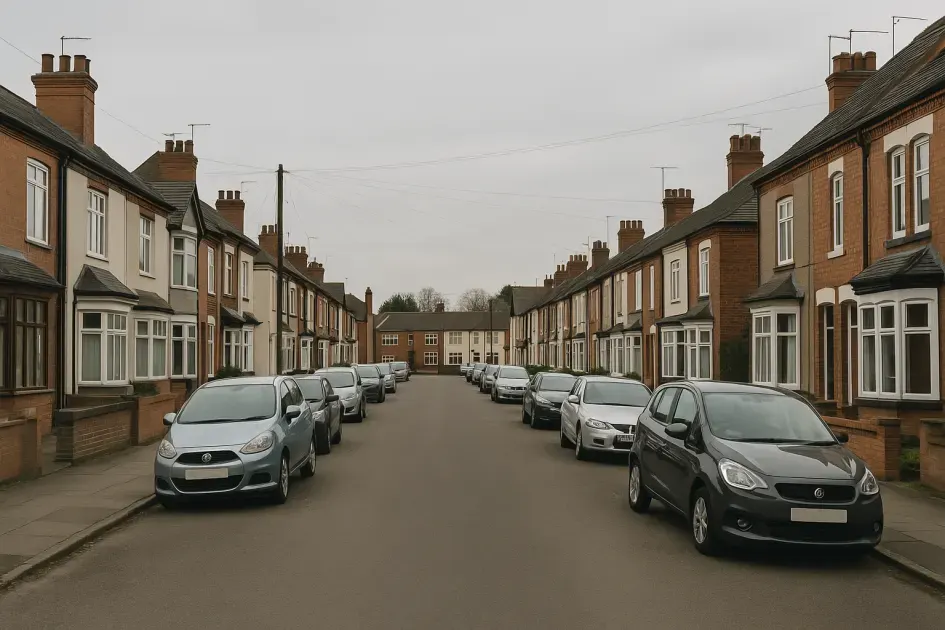
Terrace housing and permit zones limit close parking. Longer kerb-to-door carries extend each load cycle, especially when bays rotate slowly and legal space is scarce.
8) Why mixed-density neighbourhoods produce uneven demand
Areas blending flats and terraces see varied access rules and uneven turnover. When several moves align on the same day, lift queues and tight kerbs combine to slow progress.
Scenario modelling
Scenario A: Midweek, flexible start in Evington. Permit parking is lighter by mid-morning, the lift slot is available and the route avoids school-run peaks, so small delays stay manageable.
Scenario B: Saturday in Stoneygate with terrace housing. Weekend parking pressure forces a longer carry from the nearest legal space; the later start and busier local traffic reduce recovery time.
Scenario C: End-of-month in Clarendon Park during student turnover. Permit bays are packed, lift booking windows are short and school-run traffic compresses arrival, so even a modest delay ripples through the rest of the day.
Practical scheduling checklist
- Weekend parking pressure → Request a wider arrival window and pre-identify two legal kerbside alternatives near the entrance.
- End-of-month bay scarcity → Reserve building loading bays early and secure written slot confirmations with contact details.
- School-run congestion → Avoid arrivals near 8–9am and 3–4pm and use quieter secondary roads where possible.
- Permit-only terraces → Arrange a visitor permit or resident assistance and stage items closer to the kerb to reduce carry time.
- Lift sharing in managed blocks → Book exclusive lift periods where allowed and stage loads to match the reserved window.