Include indoor, garage and garden belongings that travel, then compare the same addresses, date, stops, vehicle, help, access, optional work and booked time.
On this page
Define what is leaving and where it will go
For a selected Roundhay house or flat move, walk the rooms and any garage, utility or garden storage holding your belongings. List the pieces that travel and mark those that stay. Count the packed boxes and associate furniture sections, fittings and any packaging with their item. A property’s bedroom count does not describe that load.
Identify the receiving room for each bulky piece. An outdoor table, wardrobe sections and garage boxes may have different routes at the destination. Give the actual collection and delivery addresses and declare any intermediate collection or key stop before requesting a price.
Use the actual loading position in the brief
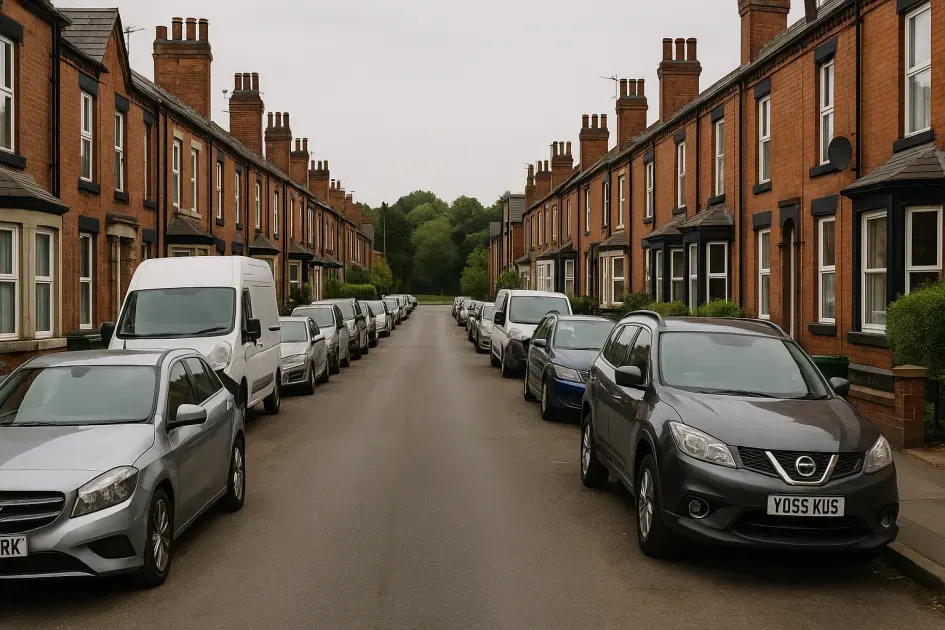
Check whether the drive or private approach is permitted and suitable for the vehicle. Describe the entrance, gate and space rather than assuming a car-sized opening establishes van access. If the van must use the street, record the lawful position and the complete carry from there.
At both properties, check prepared item sizes against turns, steps, stairs, corridors and final-room openings. The Roundhay piece-to-route check helps identify what remains unresolved. A different stop or an added flight of stairs changes the work to assess, even if the inventory stays the same.
Choose the same help and optional work for each comparison
Select assistance for the complete carrying, loading and unloading work. With customer loading, arrange enough people at both ends and relevant stops; a keyholder is not an automatic helper. Say who prepares the pieces, packs loose belongings and completes any required receiving assembly.
Packing/unpacking share the existing packing selection, allowance and rate. The paired service and item disassembly/assembly may be agreed at any declared stop, subject to eligible provider availability, using separate 30-minute blocks of elapsed team time at the booking rate. Ordinary loading does not automatically include them. Compare identical tasks and time allowances rather than treating a version without assembly as equivalent.
Keep a clear original-versus-current quote record
As a hypothetical example, a quote brief lists a table and packed room boxes with private loading space. A later check adds garage goods and shows the van must use a street position with a longer carry. Send those changes together, including the actual route and any preparation request, before relying on the original plan.
Align addresses, date, stops, inventory, vehicle, help, access, optional work and booked time. The Roundhay change-cost guide distinguishes revised work from time beyond booked time at the displayed additional rate and separately applicable outside charges. Read how pricing works for the business definitions. Use the Leeds quote guide for the wider journey, then plan and price your Roundhay move with the complete current brief.
Common questions
Can a Roundhay driveway be assumed in the quote?
Only after checking its entrance, usable space, permission and the vehicle’s requirements. If it cannot be used, describe the lawful street position and full carry instead. Check delivery independently, including each prepared piece through to its receiving room, and tell support if the access differs from the original quote brief.
Sources and further detail
Selected Roundhay household goods and actual boundary/entrance-to-finalroom routes; council2004appraisalWetherbyRoad/ParkAvenue context only, not currentpermission or universalhousing/accessclaim. Hypothetical examples labelled.
Bring your Roundhay move plan together
Use the complete travelling load, both routes and selected work for your journey.
Plan and price your Roundhay move