
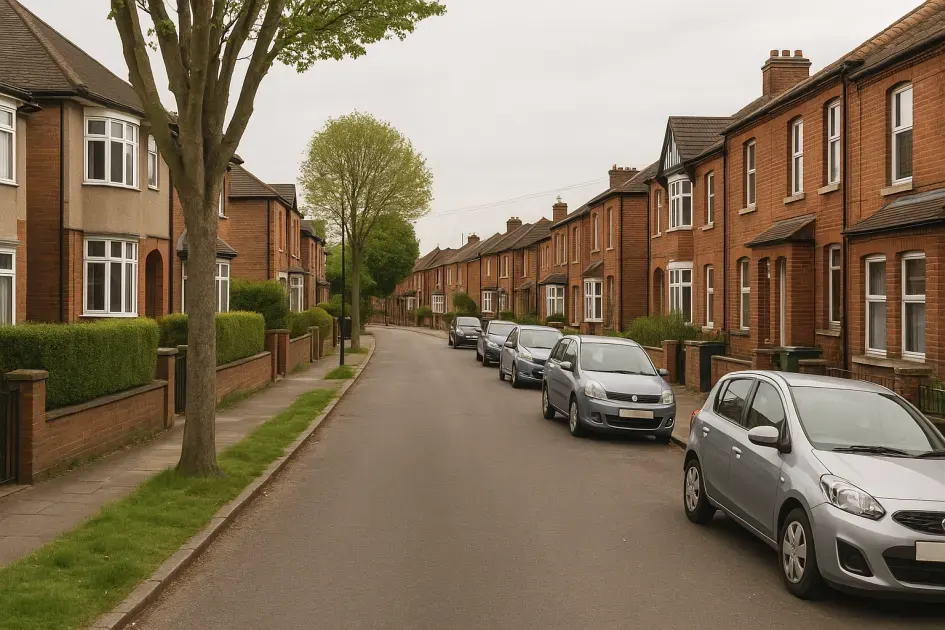
How moving conditions vary across Leeds
Leeds has a wide mix of Victorian terraces, student HMOs, city-centre apartments and suburban semis. Streets around Harehills or Headingley can leave very little room for a van to stop close to the door, which quickly turns a short move into a long-carry job. Apartment blocks near the centre often depend on loading bays, fobs and booked lifts. In places such as Roundhay, driveway parking is more common, which can make the physical handling much simpler. Most delays come from access constraints rather than distance. The route-planning side is covered in Leeds route and loading access planning. A contrasting neighbourhood pattern appears in man and van services in Roundhay.
Neighbourhood access patterns
Permit parking zones can turn a straightforward flat move into a shuttle job if the only legal bay is half a street away. Narrow residential roads also make turning and positioning slower, especially where parked cars leave little passing room. Some managed buildings work well once access is arranged, but fixed lift slots and bay timings leave very little slack if the van arrives late. In suburban pockets, the roads may be easier, yet school-run traffic, bus routes and timed bays can still tighten the workable window. If you are planning a move, this is what usually matters most: how close the van can stop and how uninterrupted the carrying route will be.
Property and loading differences
Stair-only flats slow the pace because every bulky item needs extra handling and more trips. Long corridors, tight turns and split-level layouts also reduce how much can be moved per cycle. Ground-floor terraces can look simple, but steps, long garden paths or rear ginnels often add more carrying distance than expected. Apartments with goods lifts help with heavier items, although key collection, waiting times and shared lift use can still break the flow. Driveways and rear access usually make loading easier, but even then there may be pinch points such as steep paths, narrow gates or shared parking courts. The pricing effect of those conditions is clearer in how these conditions affect moving costs.
How to choose the right planning approach
Start with the stopping point, not the map distance. Check where the van can legally stand, whether there are stairs or lift controls, and whether furniture has to pass through tight halls or awkward turns. On permit streets, arrange visitor parking or identify the nearest realistic bay in advance. For managed blocks, line up the lift and bay booking first, then work backwards from the confirmed slot. Where the property has a driveway or clear frontage, a larger van may reduce the number of cycles. Loading time usually outweighs driving time on most city moves, so the plan should be built around the slowest access point rather than the easiest stretch of road.
City-wide baseline: time drives outcomes
Across Leeds, the combination of terraces, apartment schemes and suburban housing means move duration is usually set by access rather than geography. Parking availability determines how close the van can work, housing density affects whether kerb space is available, and building access decides whether stairs, lifts or long internal walks shape the pace. When the van is close and the route inside the property is simple, the whole job feels more predictable. When bays are scarce or lifts are controlled, time expands quickly. One clearer neighbourhood example is man and van services in Harehills.
Eight variables that change moving time locally
1) How permit parking delays loading
Permit zones often push the van into the nearest legal gap rather than the best loading spot. That increases the kerb-to-door carry and adds minutes to every trip. A visitor permit or pre-checked loading bay keeps the van closer and makes the pace more consistent.
2) Why terrace streets limit van positioning
Terrace streets can be difficult for longer vehicles because parked cars narrow the route and reduce turning space. If the van cannot line up near the entrance, ramps are less useful and more items have to be walked by hand. That extra handling is where the time goes.
3) How building layout alters carrying distance
Long hallways, external steps and split-level rooms add distance to every trip, even when the overall move volume is modest. Small layout problems multiply fast across dozens of boxes and pieces of furniture. Staging items near the exit before the van arrives usually shortens the slowest part of the job.
4) Why managed buildings introduce lift booking delays
Concierge sign-ins, lift reservations and goods-lift rules create fixed starting points. If the slot is missed, the team can end up waiting or working in smaller batches. Matching the route timing to the booked window is often the difference between steady loading and repeated pauses.
5) How street width affects van access
Narrow roads and awkward corners can stop larger vans from reaching the ideal position. That usually removes direct ramp loading and forces longer hand carries from a side street or safer stopping point. A smaller van can sometimes save time overall because it gets closer.
6) Why route predictability changes travel time
School zones, busier radial routes and signal-heavy approaches create variable arrival times. That matters most when the destination has a timed bay or managed entry. A more predictable route is usually worth more than the absolute shortest route on the map.
7) How loading bay rules affect unloading speed
Some apartment blocks and commercial buildings impose strict bay windows, security checks or high-vis requirements. These rules can be manageable, but only if the team arrives organised and the first loads are ready to move immediately. Otherwise, the bay time disappears quickly.
8) Why neighbourhood traffic patterns delay moves
School-run peaks and commuter traffic around corridors such as the A65 can delay the approach just enough to disrupt the loading window. Even a short hold-up matters when access depends on lift times or permit availability. Starting outside the worst peaks usually protects the most valuable part of the schedule.
Practical planning checklist
- If permit parking restricts kerb access, arrange a visitor permit or reserve a bay where allowed.
- If stairs or long corridors increase carry distance, stage items by the exit and dismantle bulky furniture.
- If narrow streets limit turning, select a smaller van or plan a safe micro-stop close to the entrance.
- If lift or loading bay windows are required, match travel time to the earliest confirmed slot.
- If school-run traffic affects routes, schedule arrival before peaks to protect loading windows.
Scenario examples
Example 1: Studio flat in Kirkstall, quiet cul-de-sac, driveway access. One mover, small van. Short carry and direct ramp use keep cycles quick, so the job stays efficient from start to finish.
Example 2: One-bed terrace in Harehills on a narrow permit street. Two movers, medium van. Visitor parking is arranged, but the street still limits stopping space and adds handling time.
Example 3: Two-bed flat near Leeds city centre with a goods-lift booking. Two movers, medium van. Lift sharing causes short pauses, so staging near the lobby becomes the key to keeping flow steady.
Example 4: Three-bed semi in Roundhay to Headingley. Three movers, long wheelbase van. School-run congestion affects the approach, while easy driveway loading at the origin helps recover some time.
Example 5: Large terrace house to apartment block, Harehills to city centre. Three movers, Luton van. Permit parking, a long carry and a fixed lift slot combine to stretch the working day.
Apply neighbourhood context
Different Leeds neighbourhoods create different planning pressures, from permit-controlled terraces and student housing to apartment bays and suburban driveways. Parking layouts, housing density and building access rules vary across different parts of Leeds. The guides below explain the practical moving considerations for each neighbourhood. All of these neighbourhood differences feed into the wider city-wide pattern covered on main Leeds booking page.