
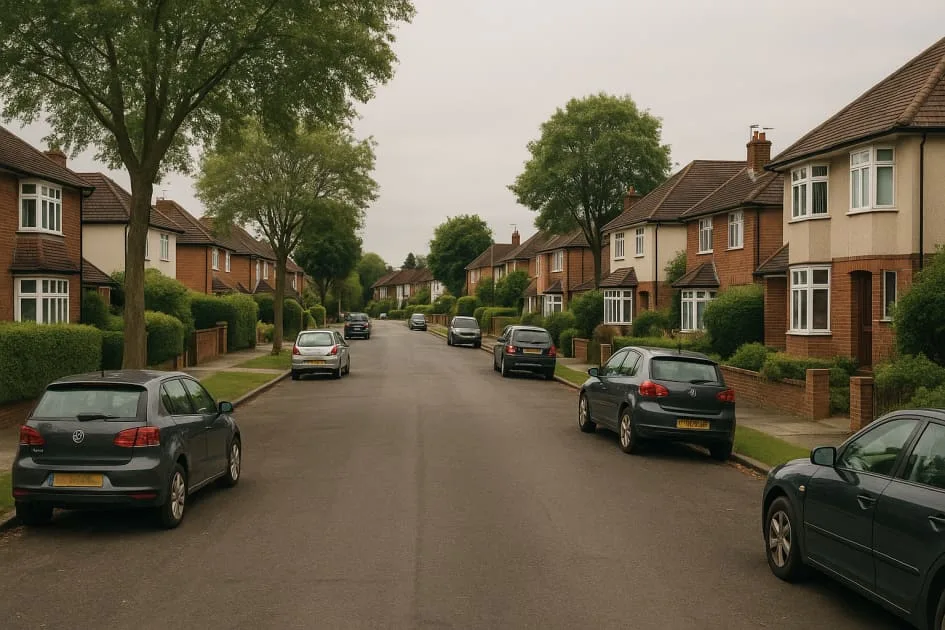
How moving conditions vary across Guildford
Central streets near the High Street and around the station rely on controlled parking zones and narrower one-way roads that constrain where a van can safely stop. Victorian and Edwardian terraces close to town often lack driveways, so crews depend on kerbside loading and may need to work from the nearest legal bay rather than directly outside the entrance. Suburban areas such as Burpham and Merrow more often provide driveways or wider kerbs, which shorten the carry and improve van turnaround. Riverside and station-side apartment blocks can offer service lifts and loading bays, but they usually come with booked windows and stricter access rules. These differences matter more than the map distance because the space between the van and the doorway usually determines the pace of the move.
Neighbourhood access patterns
Town-centre moves face CPZ rules, delivery-time limits and busy pedestrian activity, which increase the chance of distant parking and repeated shuttle trips. Terraced streets in Stoughton and Onslow Village can be narrow with resident parking on both sides, so permits and careful arrival timing become important if you want to avoid a long carry. University-adjacent areas often see heavier daytime movement, which makes midday stops less predictable. By contrast, suburban cul-de-sacs in Park Barn or Burpham usually allow near-door stopping or driveway use, helping the loading rhythm stay cleaner. Managed blocks near the station or riverside developments introduce loading-bay slots and lift bookings, so missing a window can immediately extend the schedule. Most delays come from access constraints rather than distance.
Property and loading differences
Older terraces may have tighter staircases that slow sofas, wardrobes and white goods, especially where turns are awkward and protection needs to be added at each landing. Semi-detached homes with driveways reduce kerb-to-door distance and let crews work in steadier cycles. Newer apartment developments often centralise access through a loading bay, lift and fob-controlled lobby, which can help if everything is lined up properly but become restrictive if the lift is shared or the bay is time-limited. Some houses sit above street level with steps, reducing trolley use and adding more hand-carrying. Long paths, communal car parks and gated courtyards also break up the loading sequence unless a close bay is secured. The pricing effect is clearer in how these conditions affect moving costs. The route-planning side is covered in Guildford route and loading access planning. A more suburban pattern appears in Guildford man and van.
How to choose the right planning approach
Match the plan to the tightest access point, not just the largest property. Where CPZs apply, arrange visitor permits or suspension guidance and time arrival outside the busiest traffic periods to improve the chance of holding a workable space. For terraces, measure furniture against stair turns and remove doors in advance if that will prevent repeated manoeuvring. In managed blocks, confirm goods-lift dimensions, reserve the loading bay and align travel to the access window, with a sensible buffer for station-area traffic. For suburban houses, use the driveway properly by loading bulky items first while the path is clear. Across Guildford, aim to avoid school-run pressure near key routes and A3 feeders so the van can arrive when the access slot is still useful. This helps you avoid delays on the day. All of these neighbourhood differences sit within the wider pattern on Guildford man and van services.
City-wide baseline: time drives outcomes
Guildford mixes Victorian terraces, suburban semis with driveways and modern apartments around the station. Moving time is most affected by parking availability, housing density, building access and route predictability. Kerb distance and stair or lift access control cycle speed, while driveway access and clearer corridors increase throughput. Where streets are narrow or one-way, van positioning takes longer and reduces loading rhythm. Predictable routing, especially avoiding peak flows on key junctions and A3 approaches, helps crews link load and unload without idle gaps. A denser neighbourhood example is Guildford man and van.
Eight variables that change moving time locally
1) How permit parking delays loading
Permit zones can prevent near-door stopping without prior arrangements. If permits are not secured, the van parks farther away, creating longer carries, more shuttling and reduced loading efficiency. That fragments workflow and extends the schedule even when travel distance is short.
2) Why terrace streets limit van positioning
Narrow terraces with parked cars leave few legal gaps for a longer wheelbase. Crews may need to reverse from junctions or wait for a space to clear, losing time and increasing carry distance, which lowers loading efficiency on every trip.
3) How building layout alters carrying distance
Internal layouts such as tight stair turns, split landings and long corridors add handling steps. When bulky items need protection or angle changes, each trip slows and the total schedule expands.
4) Why managed buildings introduce lift booking delays
Goods lifts and loading bays run on fixed slots. If arrival slips because of traffic, crews may wait for the next window. Shared lifts also create queueing, and any fob or concierge delay interrupts the load-unload rhythm.
5) How street width affects van access
On narrow or one-way streets, safe stopping may mean carrying items from a side road rather than directly outside. Turning a larger van can take multiple manoeuvres, which slows setup before loading even begins.
6) Why route predictability changes travel time
Unpredictable peaks on A3 approaches, the gyratory and school-run routes create arrival variance. When the van misses pre-arranged access windows, crews lose continuous work and the move extends despite short geographic distance.
7) How loading bay rules affect unloading speed
Time-limited bays force crews to prioritise bulky items first and then shuttle boxes. Overruns risk enforcement or forced relocation mid-move, breaking momentum and adding setup time at a second position.
8) Why neighbourhood traffic patterns delay moves
Local peaks around schools, the station and retail areas compress kerbside opportunities. Arrivals slip, street space tightens and workable gaps disappear quickly, increasing carry distances and shrinking the effective loading window.
Practical planning checklist
- If permit parking restricts kerb access, arrange visitor permits or suspensions in advance for both addresses.
- If terraces are narrow and busy, hold safe van space where legally possible during arrival.
- If lifts or bays are managed, confirm the slot, lift size and fob access, then align travel to that window.
- If school-run congestion affects the route, schedule arrivals outside those peaks to protect loading time.
- If the kerb-to-door carry is long, stage items nearer the entrance and use trolleys to reduce shuttle trips.
Scenario examples
Example 1: Studio move from a suburban semi with driveway access to another driveway. One mover with a small van. Near-door loading keeps cycles fast and limits delays.
Example 2: One-bedroom terrace to terrace in Stoughton using a medium van and two movers. Resident bays require a visitor permit, and a moderate carry from the nearest space adds handling time.
Example 3: Two-bedroom flat near the station to a semi in Burpham with a medium van and two movers. Lift access helps, but a long corridor and school-run traffic extend the schedule.
Example 4: Three-bedroom house to managed riverside apartments using a long wheelbase van and three movers. Loading-bay and goods-lift bookings create tight windows, while A3 approach variability reduces flexibility.
Example 5: Large terrace to top-floor apartment with no on-site bay using a Luton van and four movers. CPZ restrictions, a narrow street and a long carry require multiple shuttles, extending the overall time.
Apply neighbourhood context
Parking layouts, housing density and building access rules vary across different parts of Guildford. The guides below explain the practical moving considerations for each neighbourhood. Permit parking zones, narrow terrace streets, managed apartment access and suburban driveways each produce distinct loading rhythms and timing risks. Use local specifics such as street width, bay rules and likely traffic peaks to set arrival windows and choose van sizes that can position safely without repeated manoeuvres.
Confirm the route from the vehicle to the Guildford property
For a Guildford collection, describe any steps, slope or shared passage between the stopping place and the door. Photograph awkward turns rather than relying on the floor number alone. Where a flat is involved, confirm lift access and whether bulky furniture can use it.
Send a useful Guildford quote request
For your small move or furniture collection, give the full inventory, both postcodes, floors, lift arrangements and the carrying distance from the vehicle. Identify any fixed key or building-access time. Compare quotes using the same load and level of help rather than the journey distance alone.
- Confirm who will be present to provide access at each address.
- Separate items that stay behind and label packed boxes by destination room.
- Agree any dismantling or special handling before the move.
- Tell the team promptly if the load or access changes.
Use the Guildford man and van page to check the service and prepare your booking details.