Give one joined brief for goods, actual entrances, sufficient help and selected services. Keep that same work and time allowance when comparing a personalised quote with an example or another arrangement.
On this page
Count the goods before choosing capacity
Walk the rooms and any agreed cupboard or store. List the desk, mattress, bed sections, packed groups and loose shelves or fixing bags that travel, identifying what stays. Give the largest prepared dimensions, protection and available weight information, with fragile or unusually heavy pieces flagged for assessment. A product name or bedroom count does not describe the vehicle load.
Give complete collection and receiving addresses and every intermediate stop. An additional purchase or key collection needs its own goods or purpose, opening contact and period. Use the same inventory through all handovers so a small accessory or separate box does not disappear from the brief.
Describe the carry beyond the first entrance
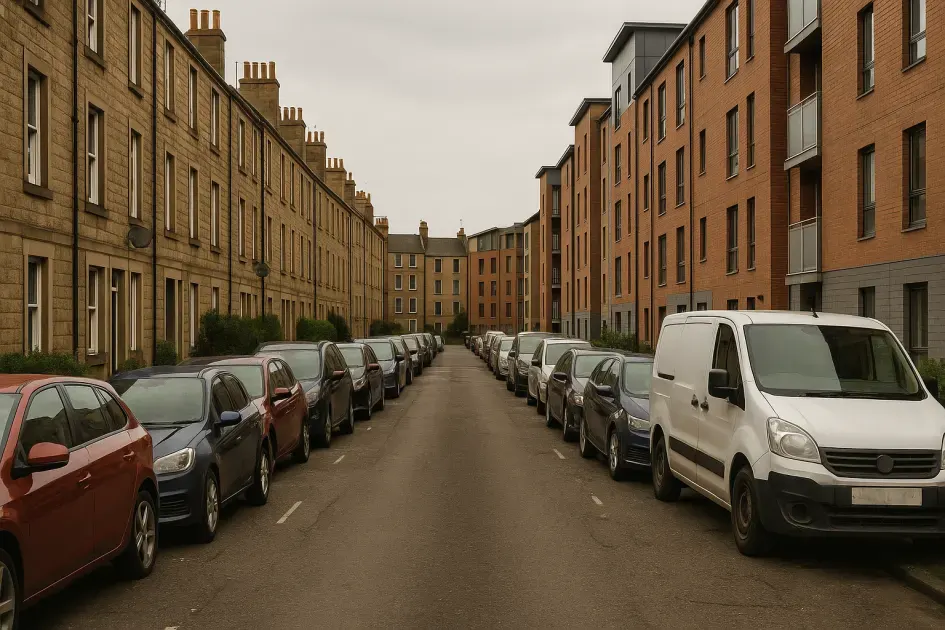
The council’s historic Leith appraisal records warehouse conversions for residential or office use and tenements above ground-floor businesses on Leith Walk. Identify your actual furniture door and room rather than pricing a carry to the building name or shopfront. Record controlled doors, corridors, stairs or a permitted suitable lift, outside stages and the full distance between the lawful working position and the room.
Check the receiving route independently and select sufficient help through both complete carries and all relevant stops. With customer loading and unloading, provide enough suitable people throughout at both ends. A person holding the close key can be an access contact without being a carrying helper. The prepared-item route check helps describe a demanding section.
Keep the chosen services and allowance the same
State what preparation you or the releasing contact will finish and what optional provider work is requested. Packing/unpacking share one selection, allowance and rate; that paired service, item disassembly and item assembly may be agreed at any declared stop, subject to eligible provider availability. Their separate 30-minute blocks of elapsed team time at the booking rate are apart from ordinary loading/unloading, not per person or duplicate travel.
Compare identical addresses, date, full load, prepared dimensions, vehicle, routes, help, stops, selected optional work and booked time. A quote without receiving assembly describes different work from one including it. How pricing works explains the shown additional half-hourly rate beyond the booked allowance and applicable outside parking or journey charges. Ask who arranges and pays any relevant outside cost.
Fit the quoted work into real access periods
Give seller appointments, keyholder availability and any key-handover deadlines, checkout deadlines, building access periods and facility access periods to support before booking. Allow time to get in and check all the goods and their parts. Finish any remaining agreed preparation before carrying the items that need it. Include the full collection carry and loading, the journey and every agreed stop. At each delivery, allow for access, unloading and carrying the goods into their agreed final rooms, and place them there before any selected finishing work. Expected pickup arrival is not completed delivery.
A street arrangement and private-building admission are separate inputs. Keep the usable position and the complete carry it creates with the quote; use the position-and-admission record when an entrance or working place remains unresolved.
Keep a version of the full comparison brief
Hypothetical example: a Leith flat list includes a prepared desk and boxes, then a mattress in another agreed room is added. The resident supplies its dimensions, full carry and continued shared-door access before relying on the earlier arrangement. The recipient checks the same complete load into the final room.
Keep the dated inventory and both route records, with contacts, selected help, preparation responsibilities, optional tasks, stops and booked allowance. Bring that joined brief to Leith man and van; record later changes beside the original facts rather than comparing different jobs as if they were identical.
Common questions
Is there one fixed moving price for this area?
No. Use a personalised quote for the actual full load, addresses, date, routes, vehicle, help, stops, selected services and booked time. An example retains its own assumptions and is not a Leith tariff or a promise that future changes are included.
Where should I check the local rules for Leith?
Check Edinburgh’s current instructions for the precise proposed road position, vehicle and activity, then confirm private admission with the building contact. Ask who arranges and pays any applicable permission or premises cost and keep it distinct from the moving-work quote and shown additional-time rate.
What should I do if the move details change?
Send support the original brief and the revised goods, prepared dimensions, doors, carries, help, services or stops. Ask how that changed work affects suitability, availability and price. Keep the shown rate for time beyond the booked allowance and applicable outside charges as separate questions.
Sources and further detail
Practical guidance for the actual load and property routes. Examples are hypothetical; confirm current council and premises instructions.
Bring your Leith plan together
Use the agreed load, complete routes and connected handovers when arranging your move.
Leith booking options