Identify the proposed road position and current controller process, then confirm the private path and door separately. Record the vehicle, period, contact and unresolved conditions for the actual move.
On this page
Mark the stopping place before choosing a process
Give the full address and identify the exact bay, kerb position or proposed private standing area. Check current signs and restrictions for that place and date. Trace the carry between the stopping place and the door, rather than assuming the closest space can be used for the whole operation.
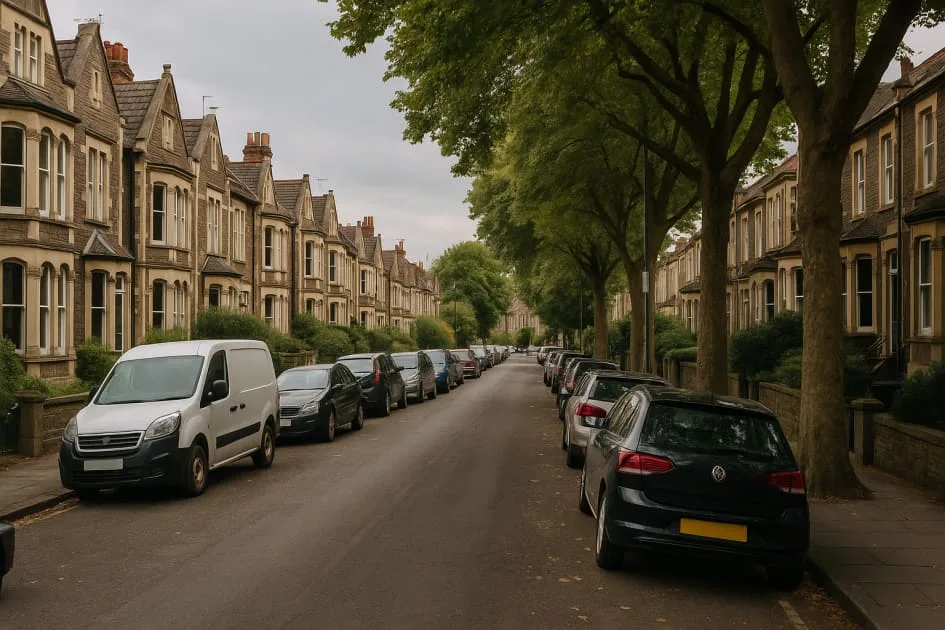
The East Redland section of the September 2011 appraisal describes retained walls and front gardens, including some partly used for parking on Redland Court Road. That historic observation does not establish a usable space or vehicle entry today. Ask the responsible occupier or manager about the actual boundary opening and permitted use.
Distinguish a bay suspension from other road arrangements
Bristol’s suspension guidance covers designated parking bays. Its separate dispensation and coning guidance addresses other temporary arrangements. Choose the applicable enquiry or application from the actual position and purpose; do not transfer another city’s process or assume a domestic move automatically authorises a restriction.
Provide the current process with the vehicle details, position, dates and period it requires. Read how status and conditions are established: these council pages say the council does not contact applicants to say an application is approved, although it may ask for more information. Do not rely on an expected approval email. Check the current requirements before committing to a loading plan.
Obtain the private decisions independently
Ask who controls the path, gate, entrance and any shared hall. Agree which goods door may be used, whether the vehicle may enter private land and who will keep access available. A road arrangement does not grant private entry or permission to alter a wall, door or building. Keep any uncertain clearance or right of use unresolved for assessment.
Follow the route into the property, including a recessed lobby or side entrance where present, the first stair turn and every later stage. Check the receiving property independently. The two-property handling record connects the legal position to the actual furniture carry.
Allow the arrangement to cover the full moving work
Explain the period required for admission, goods and parts checks, remaining agreed preparation before carrying, the complete collection carry and loading. Connect all stops and travel between addresses with receiving admission, unloading, the full final-room carry and selected finishing. Before booking, tell support about council loading periods, keyholder availability and any key-handover deadlines, building access periods and receiving finish deadlines; arrival at the road position is not a completed move.
Choose sufficient selected help or, with customer loading/unloading, enough suitable customer people throughout both full carries and relevant stops. Someone opening a gate is not automatically handling help. If the proposed lawful position changes, send support the new outside carry and any effect on people or preparation.
Keep one access record with both property contacts
Your record should identify the position/controller, applicable current process, vehicle and period, relevant conditions, arranger/payer, private-entry decision and goods-door opener. Hypothetical example: an occupier permits use of a front path but cannot authorise stopping in the adjoining controlled bay. Resolve the two decisions separately.
Share the conditions with the people opening collection and delivery. The connected access schedule keeps the appointments together; Bristol access planning covers the wider journey without replacing address-specific permission.
Common questions
Does a moving booking include parking permission?
No. Confirm who arranges and pays for any required permission and which position, vehicle and period it actually covers. Private entry, the goods door and building conditions need separate agreement; a moving booking does not settle them.
Where should I check the local arrangements?
Use Bristol’s current bay suspension or dispensation and coning instructions for the actual road position. Ask the property contact separately about a gate, standing area and goods entrance. Check the stated process and status rather than waiting for an approval message the council does not promise.
What information should I give the booking team?
Give support the exact lawful position, vehicle and required period, current conditions and unresolved road questions, plus private-entry and entrance instructions. Include the full outside carry, named openers and fixed building or receiving limits before booking.
Sources and further detail
Actual Redland item and access arrangements. September 2011 East Redland character-area descriptions are limited historic context, not present property permission or fit. Examples are hypothetical.
Plan the move from your Redland address
Use the full inventory, actual exit and independent receiving route to choose the vehicle and help.
Plan and price your Redland move