What affects cost planning for moves in Bradford
Moving often costs more than people expect because most billable time is spent at the kerb and inside the property, not on the road. Short journeys can still run long when the van cannot park close, internal routes are tight, or items must be staged before loading. If you are budgeting a move, this is usually what matters most.
Distance affects cost when travel is unpredictable or far enough to add non-productive time. However, for local Bradford moves, the bigger variables are loading distance, stairs and lifts, parking restrictions, and building rules such as timed loading windows or required reservations. Loading time usually outweighs driving time, especially on tighter residential streets or in apartment blocks.
Stairs increase cost because every item has to be carried by hand through more levels, slowing the flow and increasing trips. Parking restrictions raise cost by forcing longer carries or repeated repositioning. Lift bookings can save time when secured; without them, crews may wait or switch to stairs, which stretches the schedule. Scheduling pressure becomes clearer when viewed alongside Bradford demand patterns at different times.
What affects cost planning for moves in Bradford
| Cost driver | What changes the time | Why it affects total cost |
|---|---|---|
| Parking access | Distance from bay to door; permit rules; loading windows | Longer carries and repositioning reduce loading speed, adding labour hours. |
| Building layout | Stairs vs lift; corridor width; door clearances | Restricted routes force slower, staged moves, increasing handling time. |
| Van size / movers | Capacity match; crew coordination | Right-size vans reduce trips; adequate crew keeps continuous loading flow. |
| Route timing | School run, commuter peaks, roadworks | Unpredictable routes limit scheduling flexibility and add non-loading time. |
Typical move price patterns in Bradford
In Bradford, total price usually scales with the duration of labour. Two similar addresses can differ widely in cost because access, parking and layout change how quickly items move between property and van.
| Move type | Typical time range | What affects duration |
|---|---|---|
| Single bulky item or small studio | Very short part of a day | Kerbside parking and ground-floor access keep handling quick. |
| 1–2 room flat, local | Short part to around half a day | Lift availability, corridor width, and carry distance drive the pace. |
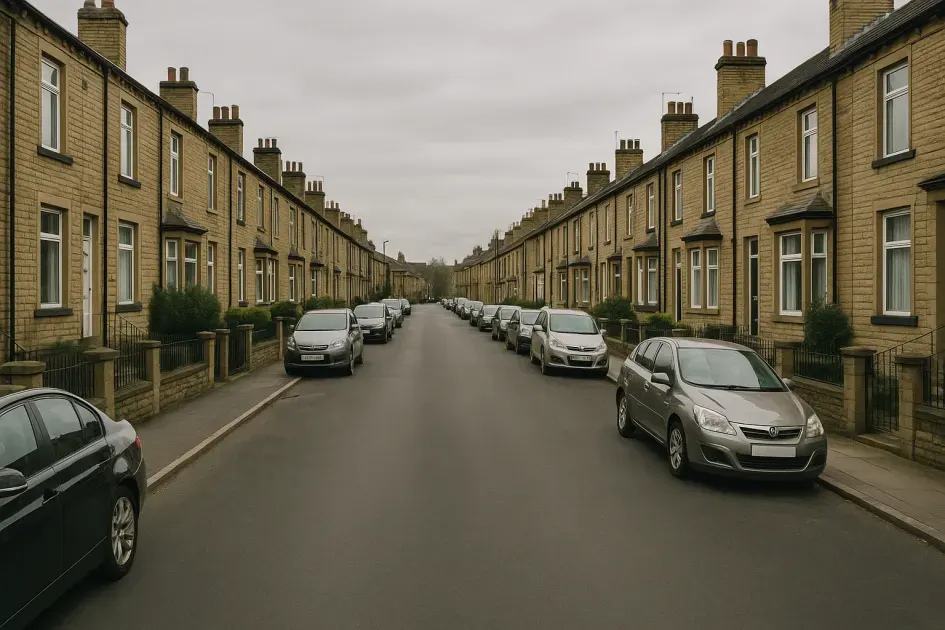
| Terraced home, across town | Half day to most of a day | Narrow streets, permit zones and stairs often slow loading. |
| Larger apartment or small house | Most of a day | Volume requires more trips; any parking delay multiplies time. |
| Full family house or multi-stop move | Full day or more | Multiple rooms, disassembly, and routing between addresses extend labour hours. |
Cost examples by move type
Example 1: Small flat with direct kerbside access
A compact flat with a bay directly outside and a short, level carry lets the crew maintain continuous loading. Minimal handling delays keep the schedule brief, containing labour cost.
Example 2: Small move with permit parking and short carry
The load is similar, but the permit process and slightly longer carry add handling steps. Even modest access friction can increase the total more than the mileage suggests.
Example 3: Two-bedroom terrace with tight internal routes
The volume is moderate, but stairs and narrow doorways require slower manoeuvring and more staging. That extends on-site hours far more than the short drive across town.
Example 4: Larger apartment with lift booking
The inventory is bigger, yet a confirmed lift booking and a reserved bay keep movement steady. Good coordination can save more time than a smaller job with poor access.
Example 5: House move with narrow street, school-run timing and multi-stop
A family-house load on a tight residential street, scheduled near school-run traffic, plus an extra collection stop. Restricted access and peak-time routing create pauses and repositioning, extending labour time and total cost. Part of that broader picture comes from how route planning affects Bradford moves.
How to keep the move efficient
- Permit or restricted parking → Arrange a visitor permit or reserve a loading bay to shorten the carry and prevent re-parking delays.
- Stairs or narrow corridors → Dismantle bulky items and stage them near the exit to reduce slow manoeuvres.
- Lift dependency → Pre-book the lift and confirm allowable loading windows to avoid waiting or switching to stairs.
- Long kerb-to-door distance → Use dollies and clear a straight path to maintain a continuous loading flow.
- Peak traffic routes → Avoid school-run and commuter peaks where possible to protect schedule predictability.
- Unclear inventory or special items → Share accurate item lists and access photos in advance so the right van size and crew are allocated.
Bradford’s neighbourhoods vary: some areas have terraced streets with permit parking, others have apartments with managed lifts, and some suburbs offer wider kerbs for easier loading. Local street access, housing density and building rules directly influence how long your move will take on the day. That pattern is also reflected in how neighbourhood layout changes moving time. A useful local example can be seen in man and van services in Bingley.
We provide man and van services across the wider area, including man and van services in Guiseley, man and van services in Menston, man and van services in Otley, and man and van services in Shipley, with bookings managed through one system coordinating bookings with pre-checked drivers.