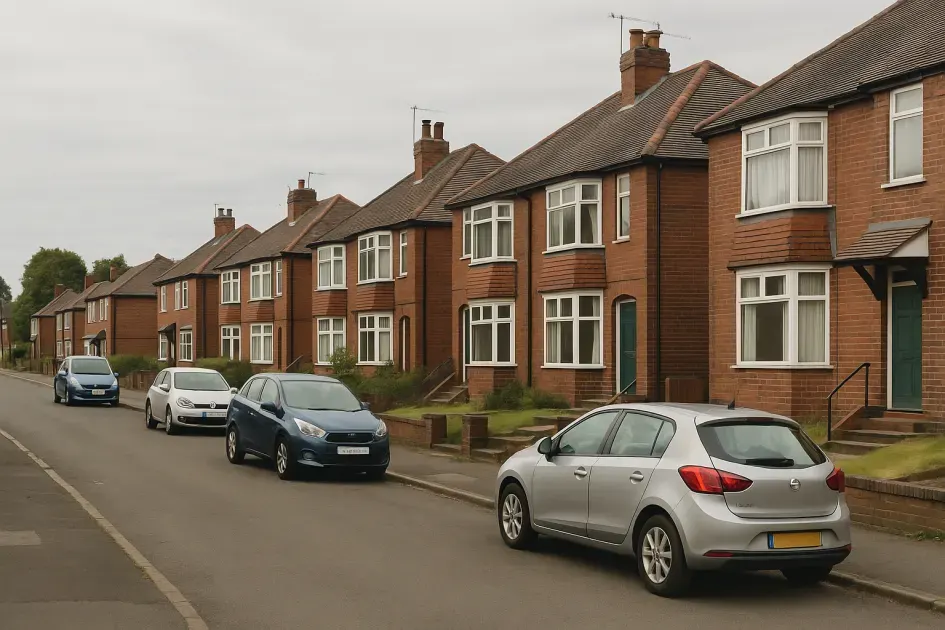
Walkden moving costs are usually decided less by distance and more by how long the job actually takes once loading begins. In Walkden, that often means the real variables are access geometry, stopping practicality and whether the building lets the crew move cleanly from door to van.
Walkden tends to be shaped by 1930s semi-detached streets around central Walkden with short front drives and stepped garden paths, red-brick Victorian terraces near Walkden South and older shopping streets with direct pavement frontage and post-war council houses and low-rise maisonettes on estate roads around Little Hulton edges. For moving costs, that matters because that local housing mix often brings short kerb frontage on older terraced rows often requires loading from a side street or staggered parking position, variable lift access and sloped drives, garden steps, narrow hallways on 1930s semis affect bulky furniture handling, so the price is usually driven more by labour time and job rhythm than by mileage alone.
This part of Bolton creates its own loading rhythm. In Walkden, practical factors like limited on-street stopping and older residential streets often have one-sided kerb space reduced by resident parking on both sides and school-run congestion builds on bolton road, manchester road, roads feeding local schools in early morning, mid-afternoon and weekday commuter pressure shape how the day actually unfolds.
That matters whether you are arranging a studio move, a flat relocation or a larger household shift with vetted and approved drivers available through the platform. Clear planning protects time, and time is what usually protects the budget.
A straightforward job in Walkden can still slow down when building access is sequential rather than parallel. One person may be waiting at an entry point while another handles the van, or the team may need to coordinate around lift use, side-street loading or a longer internal walk from courtyard to entrance. Those are ordinary local realities, not unusual complications.
That is why this page works best as part of a clear planning path. The man and van services in Walkden is the main hub for this area. For one closely related angle, see parking permits for moving in Walkden. For a second supporting issue, review hidden moving costs in Walkden. For broader regional context, see the moving costs in Bolton. When you are ready to connect local planning back to the full service page, return to the Walkden man and van page. For comparison with other cities, see our moving guides.
Use this page as a planning layer, then use the Walkden man and van page when you want to request the actual service. Support pages should clarify planning factors rather than duplicate the booking page. That way lies cannibalisation and other structural issues.
| Move size | Typical range | What usually affects it |
|---|---|---|
| Studio / small 1-bed | £140–£280 | short kerb frontage on older terraced rows often requires loading from a side street or staggered parking position and limited on-street stopping. |
| 1–2 bed flat | £260–£480 | Carry distance, stair cycles, lift access and van positioning. |
| 2–3 bed home | £420–£780 | Furniture volume, loading distance, disassembly needs and timing pressure. |
Common questions about how moving costs change in Walkden.
They often can. Apartment moves in Walkden are usually influenced by short kerb frontage on older terraced rows often requires loading from a side street or staggered parking position and variable lift access, and those factors affect how quickly the team can move between property and van.
Often, yes. Mileage matters, but many local jobs in Walkden are shaped more by loading speed than travel time. Where factors such as short kerb frontage on older terraced rows often requires loading from a side street or staggered parking position and variable lift access slow repeated trips, the total can shift even on a short route.
The final cost usually changes when the real loading route is slower than it looks on paper. In Walkden, that often comes down to short kerb frontage on older terraced rows often requires loading from a side street or staggered parking position and variable lift access and limited on-street stopping and older residential streets often have one-sided kerb space reduced by resident parking on both sides, because both can add repeated minutes across the job.
Yes. If the van cannot hold a practical loading position, the crew loses time to extra walking and slower handling. In Walkden, that is especially relevant where factors such as limited on-street stopping and older residential streets often have one-sided kerb space reduced by resident parking on both sides apply.
Share the access reality early, confirm where the van can stop, and flag anything unusual about the route inside the property. In Walkden, accurate planning is usually the cleanest way to keep the job close to expectation.
In many cases, yes. A quieter weekday slot can reduce waiting and make access more predictable, especially where factors such as school-run congestion builds on bolton road, manchester road, roads feeding local schools in early morning, mid-afternoon and weekday commuter pressure tend to create friction at busier times.