What affects cost planning for moves in Bath
Bath moves become more expensive when loading and unloading take longer than expected. That usually happens when the van cannot stop close enough to the property, when stairs replace lift access, or when the route inside the building involves narrow turns, long corridors or split levels. A compact flat with poor access can easily cost more than a larger house with clear driveway parking. For a wider view of coverage across the city, explore Bath man and van services. Travel timing and access windows are a major part of how route planning affects Bath moves.
The clearest way to think about price is to follow the time. Every extra walk from the van, every wait for a bay, and every awkward furniture turn adds labour minutes. In Bath, older terraces, upper-floor flats and permit streets create those slowdowns more often than the drive itself. If you want financial clarity, start by assessing access honestly. A local example of this is man and van services in Frome.
What affects cost planning for moves in Bath
| Cost driver | What changes the time | Why it affects total cost |
|---|---|---|
| Parking access | Distance from kerb to door, permit zones, single-lane streets | Longer carries and waiting for space extend loading and unloading, increasing billed labour time. |
| Building layout | Stairs without lifts, tight corridors, multi-level homes | Fewer items per trip and more careful handling slow progress, adding hours. |
| Van size / movers | Capacity vs. doorway size, crew strength, number of hands | The right van and crew reduce trips and handling; the wrong setup increases trips and duration. |
| Route timing | School-run congestion, roadworks, event traffic | Delays during transit or access windows shift the schedule and add on-the-clock time. |
Typical move price patterns in Bath
Pricing usually rises in line with duration. A move with close parking, level access and pre-packed items stays efficient, while a similar-volume move on a steep terrace road or in a stair-only apartment can take noticeably longer. The key financial point is simple: the harder the access, the more labour time the move needs.
| Move type | Typical time range | What affects duration |
|---|---|---|
| Room or studio with easy access | Short session | Close parking, ground-floor access and pre-packed items keep handling quick. |
| One-bedroom flat with stairs | Short session to half-day | Stair trips and tight turns add handling minutes per item. |
| Two-bedroom home, mixed access | Half-day to most of a day | Parking distance, internal stairs and furniture volume drive trips and time. |
| Larger home or split addresses | Most of a day to multi-day | Multiple loading points, heavier items and route timing widen the schedule. |
Cost examples by move type
Example 1: Studio move, kerbside parking outside front door
A compact studio with items pre-packed and the van at the doorstep keeps walking distance minimal. Handling remains continuous, so hours stay tight and cost low relative to volume.
Example 2: One-bedroom flat with stair access and permit parking
Even a short drive can extend if the crew must park in a permitted bay down the street and carry up stairs. Smaller loads per trip and longer carries add time, increasing the total.
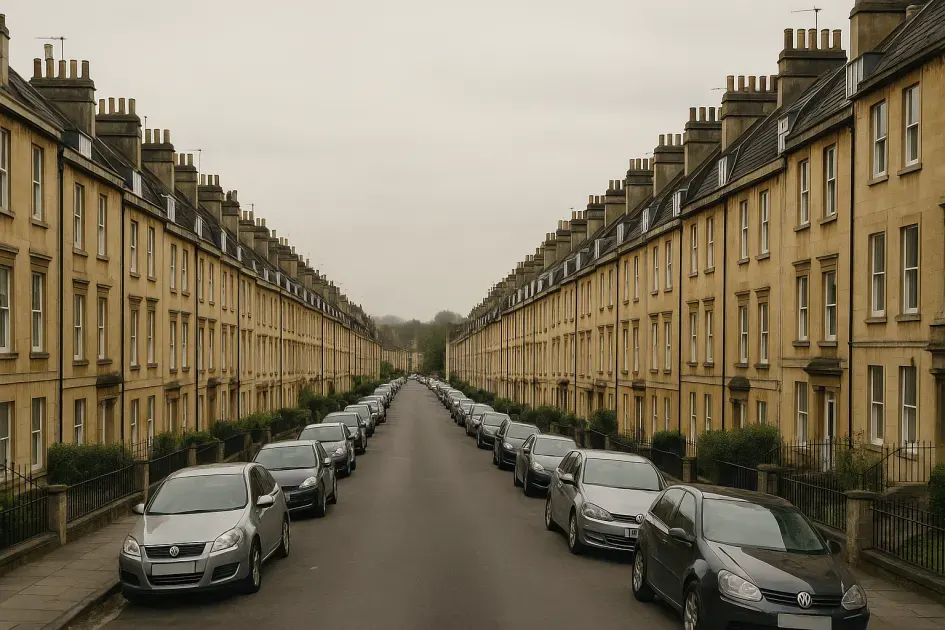
Example 3: Two-bedroom terrace, narrow street and school-run traffic
Narrow terrace roads reduce passing space, so the van may wait or reposition. If loading overlaps school-run traffic, access windows tighten. These delays lengthen the schedule and cost.
Example 4: Three-bedroom house, mixed furniture and moderate carry
Larger volume needs a van with adequate capacity and a crew that can team-lift heavier items. Good parking keeps it efficient; if the carry is moderate, duration sits in a longer but predictable window, shaping a higher yet controlled total.
Example 5: Apartment with lift booking and loading bay window
Managed buildings often require a booked lift and loading bay slot. If the slot is late or crowded, crews may wait or stage items, extending on-site hours. Extra staging and timing constraints raise labour time and cost.
How to keep the move efficient
- Permit or restricted parking → Arrange a visitor permit or a timed loading dispensation so the van parks close to the door.
- Long kerb-to-door carry → Stage packed boxes near the entrance to cut walking distance.
- Stairs or tight corridors → Dismantle bulky furniture and protect corners to reduce slow manoeuvres.
- Managed building with lifts → Pre-book the lift and loading bay and notify reception of arrival times.
- Peak traffic on approach → Avoid school-run and commuter peaks to keep transit and access predictable.
- Unclear inventory → Share a concise, itemised list and photos so the right van size and crew are assigned.
Bath’s neighbourhoods vary widely: one move may involve a driveway and broad hallway, the next a terrace with timed parking and a steep internal staircase. This helps you avoid paying for preventable delays on the day.
We provide man and van services across the wider area, including man and van services in Warminster and man and van services in Westbury, with bookings managed through a single booking system with vetted local drivers.