
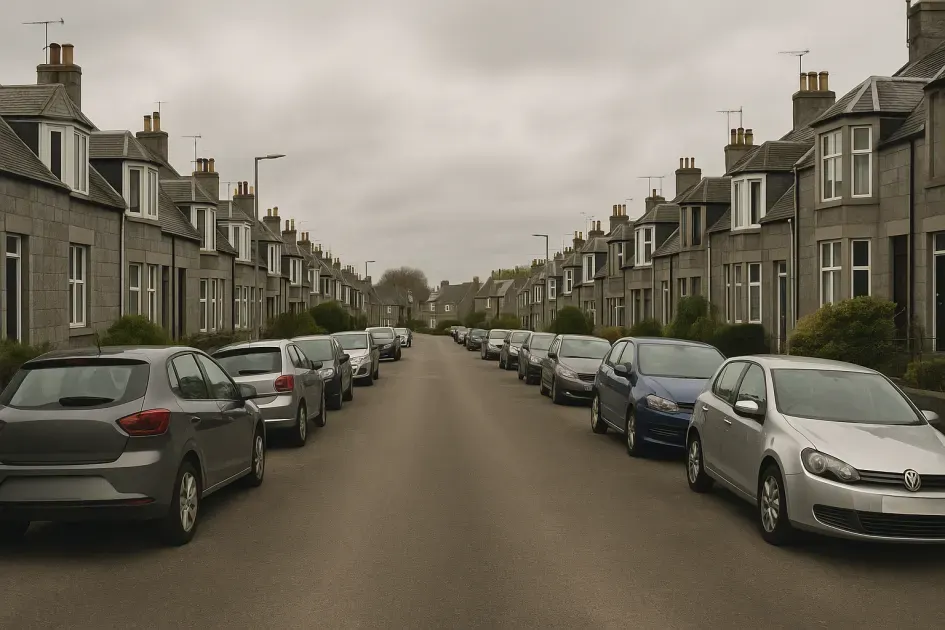
What matters operationally
Good route planning is not only about choosing the shortest drive. It is about making sure the van reaches the property when the building will allow access and when a practical loading position is still available. Traffic delays, restricted turns, narrow approaches and contested kerb space all make the final stage of the move harder. If a van arrives late or has to stop further away than expected, every subsequent carrying trip takes longer. In many Aberdeen moves, loading time usually outweighs driving time. Those constraints feed directly into how moving costs are shaped by access and time. The timing side of that shows up in when Aberdeen moves tend to take longer.
How to plan around restrictions
Start by checking both the road approach and the final legal stopping point. Confirm whether the destination has timed bays, resident controls, bus-priority access, pedestrianised sections or building-specific unloading rules. Then match the likely arrival time to the loading window, leaving enough buffer for small delays on the road. If a building has concierge, fob or lift procedures, factor those into the schedule rather than treating them as separate issues. Clean-air and access rules in Aberdeen are not active today, but city-centre loading limits, bus gates and site-level procedures still shape the practical route. Similar route constraints also appear in man and van services in Torry. That is especially visible in man and van services in Dyce.
Eight route-planning variables in Aberdeen
Traffic timing patterns
Commuter peaks, school-run traffic and occasional event flows can all affect arrival reliability. A route that looks short on paper can still create problems if it reaches the address after the best loading window has gone.
Central access constraints
Pedestrianised areas, bus-priority gates, restricted turns and controlled access streets limit how directly a van can approach some properties. Pre-checking these details avoids last-minute detours and awkward final positioning.
Kerbside loading conditions
Timed bays, short maximum stays and no-stopping frontage determine how close the van can get to the entrance. The further away the van sits, the more every item costs in time and effort.
Building access limitations
Concierge sign-in, goods-lift bookings, shared entrances and fixed dock slots can all create non-negotiable timing points. If the van misses the access window, the crew may be ready to work but unable to unload.
Route predictability and delays
Roadworks, lane closures and bridge or junction bottlenecks can reduce confidence in the ETA. A route plan works best when it includes a sensible backup, not just the default sat-nav suggestion.
Vehicle suitability and access
Street width, turning space and car-park height limits can make the wrong van a liability. A vehicle that technically holds the load but cannot reach the right stopping point may slow the move more than a smaller, better-positioned van.
Parking and permit constraints
Resident bays, pay-and-display streets and temporary suspensions all affect where and how long the van can wait. This helps you avoid delays on the day because permits and bay planning are often overlooked until the move is already under way.
How clean-air or charge-zone rules affect moves in Aberdeen
No active clean-air or charge zone currently applies in Aberdeen. Even so, city-centre access is still shaped by bus-priority streets, loading controls, height limits and building procedures. The practical issue is not a charge but whether the van can reach the right place at the right time without needing to reposition.
Practical route-planning examples
Example 1: City-centre flat with a timed loading bay. The van is routed to arrive outside the heaviest commuter period and reaches a pre-checked bay next to the entrance, keeping the lift booking intact.
Example 2: Office move on a pedestrianised block. The driver approaches via the approved service street, coordinates with reception and starts unloading as soon as access opens, avoiding a stalled arrival.
Example 3: Dyce to Torry home move crossing the river. The main route avoids the busiest school-run period, and a fallback is ready in case bridge traffic builds, protecting the unloading slot at the other end.
Example 4: Old Aberdeen terrace with resident-permit parking. A visitor permit is arranged in advance, and a van size is chosen that can fit the available frontage without forcing a longer carry from the next street.
Example 5: Multi-storey apartment with no goods lift. The team avoids the tightest traffic period, secures the nearest legal stop and stages trolleys and protection mats early to keep each handling cycle efficient.
Practical route-planning checklist
- \n
- Timed loading bays → Confirm the hours and maximum stay, then line up arrival and lift access with that window. \n
- Bus gates and restricted turns → Set the route deliberately so the driver is not relying on a last-minute detour. \n
- Resident or controlled parking → Secure permits or a suspension where needed and keep the evidence ready to display. \n
- Long kerb-to-door carry → Aim for the closest legal stopping point and stage equipment at the entrance. \n
- Event or works unpredictability → Build in a small buffer and keep a tested backup route that still protects your access window. \n
Apply neighbourhood context
Street layout and parking rules vary across Aberdeen, so the right route plan depends on the area as much as the distance. Check local constraints early to set a realistic arrival and loading strategy.
What to do next
Route planning works best when access rules and timing restrictions are known in advance.
- Check for local access rules, loading windows and controlled streets.
- Share route-sensitive stops, permits or restricted access before booking.
- Use the linked area pages below to check how local conditions vary.
- Use the main city page to get a quote based on the actual move route and access setup.