
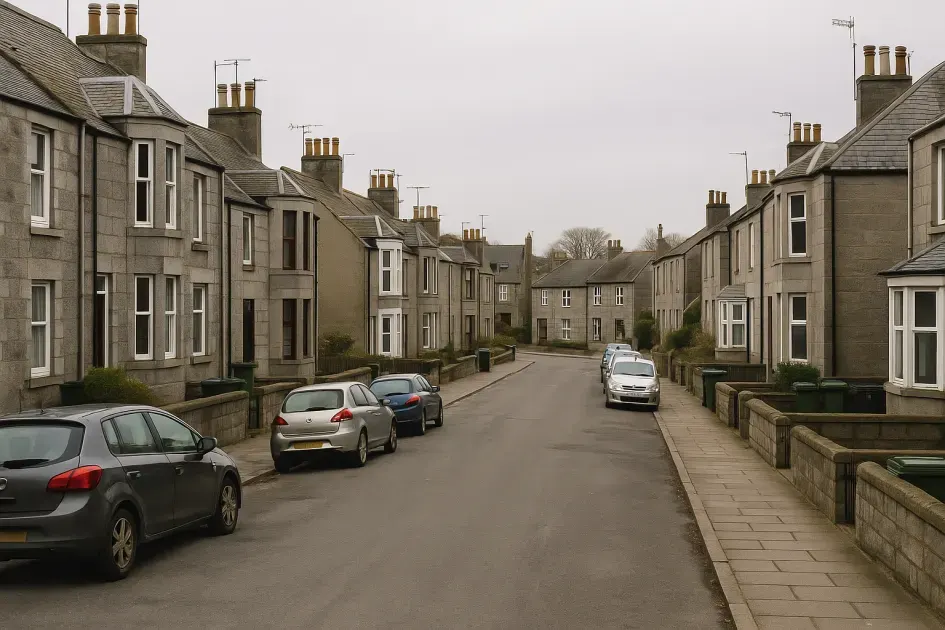
How moving conditions vary across Aberdeen
Aberdeen includes granite tenements, Victorian terraces, suburban semis, modern apartment blocks and business-edge developments. In central districts and older streets, crews often deal with permit bays, tighter frontage and longer carries from the nearest legal space. On the suburban edge, driveways and wider kerbs can make loading more direct, although cul-de-sacs, parked cars and turning limits still matter. Most delays come from access constraints rather than distance. Two homes can be only minutes apart, yet the move length changes sharply depending on where the van can stop, whether items travel by stairwell or lift, and how many handling trips the layout creates.
Neighbourhood access patterns
Busier central streets and university-adjacent areas usually offer less flexibility at the kerb. Limited bays, bus routes, pinch points and timed restrictions can leave only a short loading window at the entrance. A larger van may need to stop further away if turning space is limited or the frontage is already full. In more suburban parts of Aberdeen, nose-to-door loading is often easier, but detached houses, terraces set back behind short paths, and estate roads with parked cars still affect flow. Industrial and mixed-use areas can be straightforward to reach while relying on designated bays or site-specific access rules. Each setting changes carry distance, trolley use and idle time. The route-planning side sits in Aberdeen route and loading access planning. A denser inner-area example is man and van services in Torry. A more suburban pattern appears in man and van services in Bucksburn.
Property and loading differences
Property type often decides the pace of a move more than postcode alone. Older flats and tenements may involve several flights of stairs, tight turns on landings and narrow communal doors that slow larger pieces. Newer apartment blocks can be easier if there is a service lift and a reserved bay, but fob entry, lift bookings and protection requirements add fixed setup steps. Terraces may have short front paths, basement access or limited hallway width. Semis and bungalows often allow faster loading from a driveway, though long internal routes from back rooms, lofts or garden stores still add time. Loading time usually outweighs driving time, especially when a move includes stairs, shared entrances or awkward furniture routes.
How to choose the right planning approach
Start by assessing the approach to the property, not just the journey across town. Check where the van can legally and practically stop, whether there are steps, lifts or narrow communal doors, and how far items need to travel from the entrance to the vehicle. A smaller van can sometimes be the better choice if it fits closer to the door on a busy street, while a larger van only helps when the road layout allows it to position efficiently. If you’re planning a move, this is what usually matters most: secure any permits early, anchor the day around lift or bay bookings, and build in a buffer where access is shared or restricted. The pricing impact is clearer in how these conditions affect moving costs.
City-wide baseline: time drives outcomes
Across Aberdeen’s mix of flats, terraces, semis and apartment developments, the same four factors usually shape moving time: parking availability at the door, the amount of local kerb pressure, the building access route inside the property, and the predictability of the final approach. When those factors line up, crews can keep a steady loading rhythm with fewer pauses and repositions. When they do not, the schedule stretches quickly. Distant parking, crowded streets, shared lifts and unpredictable arrival windows all slow the job down even when the addresses are close together. Those neighbourhood differences sit inside the wider picture of Aberdeen man and van services.
Eight variables that change moving time locally
1) How permit parking delays loading
Permit zones can force the van away from the entrance when a visitor permit or waiver has not been arranged. That extends the kerb-to-door carry and usually increases trolley trips. Crews may also have to keep an eye on short-stay conditions, which breaks the rhythm of loading. Sorting permits in advance often does more for timing than shaving a few minutes off the driving route.
2) Why terrace streets limit van positioning
Terrace streets frequently combine narrow carriageways with cars parked on both sides. A long-wheelbase van may not be able to hold the best spot without blocking the road, so loading starts from further away or from an imperfect angle. That means longer carries, more careful manoeuvring and occasional repositions if another vehicle moves in or out.
3) How building layout alters carrying distance
Stairs without lifts, long hallways, shared lobbies and awkward internal turns all extend the route every item has to travel. Bulkier pieces may need to be tilted, unwrapped or partly dismantled on the way through. Even a modest one-bed flat can take longer than expected when the access route forces single-file movement and repeated pauses.
4) Why managed buildings introduce lift booking delays
Apartment blocks and managed developments often rely on fixed procedures. Concierge sign-in, reserved lifts, floor protection and designated loading bays can all work well, but only if the booking window is met. When another resident overruns or access starts late, trolleys back up and unloading loses momentum. This helps you avoid delays on the day because it highlights where the schedule is least flexible.
5) How street width affects van access
Narrow streets, tight junctions and traffic-calming measures can stop a larger van from turning neatly or reversing close to the frontage. In some cases, a crew will work faster with a slightly smaller vehicle that can position properly than with a larger one left at the end of the street. Street fit matters as much as load size.
6) Why route predictability changes travel time
School-run traffic, roadworks, diversions and busy arterial approaches all affect arrival reliability. If the van reaches the address late, lift slots and bay reservations become harder to hit. Good planning means checking not only the route itself but also when the approach roads are most likely to jam up.
7) How loading bay rules affect unloading speed
Newer blocks and mixed-use sites can provide efficient loading bays, but they often come with time limits, height restrictions or shared use. If the bay is occupied or the building only allows short stays, crews may need to unload in stages. Pre-checking bay dimensions, access instructions and site contacts can prevent avoidable waiting.
8) Why neighbourhood traffic patterns delay moves
Short spikes in local traffic can have an outsized effect on a move. School pickups, commuter surges and busy junctions near residential streets can make it harder to secure the right position at the right time. Once the best spot goes, the carry usually gets longer and the schedule becomes less efficient.
Practical planning checklist
- If permit parking restricts kerb access, arrange a visitor or trade permit in advance and keep it ready for the windscreen.
- If stairs or narrow landings make movement slower, dismantle bulky items the day before and stage them near the exit.
- If street width is tight, consider a shorter van or plan a shuttle from a wider legal stopping point.
- If school-run traffic affects the route, aim for an arrival outside the busiest window so the crew has a better chance of parking close.
- If the carry distance is likely to be long, pre-position dollies, straps and protection so each trip runs more smoothly.
Scenario examples
Example 1: Studio move from a suburban semi with a driveway to a ground-floor flat with visitor parking. Small van, two movers. Direct loading at both ends keeps the carry short and the handling pace steady, so the move stays efficient despite crossing town.
Example 2: One-bedroom flat to a terrace on a narrow permit street. Medium van, two movers. No permit is ready on arrival, so the van has to stop further down the road. The longer carry and a couple of repositions add noticeable time.
Example 3: Two-bedroom apartment to a terrace. Medium van, three movers. A booked goods lift helps at the start, but shared access, fob entry and a slightly awkward unloading point at the terrace create intermittent pauses throughout the job.
Example 4: Three-bedroom semi to a city-centre apartment. Long wheelbase van, three movers. The building has a fixed bay slot and the approach becomes slower during the school run. Missing the first unloading window means staged access and a longer finish time.
Example 5: Top-floor tenement to a narrow terrace within a permit zone. Luton van, four movers. Stairs, tight turns, limited parking and a long carry all compound the handling time, so the job takes materially longer than the mileage suggests.
Apply neighbourhood context
Different parts of Aberdeen bring different moving conditions. Some streets are defined by tight parking and older flats, while others offer driveways, apartment loading bays or easier suburban access. The area guides below explain how those local differences can affect planning, timing and the flow of a move.
What to do next
Use this guide to check how different Aberdeen areas affect loading time, access and parking.
- Check whether your street has permit parking or narrow frontage access.
- Check your property layout with the linked area pages below.
- Flag stairs, tight corridors or long carries before booking.
- Use the main city page to get a quote based on the real move conditions.