
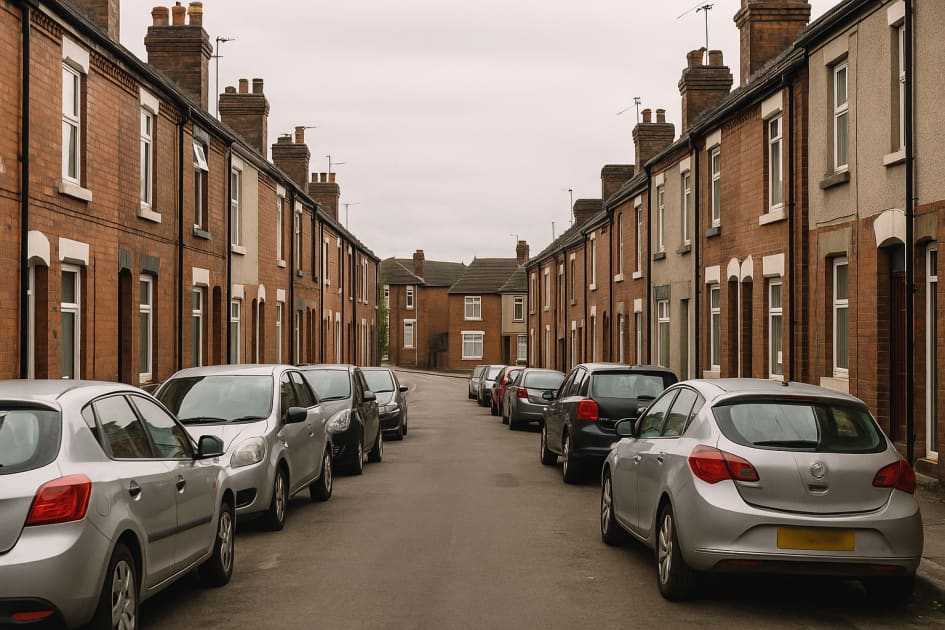
Why moves in Hanley often attract unexpected charges

Hanley’s mix of town-centre blocks, older terraces and newer developments creates practical challenges for large removal jobs. The costs that feel “hidden” are usually the direct result of physical constraints and local controls: where a removal vehicle can stop, how far crews must carry, and how long the operation actually takes. Below we describe the most frequent causes of extra time and cost, with Hanley-specific reasoning.

1. Waiting time charges: where delays come from in Hanley

Crews are paid for active packing and carrying; when they wait they will charge. In Hanley common causes are:

Use removals in Hanley first for the core service page. For broader parent-area context behind price variation, see moving costs in Stoke on Trent.

  • Locked communal entrances and concierge hours in central apartment blocks where fob access or management-staff handovers are required — the lift or door delays add unpredictable pauses.
  • Local authority procedures for suspending parking bays: technicians or enforcement officers sometimes need to confirm suspensions before a large vehicle can legally park.
  • Market days and town-centre events that close streets around the shopping precinct, forcing crews to stop until access is cleared.

Operational implication: every 15–30 minutes of waiting in Hanley can add a fixed waiting charge or increase the crew’s billed hours. That turns a half-day job into a full-day cost quickly if access isn’t confirmed beforehand.

In practice, this usually connects with To spot where extra costs usually appear before booking, look at moving costs in Hanley and property access challenges in Hanley as well..

2. Parking fines and permit requirements specific to Hanley

Hanley has short-stay bays, loading bays and council-controlled car parks concentrated around the town centre. Key points:

  • Parking a large removal vehicle in a resident-only bay or restricted loading bay can result in Penalty Charge Notices (PCNs) or clamping — those fines are enforceable and add to costs.
  • Securing a temporary bay suspension through Stoke-on-Trent City Council removes enforcement risk but is an additional cost and can require advance notice; last-minute moves sometimes cannot get a suspension in time.
  • If the move uses a private car park (for example a multi-storey) daily parking tariffs and height/weight restrictions may apply, adding to operational expense.

Operational implication: budgeting for bay suspensions or legal parking alternatives is essential in Hanley. Failure to arrange legal stopping points usually results in longer carries or fines, both of which raise the final bill.

3. Long carry distances from legal stopping points

Because Hanley has pedestrianised sections and busy shopping streets, removal vehicles often have to park in the nearest legal spot rather than outside the property. Typical scenarios include:

  • Parking in a municipal car park and carrying goods across the precinct to flats above shops.
  • Using a loading bay at the edge of the town centre and transferring items to the property along one-way streets.

Operational implication: longer carries increase labour time and risk of damage. Crews may charge per man-hour and apply handling surcharges for repeated trips. In Hanley, a 5–20 minute extra carry per load multiplies quickly on a full house move.

4. Extra labour because of stairs, small lifts and constrained access

Hanley’s housing stock includes terraced houses with narrow staircases, converted flats above shops and new builds with small service lifts. Specific impacts:

  • Victorian terraces: tight turns and narrow landings require additional crew to manoeuvre large items safely.
  • Flats above shops or conversions: lifts may be too small for sofas and beds, forcing stair carries or specialist handling.
  • New-build complexes: concierge rules and timed delivery bays can force off-peak or coordinated lifts, which add time to the schedule.

Operational implication: removal firms in Hanley will itemise extra labour charges for stair-heavy moves or require specialist teams — that increases the hourly labour portion of the job and the total cost if the move takes longer than quoted.

5. Delays from traffic patterns, one-way systems and local events

Hanley sits inside a compact town-centre network with one-way streets and frequent pedestrian flows. Real-world delay factors include:

  • Rush-hour congestion and school-run peaks making approach times unpredictable on the A500/A50 corridors into the town.
  • Event days and markets that block streets or change vehicle access across the town centre.
  • One-way systems or weight-restricted streets that force removal vehicles to take detours, adding driving time between jobs.

Operational implication: departure and arrival windows in Hanley should factor in local peak times and events. If a crew is held up en route they may charge for extra travel time, or you may need to rebook parts of the move at additional cost.

6. Rebooking, overruns and the knock-on costs

When a Hanley move overruns the booked time one of several consequences typically follows:

  • Extra hourly charges for the crew until the job is finished.
  • If the crew must finish another customer’s job that day, items may be moved to temporary storage — storage and double handling are additional costs.
  • When bay suspensions or parking permits were purchased per day, an overrun may require extending the suspension—incurring extra council fees.

Operational implication: small delays in Hanley (a locked communal door or a 20-minute traffic hold-up) can cascade into significant additional charges because of how compact and regulated the town centre is.

Practical details that affect time and money in Hanley

  • Hoist or specialist equipment hire: some Hanley properties require external lifts for bulky items because stair carries are impractical — this is an extra-day hire and operator cost.
  • Extra movers: narrow accesses and long carries commonly need additional crew, charged by the hour per person.
  • Off-peak and weekend constraints: some delivery bays and lifts are only available outside peak retail hours in the town centre; arranging these windows can add to scheduling complexity and cost.

For practical guidance on pricing assumptions and how access drives cost, see the local moving-cost overview at moving costs in Stoke on Trent and the Hanley parent page at removals in Hanley. If you want detail focussed on Hanley-specific price factors (permit timing, typical carry distances and likely extra labour), see moving costs in Hanley.

Bottom line

Hidden costs in Hanley are almost always traceable to access and local controls: where a vehicle can legally stop, how far crews must carry, the stair and lift situation and the town-centre traffic pattern. Planning parking suspensions, confirming access windows, and allowing time for longer carries are the practical ways to reduce unexpected charges — and they must be planned with Hanley’s specific constraints in mind.