
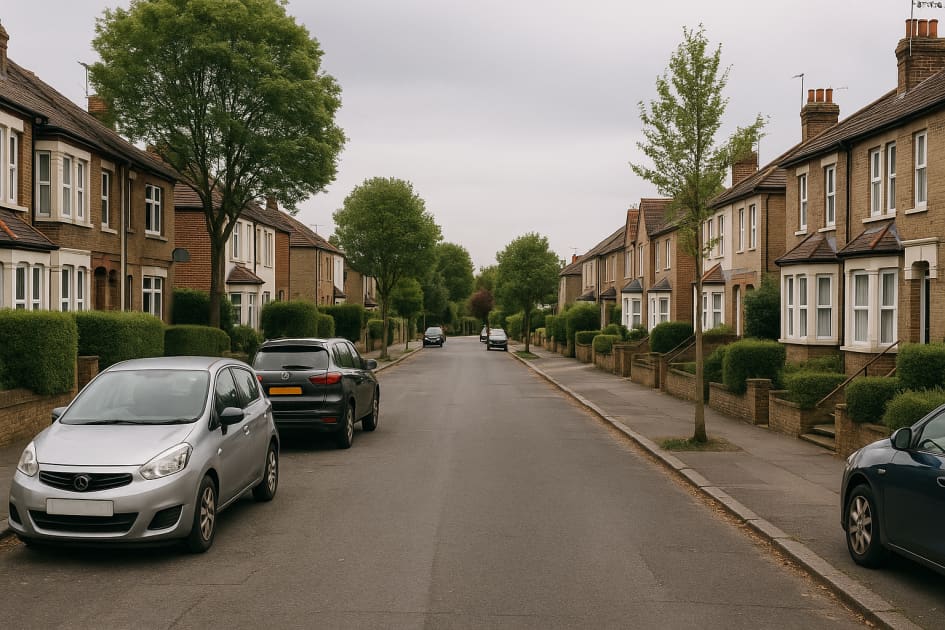
Access and property constraints in Reading
Reading’s mix of terraces, flats, and modern developments often creates tight frontage access, controlled parking, and managed loading. The key friction points are vehicle fit on the street, legal stopping space, carry distance from bay to door, stair counts, and any building rules such as lift bookings or concierge oversight.
Street access and loading realities
Narrow terraces and cul-de-sacs can restrict large vehicles or turning space. One-way systems, school streets, and time-limited loading windows may affect route choice and start times. Where direct kerbside access isn’t possible, plan a safe staging point and a shuttle arrangement for last metres to the door.
- Narrow streets: confirm turning circles and consider smaller vehicles for final approach.
- Permit or timed zones: align arrival with legal loading windows to avoid forced re-parking.
- Carry distance: measure from legal bay to the door; long walks slow handling and require trolleys.
- Tight frontage: bay windows, railings, or steps can reduce lifting angles for bulky items.
Building and property friction
Flats and managed blocks often require lift bookings and compliance with house rules. Some sites demand protective floor coverings, limited crew sizes in lobbies, or evidence of scheduled move slots. In walk-ups, stairs add time and require careful pacing and pre-staging.
- Flats: confirm lift dimensions, availability, and exclusive-use slots; reserve a holding area for goods.
- Concierge rules: check permitted hours, protective materials, and any delivery bay protocols.
- Stairs: note flight count and turns; dismantle large items in advance to reduce snagging.
- Corridors and doors: measure tight points; remove doors temporarily if needed for clearance.
Parking, permits, and managed access
Many Reading streets are permit-controlled. Options include visitor permits, timed loading, or a formal bay suspension for the move window. Private estates may have management companies that issue temporary permissions. Multi-storey car parks usually have height restrictions that exclude larger vehicles, so ground-level access is preferred.
- Confirm restriction signs on both origin and destination streets.
- If a bay suspension is needed, apply in advance and display notices as required.
- For shared forecourts, alert neighbours or management to reserve a loading line.
- Provide any gate codes or fob access to avoid waiting time at entry points.
Check the collection entrance and delivery entrance separately
For a Reading apartment move, ask whether the loading entrance is different from the entrance residents use. If a lift or delivery slot is involved, establish its duration and what happens if keys are delayed. A furniture collection from a house may be straightforward while the receiving flat needs a longer internal carry.
Send a useful Reading quote request
For your household removal, give the full inventory, both postcodes, floors, lift arrangements and the carrying distance from the vehicle. Identify any fixed key or building-access time. Compare quotes using the same load and level of help rather than the journey distance alone.
- Confirm who will be present to provide access at each address.
- Separate items that stay behind and label packed boxes by destination room.
- Agree any dismantling or special handling before the move.
- Tell the team promptly if the load or access changes.
Use the Reading removals page to check the service and prepare your booking details.