
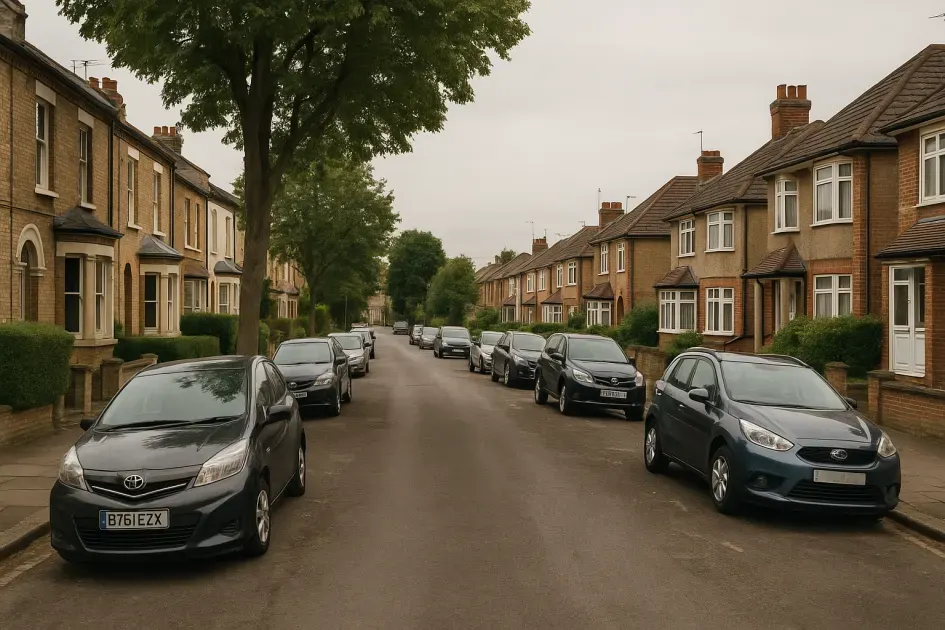
Access and property constraints in Oxford
Narrow residential streets, resident-only bays, and controlled loading windows make the exact stopping point critical. Terraced homes often have tight frontage access, while flats may require lift bookings and adherence to concierge rules. Stairs and longer carry distances add time; hall turns and door widths can limit what fits without partial dismantling.
Street access and loading realities
Expect one-way systems, school-time congestion, and signed loading limits in central areas. If a large vehicle cannot stop at your door, plan a safe loading spot within a practical carry distance. Where pavements are narrow or front walls restrict movement, pre-measure bulky items and identify the most practical angle of approach.
Building and property friction
Key friction points include stairs without landing space, low stairhead heights, and lifts with limited internal depth. Apartments may require weekday daytime moves and protective floor coverings. For terraces, consider how bins, bikes, and planters affect passage width. List any items needing dismantling, and check access heights for tall wardrobes or fridges.
Parking, permits, and managed access
Oxford streets frequently use resident permits and controlled bays. If curbside space is essential, secure visitor permits or request a bay suspension/dispensation through the council. For managed blocks, confirm loading-bay rules, maximum vehicle height, and booking slots. Align key collection with the earliest legal loading time to prevent idle waiting.
Confirm the receiving address before an Oxford collection
For an Oxford move, check the arrival entrance with whoever will receive the belongings. If accommodation management controls access, confirm the appointment and the person who can let the team in. A confirmed collection time does not resolve a destination with a later access window.
Send a useful Oxford quote request
For your household removal, give the full inventory, both postcodes, floors, lift arrangements and the carrying distance from the vehicle. Identify any fixed key or building-access time. Compare quotes using the same load and level of help rather than the journey distance alone.
- Confirm who will be present to provide access at each address.
- Separate items that stay behind and label packed boxes by destination room.
- Agree any dismantling or special handling before the move.
- Tell the team promptly if the load or access changes.
Use the Oxford removals page to check the service and prepare your booking details.