
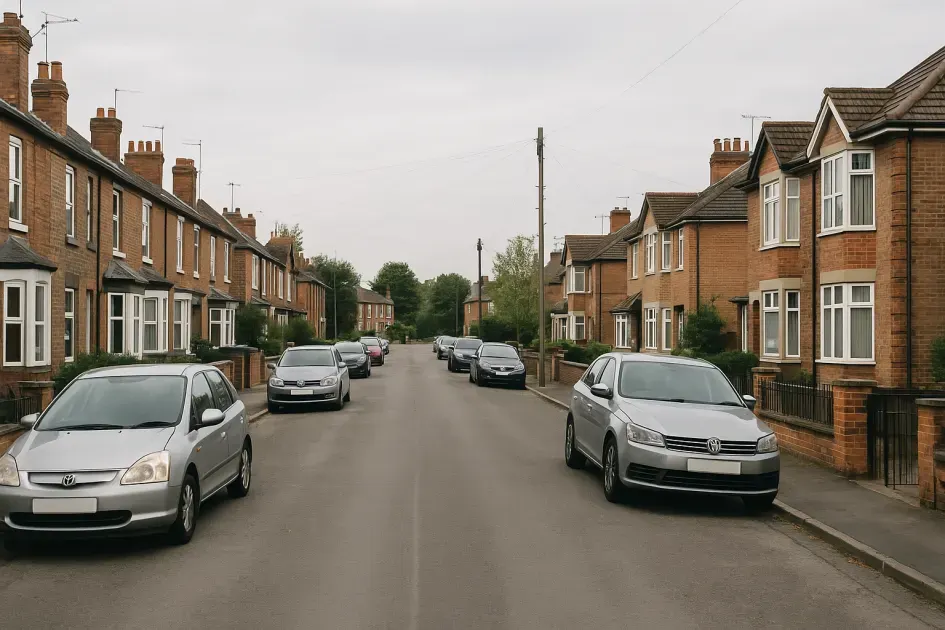
When planning a full house, flat or office move in South Nottingham, the headline price is only the start. Real cost is shaped by specific, physical factors found across the southern parts of Nottingham — from The Meadows and Wilford to Clifton and parts of Beeston — and those factors affect time, vehicle choice and crew allocation.
South Nottingham contains a mix of property types that each change the operational plan. Victorian terraced houses and converted flats close to the city have narrow internal staircases, winding corridors and rooms that don’t line up for straight carries; that demands more time per item and often a larger crew. Semi‑detached family homes and many post‑war houses have more straightforward access but frequently store large, heavy items in lofts or basements requiring extra handling. New builds and modern apartment complexes, increasingly common in parts of Clifton and riverside developments, tend to have service lifts and level entrances, which reduce carrying time and therefore labour charges. In short: terraced/conversion = higher handling time; new build = lower handling time, all else equal.
For the core service page, use South Nottingham removals service first. If you want broader context on pricing patterns across the parent area, see moving costs in Nottingham.
In practice, this usually connects with To see where budget drift usually comes from, pair this page with hidden moving costs in South Nottingham and property access challenges in South Nottingham..
Kerbside and street access are a major driver. Inner‑southern streets close to the city centre commonly include resident permit bays and short-term restrictions; loading in these streets often requires booking a temporary suspension from Nottingham City Council or negotiating meter use. Wilford and some riverside lanes have narrow carriageways and fewer legal parking places, which means removal vehicles cannot park directly outside — every extra metre between vehicle and front door becomes extra minutes and physical effort. Cul‑de‑sacs and housing estates in Clifton restrict turning circles for large vehicles, leading to transfers between a larger lorry and a smaller truck on site. Those transfers translate directly to more labour hours and higher cost.
Large 18‑tonne removal trucks are ideal for one‑trip moves but are not always practical in South Nottingham's older streets and some modern estates. Where a big lorry cannot access a street, operators must use one or more smaller vehicles (for example a local 7.5‑tonne or a 3.5‑tonne removal van equivalent used by full‑service teams). That increases the number of loading/unloading runs and the total crew hours. Conversely, when off‑street parking or wide roads are available (typical for many new developments in Clifton), a single larger vehicle can usually reduce journey time and total labour — lowering the job cost. Vehicle choice also affects insurance and permit needs, which can add time and expense on busy streets.
Crew size in South Nottingham is determined by access and the property’s layout. A two‑person crew may be adequate for a small two‑bed flat in a modern block with a lift, but the same property in a Victorian terrace with split levels requires three or four people to move safely and efficiently. Large items such as beds, chests of drawers or office equipment in properties without level access increase the need for extra hands; multiple trips because a truck can’t park nearby can also justify an additional person to speed loading. More crew reduces time on site but raises the hourly labour component of the price — a direct trade‑off that must be planned for when estimating costs.
Every minute spent carrying items across rough surfacing, up multiple stair flights, or waiting for a temporary parking bay is billed as work time. For example, a house where the nearest legal parking is 50 metres away will add repeated carry runs; over the course of a full house move those extra carries can add one to several hours. Loading time is also affected by local restrictions: enforced single yellow hours, resident permit zones and school drop‑off times can require pauses in loading or rescheduling, which increases measured labour hours and overall cost. For detailed examples of these extra charges, see important local considerations at /removals/nottingham/south-nottingham/hidden-costs.
Timing matters in South Nottingham. Saturdays and end‑of‑month dates are the busiest across Nottingham with limited crew availability; operators charge a premium for peak dates. Early morning moves can collide with school runs and rush hours on arterial roads leading into and out of the southern suburbs, increasing transit times and risk of delays. Evening moves may be subject to different parking enforcement and lighting considerations. University term starts and student turnover in the wider city elevate demand during late August and September — this can push up weekend rates and cause short notice scheduling premiums. Planning outside these peak windows reduces the chance of surcharges and often shortens the time crews spend waiting, loading and travelling.
Compared with northern or more suburban parts of the city, South Nottingham mixes dense, older terraces near the centre with newer estates and riverside developments. That mix produces more access variability on every job: where northern suburbs may offer consistently wide streets and off‑street parking, a South Nottingham move often includes at least one location with parking limits, longer carries or stairs. Those specific local frictions — frequent need for smaller vehicles, temporary parking solutions, and extra crew for stair carries — are why quotes for the same house size can differ significantly between areas of Nottingham. For a broader view of citywide cost drivers see /removals/nottingham/moving-costs, and for local hidden extras consult /removals/nottingham/south-nottingham/hidden-costs.
When you plan a move in South Nottingham, map the access at both addresses: parking availability, presence of lifts, number of stair flights and any tight turning points. If the property is a terraced conversion or an upper floor flat without a lift expect longer handling times and the likely need for a larger crew. If a large vehicle can park at both ends and a lift is available, the move should be faster and cheaper. Book outside peak Saturdays or end‑of‑month dates where possible to avoid premium rates and potential waiting time due to traffic around schools and busy shopping streets.
| Move size | Typical range | What usually affects it |
|---|---|---|
| Studio / small 1-bed | £140–£280 | permit-controlled terrace streets with short kerb access and little standing room outside the property and limited on-street stopping. |
| 1–2 bed flat | £260–£480 | Carry distance, stair cycles, lift access and van positioning. |
| 2–3 bed home | £420–£780 | Furniture volume, loading distance, disassembly needs and timing pressure. |
Answers to common local questions about what really changes the price of a removal in South Nottingham, including property and access issues unique to the area.
Older terraced houses and converted flats south of the city centre typically have narrow staircases and no lifts, which increases the time and number of crew needed. Semi‑detached and new build properties in places like Clifton usually have easier parking and lifts, reducing handling time. Each of these differences alters labour hours and therefore the final cost.
Yes. Areas such as The Meadows and some streets off Wilford Road have resident permit bays and limited kerb space. If a removal vehicle cannot park close, items must be carried further which increases loading time and may require smaller vehicles or extra staff — both of which add to cost. Temporary loading permits or meter feeding can also be necessary, and that time is charged.
Many suburban estates and older streets have narrow access, tight turning circles or cul‑de‑sacs (common in parts of Clifton and some post‑war developments). Large 18‑tonne vehicles may not be able to reach doorsteps, forcing use of smaller vehicles and more loading runs. More runs and transfers increase hours on the job.
Yes. Saturdays and end‑of‑month dates are busiest across Nottingham and demand in South Nottingham spikes, raising labour rates and availability. Early morning school run or rush‑hour moves in the morning increase journey and waiting times; evenings or bank holidays typically attract higher charges as crews are less available.
Victorian terraces and many converted flats south of the city centre have steep single‑width staircases; each flight adds handling time and increases the risk of needing extra crew or specialist equipment (for pianos, large wardrobes). In contrast, modern blocks in new developments often have lifts, dramatically reducing handling time and the number of movers required.
Share the access reality early, confirm where the van can stop, and flag anything unusual about the route inside the property. In South Nottingham, accurate planning is usually the cleanest way to keep the job close to expectation.