
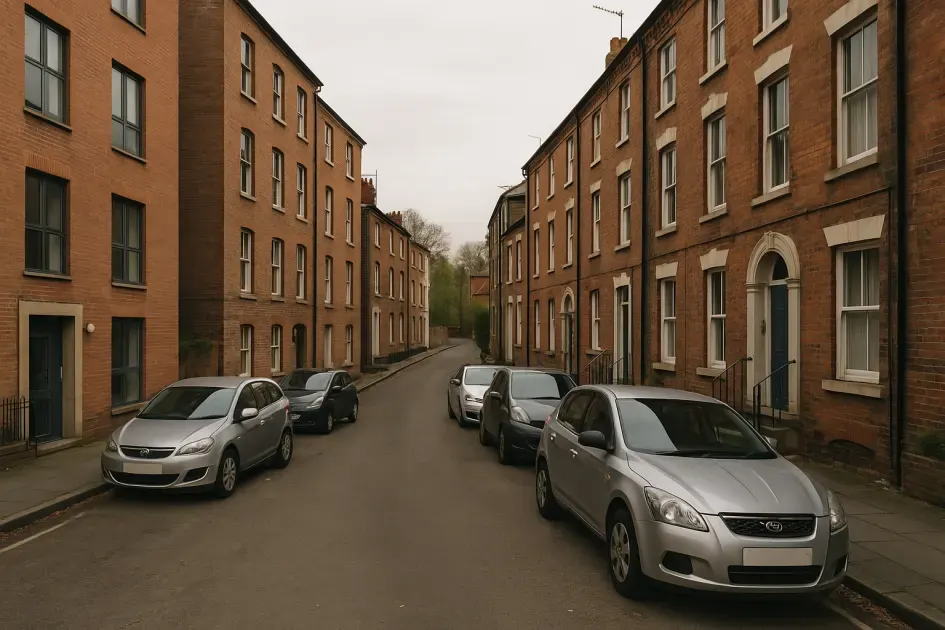
Central Nottingham’s mix of terraced houses, converted flats above shops, semi-detached townhouses and newer apartment blocks creates a variety of packing and access challenges that directly influence time and cost. Narrow Lace Market lanes, resident parking zones, tram routes and pedestrianised areas around Old Market Square often mean the van cannot pull up immediately outside the property — plan packing and loading accordingly.
Use removals in Central Nottingham first for the core service page, then see Nottingham moving timing guide for the broader parent-area picture.
Many central addresses are split into upper-floor flats accessed by steep, narrow staircases with tight landings. For those properties:
In practice, this usually connects with This topic usually works better when read alongside best time to move in Central Nottingham and moving guide for Central Nottingham..
Real-world implication: every additional flight or tight landing typically adds labour time per heavy item. That increases the move duration and therefore direct labour costs and parking/loading times.
For more on moving windows and timing in city centres, see Nottingham moving timing guide.
In Central Nottingham it’s common for vans to park on a nearby street or in a permit bay rather than directly outside the property. That means longer carries across uneven surfaces and exposure to the elements:
Real-world implication: protective packing takes time and increases packing material costs, but it reduces rework and damages that are far more expensive and time-consuming to resolve after the move.
When unloading zones are temporary or restricted by resident permit controls common in central wards, efficiency at packing stage saves substantial time on the day:
Real-world implication: better labelling shortens loading/unloading time and can cut permit or bay rental charges by reducing the overall time the van needs to occupy a restricted space. See practical location notes on removals in Central Nottingham.
Tight terraces, recessed doorways, and service entrances behind buildings are common in central streets such as those around Hockley and the Lace Market. To avoid last-minute complications:
Real-world implication: measuring and pre-disassembling reduces abortive handling and can eliminate the need for specialist lifting equipment, saving considerable time and cost. If specialist equipment is unavoidable, expect additional planning time and higher operational charges.
For timing-sensitive moves in busy central streets, consult the Nottingham moving timing guide and the local advice on the best times for a move in central areas at best time to move in Central Nottingham.
Answers focused on the specific access, building types and street restrictions you’ll face in Central Nottingham — not generic tips.
Measure sofas, wardrobes and doorways before packing. Disassemble legs and removable parts, pad corners with blankets or foam, and pack smaller components labelled in a clearly marked box. For steep, narrow Victorian stairs common in the Lace Market and adjoining streets, expect longer carry times: build additional labour time into the schedule and pack heavy items onto rolling dollies where there’s a flat approach to the stair base.
Yes. In central areas where loading is restricted or the van must park on a nearby street, use double-walled boxes for fragile items, layered padding for mirrors and framed art, and secure contents with tape. Plan for extra carry distance across cobbles, ginnels or pedestrianised sections around Old Market Square — that increases the chance of scuffs and breakage without robust internal packing.
Label each box with the destination room and floor (e.g. 'Kitchen — Flat 3, 3rd floor') and mark heavy vs light. Place an item count on each box and a single checksum sheet listing box numbers per room; this reduces time spent deciding where each box goes on arrival and cuts re-handling on tight staircases.
For new-build apartments, focus on protecting long carry routes from secure cycle stores or underground car parks to lifts (use tracked trolleys, shrink-wrap). For Victorian terraces and converted flats, prioritise size and manoeuvrability: choose smaller boxes, dismantle large items and protect narrow stair treads and newel posts with runner covers to prevent damage during multiple trips.
Central Nottingham has resident permit zones and active tram corridors that restrict where a van can stop. Pack in order of removal: boxes needed first should be packed last so they load last and unload first where parking is limited. Allow extra time in the schedule for finding a legal loading bay or walking from a permitted spot around tram routes and pedestrian zones.
The exact answer depends on the access route, loading position, building type and timing conditions in Central Nottingham, but clear planning is usually the simplest way to reduce friction and avoid surprises.