
Best time to move in Gateshead

When is it easiest — and hardest — to move in Gateshead?

Gateshead’s best and worst moving windows are shaped by the borough’s mix of terraced streets, new-build estates, business parks and river crossings. Local factors — parking permits, narrow Victorian terraces, Team Valley shift patterns and Tyne crossing congestion — make some dates and times substantially quicker and cheaper than others.

When timing research is done and you need the main booking page, start with removals in Gateshead and use Newcastle moving timing guide for the broader regional picture.

Demand patterns and seasonal peaks

Demand in Gateshead follows a clear seasonal rhythm. The busiest period for household moves is late July through August when families use the long summer break to relocate; this is especially visible in residential pockets such as Saltwell and Low Fell where family houses dominate. Mid-summer weekends fill early, pushing up prices and reducing available morning slots.

You will often need to consider For a more practical planning sequence, use this page alongside moving guide for Gateshead and packing advice for moving in Gateshead. at the same time.

Late spring (May–June) and early autumn (September) see moderate demand spikes tied to school transition and university / college intake near Gateshead College. By contrast, January to March is quieter for domestic moves, making these months the best for flexible scheduling and lower costs if weather is acceptable.

Weekday versus weekend — real Gateshead differences

Weekdays:

  • Weekday mornings coincide with peak commuter flows over the Tyne bridges and along the A184/A167 corridors. Vehicles heading to Newcastle or Team Valley can add 15–30 minutes to inter-borough journeys during rush hour, increasing vehicle-hour costs.
  • For moves into Team Valley or industrial-addressed properties, weekdays are often necessary because loading areas and goods entrances are controlled by businesses; however, expect more HGVs and constrained manoeuvring space at shift-change times.
  • Residential streets with permit parking (parts of Bensham, Pelaw and Gateshead town centre) have active enforcement on weekdays: arranging parking/loading permits or a temporary bay can be essential and will add administrative time and cost.

Weekends:

  • Weekends reduce commuter congestion across Tyne crossings and at the A1 junctions, shortening transit times for removal vehicles between Newcastle and Gateshead.
  • Saturdays remain high-demand for removals — especially during summer — so prices and earliest available start times often increase. Some local authorities still enforce parking restrictions on Saturdays, so check local signage and permits for your street.
  • Sundays are quieter on the roads and often cheaper, but access to loading bays or estate delivery slots in newer apartment complexes may be limited or require prior arrangement.

End-of-month spikes and rental cycles

End-of-month turnover is pronounced in Gateshead’s rental hotspots and family housing stock. Tenancy check-out dates clustered at month end mean removal companies are booked up for the final week of each month. If your move falls in that window you should expect:

  • Fewer available morning slots — afternoon or evening slots may be the only option, increasing likelihood of overtime charges.
  • Higher labour and vehicle rates due to demand; extra waiting time if properties are not vacated on time.
  • Longer booking lead times — securing a preferred weekday morning typically requires advance planning.

The same pressure appears around popular tenancy changeovers in terrace-heavy areas and near student accommodations adjacent to Newcastle university areas, though Gateshead’s overall student-driven moves are lighter than central Newcastle.

Property types and access constraints in Gateshead

Gateshead contains a mix of property types and each has distinct operational implications:

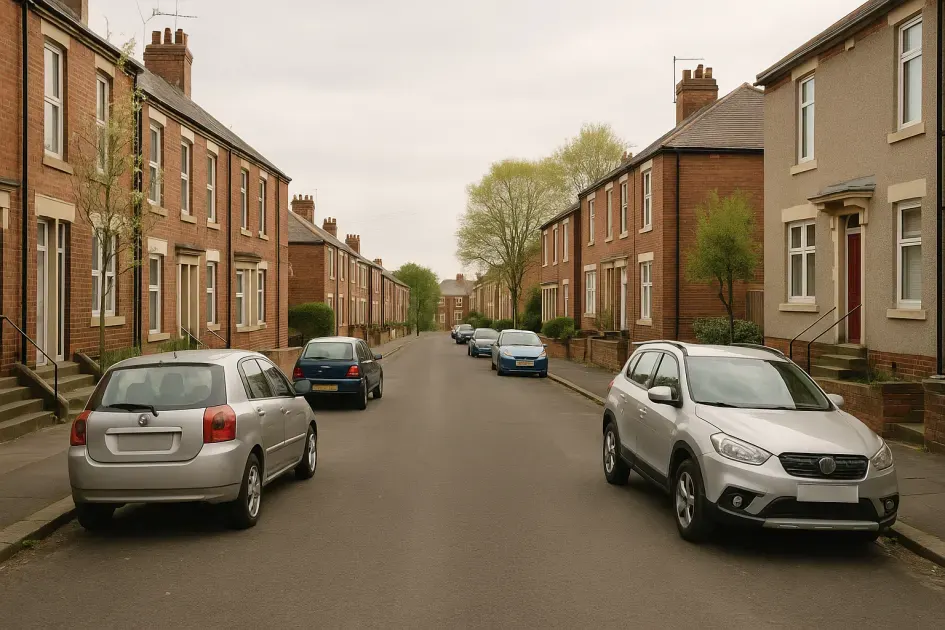
  • Terraced houses (Bensham, Saltwell): narrow pavements, small front gardens and on-street parking force longer carries and careful manoeuvring. Expect loading to take significantly longer than a suburban house, increasing labour costs.
  • Flats and maisonettes (town centre, riverside developments): lifts reduce carry distance but many modern blocks require booking time-slots for large deliveries, using service lifts only and strict corridor protection rules—these add scheduled wait times and may limit how early a crew can start.
  • Semi-detached and suburban homes (Low Fell, Whickham fringe): better parking and driveways reduce carry distance, speeding loading/unloading and lowering on-site time compared with terraces.
  • New builds and estate roads: newer estates often have narrow estate roads and shared visitor bays rather than driveways; some have management companies that require prior notice or bay-booking for large vehicles, so allow extra lead-in time for approvals.

Traffic, bridging points and journey times

Road geometry and river crossings shape removals travel time in Gateshead:

  • Peak commute times create notable delays at Tyne crossing points and on the A167/A184 approaches — plan removals to avoid 07:30–09:30 and 16:30–18:00 where possible to save vehicle hours.
  • Team Valley traffic is highly variable. On weekday mornings and late afternoons, industrial traffic and HGVs can slow access to loading bays; weekends may be smoother but some yards are closed for deliveries on Sundays.
  • Town-centre pedestrianised streets and narrow access roads near Gateshead Interchange and the Quays mean larger vehicles may need to park further away, increasing carry distances and on-site time.

Weather and daylight — real operational impacts

Northern England weather matters for moves in Gateshead:

  • Autumn and winter bring earlier nightfall and more rain. Limited daylight increases the time crews need to work safely on stairs and in tight hallways; wet conditions increase protection and drying requirements for furniture, slightly raising on-site time.
  • High winds from the North Sea can be harsh on exposed riverside moves at Gateshead Quays — tarpaulins and extra strapping add seconds per item but are essential for safety and insurance requirements.
  • Snow and ice on steep streets or stone steps common to older terraces increase manual handling time; in severe weather some teams may refuse to carry heavy items down iced stairs for safety, requiring salt/grit treatment that adds time.

Practical implications for time, cost and planning

Summarised local consequences to expect when planning a Gateshead move:

  • Book early for last-week-of-month and summer weekend moves — securing a morning slot reduces overtime charges and journey-time unpredictability.
  • Factor in extra carry time for terraced streets and flats with long corridors or walk-ups; this directly increases labour hours billed on larger removals.
  • Arrange temporary parking/loading permits for busy residential streets or confirm delivery windows with apartment management to avoid delays and waiting charges.
  • Avoid rush-hour bridge crossings where possible to reduce travel delays — an extra 30–60 minutes in transit can effectively add a full crew hour to the move cost.
  • Choose mid-week, off-peak dates in late spring or early autumn for the best balance between weather and lower demand. For full local guidance see /removals/newcastle/moving-timing-guide and for packing timing for Gateshead properties see /removals/newcastle/gateshead/packing-advice.

Where to check local constraints

Consult the Gateshead local authority for specific parking and temporary bay permits in town and certain residential streets, and check management company rules for deliveries at new-build blocks. For an overview of services in the borough, visit /removals/newcastle/gateshead.


Gateshead moving — quick answers

Short, local answers to common timing questions for moves in Gateshead. Use these to narrow dates and anticipate local constraints.

Weekends are generally easier for residential moves in Gateshead because commuter crossing points over the Tyne and Team Valley traffic are lighter. However, town-centre permit parking and restricted loading bays may still apply on Saturdays in some streets, and weekend bookings are in higher demand, increasing cost and availability issues.

End-of-month (last week) sees a significant spike in demand from tenancy turnovers across suburbs like Low Fell, Bensham and Pelaw. That concentrates availability for large removals teams and increases vehicle and labour rates; booking at least 4–6 weeks ahead is often necessary to secure a morning slot.

Yes. Summer school holidays (July–August) are the busiest for family moves in Gateshead suburbs such as Saltwell and Whickham, pushing prices and reducing available weekend slots. Mid-term breaks are less busy but still busier than term time weekdays.

Winter brings rain, strong winds off the North Sea and occasional snow/ice that slow loading/unloading, increase carry times on steep streets and can restrict bridge access. Moves during settled late-spring and early-autumn days reduce weather-related delays.

Victorian terraced houses in Bensham and Saltwell often mean long carries from parking to front doors and narrow hallways, increasing manual handling time. Riverside and town flats around Gateshead Quays may have lifts but strict delivery windows or shared corridor protection requirements that add to total loading/unloading duration.

As soon as the date is fixed. Late timing decisions are one of the easiest ways to invite avoidable friction into the move.