Central London presents a dense mix of terraced houses, Georgian and Victorian mansion blocks, converted flats, compact new-build courtyard developments and occasional mews. That diversity creates distinct access and operational challenges not seen in suburban moves: narrow carriageways, resident permit zones, frequent loading-bay demand, concierge and lift restrictions, and pedestrianised shopping streets. Choosing the right day of the week and time of year has direct consequences for how long a move will take, how many staff are needed and what extra local charges or permits will apply.
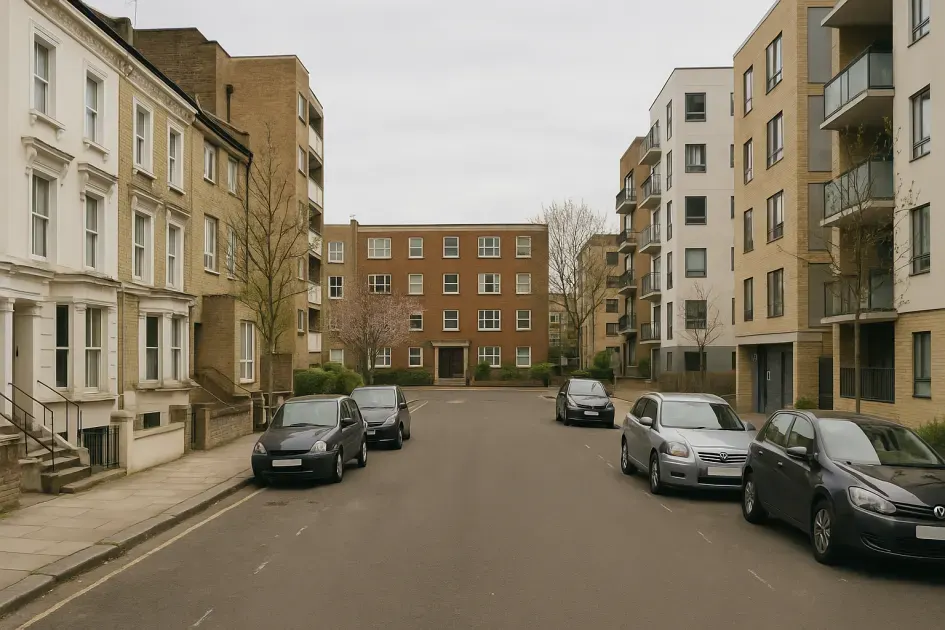
Terraced houses and townhouses: often sit on narrow streets with shallow pavements. Expect limited kerbspace for a removal lorry and a higher chance of needing a council parking suspension. Many have narrow internal staircases that slow carrying and limit the size of items moved in a single go.
removals in Central London is the main move page for checking availability, pricing and booking details, while London moving timing guide gives the broader area view on timing and moving conditions.
Timing decisions are usually easier when you this page with moving guide for Central London and packing advice for moving in Central London.
Flats and mansion blocks: service lifts are common in newer mansion blocks but older conversions rely on passenger lifts or stairs. Service lift booking windows and lift size (width/depth) determine how quickly bulky furniture can be moved and whether external hoist hire is required — hoist permits need lead time from the council and are weather-dependent.
New builds and courtyard developments: gated entries and concierge desks can be helpful but often impose time windows and require pre-arranged access. Some courtyards ban large vehicles, requiring a longer carry from the nearest accessible street.
Mews and narrow lanes: cobbled surfaces and tight turning radii can force planners to use smaller vehicles with longer carry distances, increasing labour time and cost.
Weekdays (Tuesday–Thursday): generally the most predictable for operations. Early weekday mornings can offer calmer traffic on many central routes and better access to loading bays reserved for business deliveries. However, some residential streets enforce strict weekday parking controls that block ad hoc stopping — you will often need permits or formal bay suspensions to work without interruption.
Fridays and Saturdays: these are the busiest days for residential moves because they align with tenancy turnovers. In Central London that intensity compounds competition for kerbspace, longer queues at loading bays and increased pedestrian congestion around shopping areas. Labour time usually increases: removal teams can spend significant portions of the day waiting for access, which raises cost and risks missing agreed booking slots.
Sundays and bank holidays: footfall may be lower in some neighbourhoods, but many businesses and council offices are closed, making it harder to obtain same-day permissions or resolve issues. Some streets still have controls enforced on Sundays, so checks with the local borough are still needed.
Central London follows the national tenancy rhythm but more acutely: a large share of tenancies expire on the last day of the month, creating concentrated demand on the final Friday and immediate weekend. University term dates and private rental market renewals drive a summer peak in July–September — student and professional turnover both push up demand. If your move falls on these windows expect longer loading times, higher labour estimates and the need to reserve parking suspensions well in advance.
Peak traffic: morning (around 07:00–10:00) and evening (16:00–19:00) peaks significantly slow removal vehicles on major arteries into and across Central London. Red routes restrict stopping and require careful route planning to avoid fines and delays. Tourist hotspots (such as near theatre districts or market areas) can experience sustained congestion through midday, increasing transit times between drop-off points.
Traffic management and fines: moving lorries that straddle red routes, block bus lanes, or overstay loading bays risk fines and towing. That operational friction translates into unpredictable delays if a vehicle must be repositioned—time that becomes billable labour.
Emissions and charging zones: parts of Central London sit within congestion and Ultra Low Emission Zones. Non-compliant vehicles incur charges, and some boroughs require vehicle details when applying for parking suspensions. Factoring these costs and lead times into planning avoids last-minute vehicle swaps.
Many central streets have a mix of short-term loading bays, resident-only bays and pay-and-display. Booking a bay suspension from the local council removes the risk of having to juggle a vehicle during the move, but these applications typically require several working days' notice and incur fees. For office moves, early morning slots (6:00–08:00) are commonly used to secure bay access before peak delivery periods; residential moves often need to balance this against lift and concierge availability in apartment buildings.
Summer: the busiest moving season in Central London due to tenancy turnover and student moves — higher demand equals higher prices and reduced availability of preferred time slots. Expect congested streets near transport hubs and university areas.
Autumn and spring: can offer relatively quieter windows mid-month. However, spring bank holidays can create ad-hoc spikes in pedestrian and vehicle traffic around tourist zones.
Winter and bad weather: heavy rain increases handling times because furniture needs protection and moving teams work more cautiously on slippery steps. High winds can make external hoist operations unsafe — where an external lift is needed for a flat without a service lift, a dry, calm day is essential. Localised flooding after heavy downpours can affect basement properties; checking drainage and street conditions before moving day prevents surprises.
Carry distance: long carries from the nearest legal parking place to a building entrance increase labour hours — mews houses and gated courtyards are common culprits in Central London. Each extra 10–20m of carry often equates to additional movers or extra handover cycles.
Loading/unloading time: competition for loading bays and queues caused by delivery traffic substantially lengthen the loading window. Factor in additional time if your move coincides with parcel deliveries to the same street or peak shopping hours.
Permit and suspension costs: council bay suspensions, hoist permits and congestion/ULEZ charges are real line items. Planning these into the budget and arranging them early reduces the chance of unexpected extra charges or on-the-day delays.
Best windows: mid-week, mid-month dates (Tuesday–Thursday, away from the last week of the month), early mornings before commuter rush or late mornings in quieter shopping streets; calm weather days if external hoists are required. These windows minimise queuing for loading bays and reduce carry delays.
Worst windows: last Friday/Saturday of the month, July–September peak season, bank-holiday weekends in tourist-heavy districts, and days with poor weather when external equipment is necessary. These increase labour time, competing demand for kerbspace and the likelihood of additional costs.
For specific local constraints, check the access details for your building and review /removals/london/central-london. For broader guidance on moving timing across London consult /removals/london/moving-timing-guide and for practical items to reduce on-the-day delays see /removals/london/central-london/packing-advice.
Short answers to common timing and access questions for full-house, flat or office moves in Central London. For broader timing principles see /removals/london/moving-timing-guide and for packing tips see /removals/london/central-london/packing-advice.
Mid-week (Tuesday to Thursday) is often easier for access because many streets have fewer weekend shoppers and tourist deliveries, and commercial loading bays are more predictable. However, some streets have stricter weekday parking restrictions and resident-only bays — factoring permits and loading bay bookings into planning is essential.
Extremely important. Many tenancies in Central London end on the 31st, so the last Friday/Saturday of the month is the busiest time for removals. Expect longer loading times, higher labour hours due to queues for loading bays, and premium charges from removal crews if moves must be completed on those dates.
Often yes. Central London streets commonly require council permits or paid suspensions for a removal lorry to park on double yellow lines or in a loading bay. Red routes and pedestrianised streets may prohibit stopping entirely; securing a temporary bay suspension from the relevant borough can save several hours of loading and unloading time.
High-rise mansion blocks with lifts, Victorian terraces with skinny staircases and mews houses with tight turning radii create very different operational profiles. Narrow stairs and long carry distances increase handling time and may require more movers; buildings without service lifts often need early starts to work around concierge timings or neighbour access windows.
Yes. Central London sits inside charging zones (congestion/ULEZ depending on exact location). Vehicles that don't meet emission standards either pay extra or need different vehicle arrangements, which affects vehicle choice, permit planning and overall cost. Early morning or late evening slots can sometimes avoid peak traffic, but not necessarily charges.
As soon as the date is fixed. Late timing decisions are one of the easiest ways to invite avoidable friction into the move.