
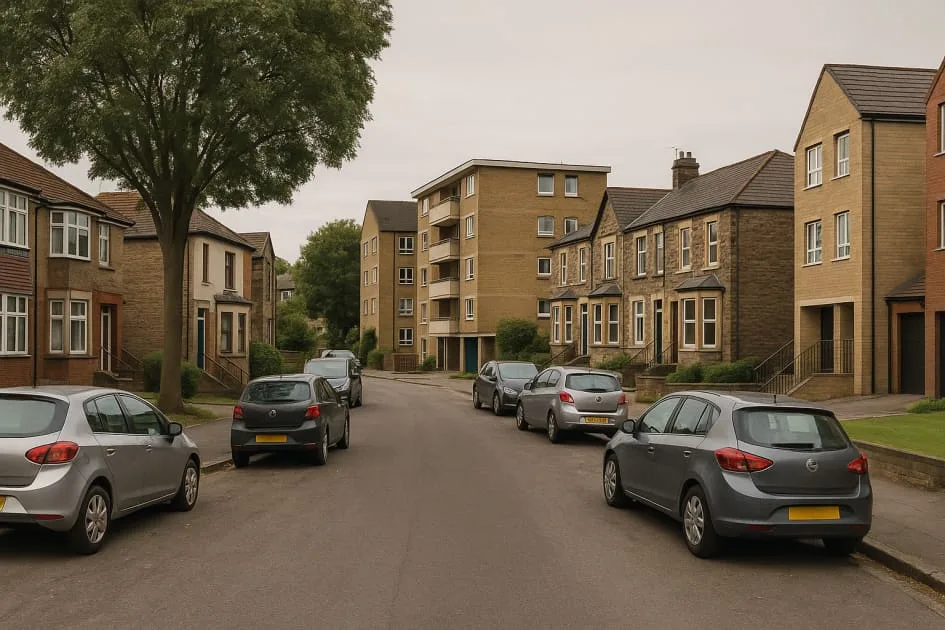
North Leeds covers a mix of terraces in Headingley, converted flats, semi-detached houses in Roundhay and newer developments in Alwoodley and Moortown. Each property type brings different physical constraints: narrow Victorian terraces often mean long stair carries and little kerbside access; purpose-built flats may have lifts but tight lobby and corridor dimensions; semi-detached homes usually give driveways to load from, while new builds sometimes place loading bays away from front doors. Your packing choices must reflect these realities to reduce delays, damage and extra cost.
Stair carries are the most common friction in North Leeds moves. In areas like Headingley and Chapel Allerton many flats are above street level with narrow winders and small landings. Use small, stackable boxes (12–20kg) so they’re easy to pass on staircases. Pack heavy items into separate, labelled ‘HEAVY’ boxes that indicate the floor they’re destined for — this lets the loaders allocate manpower more efficiently. For converted Victorian terraces with awkward corners, also use furniture sliders and remove legs from tables and sofas in advance so items fit through tight turns without repeated stops.
When you need the main booking page rather than background reading alone, start with removals in North Leeds and use Leeds moving timing guide for wider regional context.
You will often need to consider To keep planning practical rather than repetitive, connect this page with best time to move in North Leeds and moving guide for North Leeds. at the same time.
When permitted parking is a distance from the front door — common where kerb parking is restricted or suspended on narrow streets — expect carries of 20–70 metres through alleys, across gardens or along shared drives. For these scenarios reinforce box bottoms with extra tape and use double-layer wrapping for fragile contents. Furniture should be shrink-wrapped and padded; wrap corners with dense foam. If you have large mirrors, paintings or flat-screen TVs, consider rigid moving crates or custom-made cardboard double-boxes to avoid pressure and puncture damage when items are carried multiple times.
Label per room and per floor, and include simple handling tags: ‘KITCHEN — GROUND’, ‘BED 2 — 1ST — FRAGILE’. Add a colour tape per room so crews can quickly group boxes for van stacking in delivery order. In busy neighbourhoods like Chapel Allerton, where unloading might have to take place on the main road, colour-coding helps the loaders offload a single block of boxes for the new house in sequence. For large semi-detached or new-build properties with drives in Roundhay, stage labelled stacks on the driveway so they're loaded in the reverse order of unloading to save time on the day.
Narrow roads and parking restrictions are common in older pockets of North Leeds. If the van cannot pull right up to your door, folding trolleys and stair climbers are essential. For flats with lifts, measure lift widths and door heights beforehand — many communal lifts in newer blocks are too narrow for assembled wardrobes or large sofas. If a lift is available but shared with residents, build in waiting time and arrange a lift-use window where possible; this prevents queueing and reduces the average loading time per item. For properties where the only realistic loading point is a high kerb or a road with no parking, plan for temporary parking suspension from Leeds City Council well in advance to avoid on-the-day delays.
Operational friction in North Leeds directly affects time and cost. Long carry distances and stair-heavy buildings increase crew labour hours — a rule of thumb is that every extra 10 metres of carry can add several minutes per trip and a complex staircase can add 30–60 minutes to the move overall. Narrow streets and permit requirements can also force loading from a main road, increasing loading/unloading cycles and adding to the van time. Factor these elements into your schedule and budget: packing smaller, labelled boxes and pre-dismantling furniture reduces hands-on time and mitigates the knock-on cost of longer loading windows.
For a fuller look at timing across Leeds and how to slot your move into local constraints, see the moving timing guide at Leeds moving timing guide. For North Leeds-specific logistics and the best days to move locally, the parent removals page removals in North Leeds and the best-time advice at best time to move in North Leeds contain practical next steps tailored to the area.
Answers to the questions North Leeds households ask most — focused on stair carries, parking limits, fragile items and planning around local access.
Use small, strong boxes (12–20kg max) and soft padding. Pack heavy items low and keep boxes narrow so they can be manoeuvred on tight stair landings. Label boxes with a floor number and ‘STAIRS’ so porters know which items will require extra time and manpower. Expect extra loading time — plan for at least 30–60 additional minutes compared with ground-floor flats.
Yes. For carries across uneven gardens, paths or through alleys common in Roundhay and Alwoodley, use shrink-wrap on furniture, protective covers for legs and edges, and rigid crates for fragile goods. Reinforce box bottoms and use two layers of tape; extra protection reduces drop damage on longer carries and avoids time-consuming reassembly later.
Use room-based labels plus handling tags: e.g. ‘KITCHEN — GROUND’, ‘BED 1 — 1ST — FRAGILE’. Pair printed labels with colour-coded tape per room so boxes can be stacked on the van in delivery order. Long driveways in Meanwood or Moortown let loaders stage items near the vehicle, so mark bulky and heavy items to be loaded last for easy unloading.
Measure the lift and corridor dimensions before packing; many new-build blocks in Moortown and Alwoodley have lifts but narrow doors. Use flat-pack packing for sofas and beds and break down wardrobes. For lifts with time-restricted access, consolidate items into fewer, larger dollies and label them clearly to reduce waiting time in communal lobbies.
For carries of that length, use rigid boxes or specialist transport crates with internal foam, corner protectors for frames, and double-wrap screens with bubble and woven blankets. Secure cables and use sealed boxes for electronics to protect against weather during repeated loading cycles; budget extra packing time — roughly 10–20 minutes per large fragile item when carry distances are long.
The exact answer depends on the access route, loading position, building type and timing conditions in North Leeds, but clear planning is usually the simplest way to reduce friction and avoid surprises.