
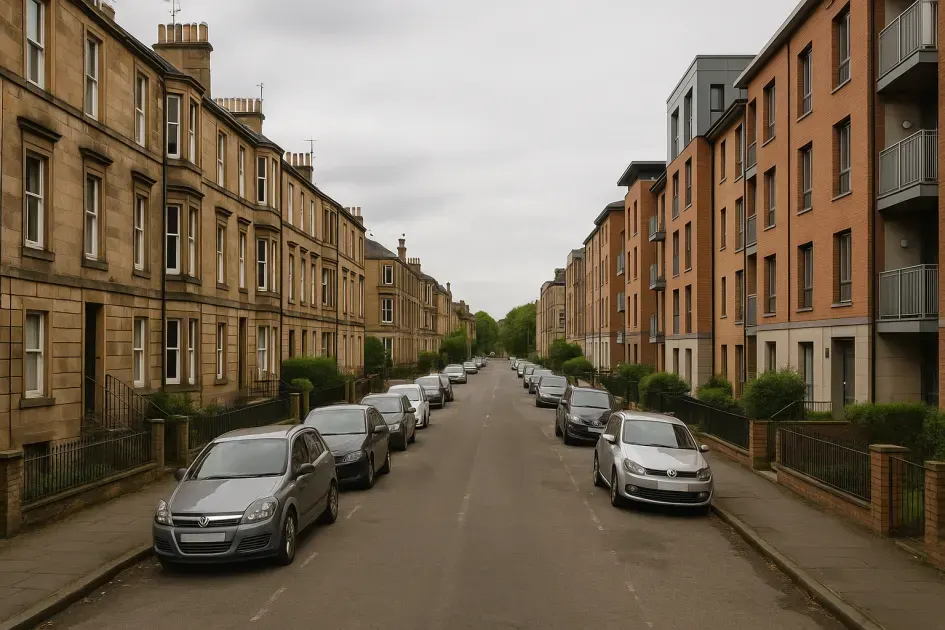
Central Edinburgh is compact, historic and topographically varied. Those characteristics create tangible, local costs — not abstract line-items. Below are the specific factors that determine how much a full house, flat or office removal will cost in Central Edinburgh and why they differ from other parts of the city.
Central Edinburgh contains a mix: Georgian terraces in the New Town, narrow Old Town tenements, a scattering of semi-detached villas near the western edge, and modern flats around Haymarket and the cathedral precinct. Each property type alters the job:
Central Edinburgh removals service is the main booking page for checking availability, pricing and move details in one place, while moving costs in Edinburgh gives the wider regional cost picture.
Reasoning specific to Central Edinburgh: the prevalence of historic tenements and listed Georgian façades increases the average handling time per item compared with suburban areas where drives, garages and level access are more common.
Central Edinburgh’s street layout and parking controls strongly influence cost:
If you want to separate headline pricing from the details that change the final job, hidden moving costs in Central Edinburgh and property access challenges in Central Edinburgh.
Because central streets are used by buses and trams, some roads have limited hours for loading. That forces moves into narrower windows when crews are allowed to stop near the property, driving up hourly rates if the job cannot be completed within those windows.
Large removal lorries are efficient when they can park at the property. In Central Edinburgh, several constraints change that calculus:
The practical effect: more vehicle-miles and more handling time translate into higher labour charges and potential traffic or parking fines if staging is not pre-arranged with local authorities.
Crew size is not determined solely by volume. In Central Edinburgh, building layout and the item mix matter greatly:
So the crew model in Central Edinburgh tends to balance the need for extra hands to protect listed features against physical constraints that prevent simultaneous work.
Local traffic patterns, council enforcement and pedestrian flows affect when moves are fastest:
Compared with suburban moves, Central Edinburgh jobs are more sensitive to narrow time windows: a single hour of extra loading caused by a restricted bay or tram crossing can add a significant proportion to the total bill.
Outer areas typically offer driveways, wider roads and level access that let big lorries park adjacent to properties and speed loading. Central Edinburgh’s dense street network, high number of stairs, and preserved architecture mean handling is slower, more manual and often requires specialist packing — so average per-job labour time and logistics costs are higher.
Practical steps specific to Central Edinburgh include checking lift dimensions in New Town flats, inspecting stair turns in Old Town closes, and confirming local loading bay rules. For an overview of removals in this neighbourhood see Central Edinburgh removals service. For citywide moving cost context visit moving costs in Edinburgh. For details on charges that sometimes appear on the day, review hidden moving costs in Central Edinburgh.
| Move size | Typical range | What usually affects it |
|---|---|---|
| Studio / small 1-bed | £140–£280 | stair access and limited on-street stopping. |
| 1–2 bed flat | £260–£480 | Carry distance, stair cycles, lift access and van positioning. |
| 2–3 bed home | £420–£780 | Furniture volume, loading distance, disassembly needs and timing pressure. |
Answers focused on how Central Edinburgh’s streets, buildings and parking rules change the real cost of a removals job.
Most central tenements are Victorian with narrow stairwells and no lifts. Carrying bulky furniture down tight turns increases loading time and requires more hands to protect tight corners and banisters. That extra time and crew requirement typically raises the cost compared with ground-floor properties or modern flats with freight lifts.
Yes. Georgian New Town streets often have resident permit zones, limited loading bays and strict enforcement. If a large removals lorry cannot park directly outside, vehicles must be staged further away and items carried across stone pavements, which adds labour hours and possible permit fees — all reflected in the final cost.
Timing can reduce congestion but not always cost. Moving very early or outside weekday business hours can avoid daytime loading restrictions in busy commercial corridors like Princes Street and reduce time stuck in traffic. However, weekend moves may still face council enforcement and sometimes higher crew-surcharge rates if specialist teams are needed.
Old Town closes, cobbled lanes and narrow streets around the Royal Mile and Grassmarket prevent access for long-wheelbase lorries. That forces a change to smaller vehicles and more shuttle trips between vehicle and property, which increases loading time and therefore cost compared with areas where a single large lorry can park at the kerbside.
Carry distance and stair complexity are huge time drivers in Central Edinburgh. A five-minute carry on a flat pavement becomes 15–30 minutes when negotiating multiple flights of stone stairs or zig-zag communal staircases. Calculators that ignore these real-world carries understate the true labour and time costs.
In many cases, yes. A quieter weekday slot can reduce waiting and make access more predictable, especially where factors such as weekday commuter pressure and school-run traffic around local primaries creating short delays on residential side streets tend to create friction at busier times.