
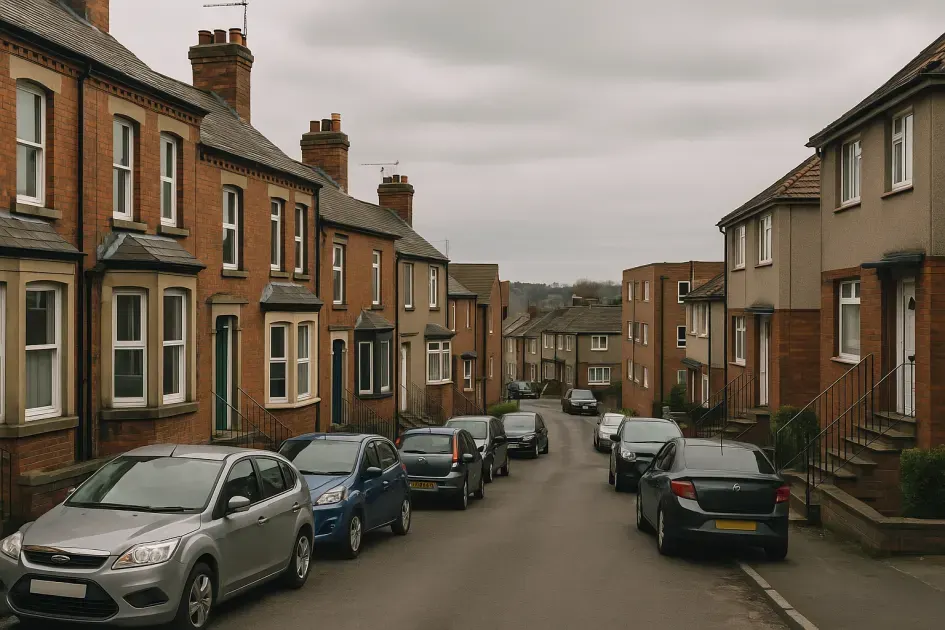
Property and access challenges in Pontypridd

Physical and structural realities of moving in Pontypridd

Pontypridd’s layout — a town squeezed into the Taff valley with a dense historic centre and surrounding suburban sprawl — creates a mix of removal challenges you don’t see on flat, grid-layout towns. Understanding how building types, road geometry and local parking rules interact is essential for realistic timings, crew size and vehicle choice. See the local removals overview at removals in Pontypridd and the broader access considerations at access and property guide for Cardiff.

removals in Pontypridd is the main booking page for checking availability, pricing and move details in one place.

For the wider picture across the area, refer to access and property guide for Cardiff.

Terraced housing: narrow frontages, tight staircases

Pontypridd’s older terraces — common close to the town centre and in neighbourhoods that developed in the 19th and early 20th centuries — generally have small doorways, steep staircases and short front gardens or none at all. That means:

Access issues usually sit alongside other planning points, so compare this page with moving guide for Pontypridd and hidden moving costs in Pontypridd.

  • Large items often cannot be taken out horizontally and require angled manoeuvres on stair landings, increasing handling time.
  • Gear such as stair trolleys may be usable only for ground-floor moves; first- and second-floor carries are predominantly manual labour.
  • On narrow pavements, a parked vehicle blocks space for manoeuvre; teams must plan drop-off zones to avoid pedestrian obstructions and to maximise safe working room.

Real-world implication: a three-bedroom mid-terrace in central Pontypridd will typically need 30–90 minutes more loading/unloading time than a similarly sized detached property where items can be moved straight from driveway to van.

Flats and apartments: conversions, small lifts and shop‑above flats

Flats in Pontypridd fall into two main categories with different challenges. Purpose-built blocks on the outskirts often have small passenger lifts with weight and size limits; older conversions above shops or terraces frequently have no lift at all. Practical consequences include:

  • Multiple short carries up flights of stairs when lifts are absent, increasing crew fatigue and time per load.
  • Restrictions on using dollies or wheeled platforms in small lifts, creating more manual handling.
  • Access through narrow alleyways or shared communal staircases that require protective routeing to avoid damage.

For guidance on planning for blocks and stair carries see the local moving guide at moving guide for Pontypridd.

Narrow roads, parking and loading constraints

The town centre streets, particularly near the High Street and riverfront, are often narrow and busy during the day. Residential roads radiating uphill can be single-lane or framed by parked cars. Specific operational frictions are:

  • Limited space to position a large removals vehicle directly outside a property — frequently the vehicle must stop in a nearby bay or on a main road and items carried further.
  • Controlled parking zones, timed bays and double yellow lines that may require temporary permits or pre-booked suspension to secure a loading area.
  • Restricted turning circles in estate cul-de-sacs on newer developments, making it impossible to drive a large vehicle right up to the address.

Real-world implication: added carry distance of 25–150 metres can increase crew time and labour costs. Permits or bay suspensions, when needed, add admin time and possibly council fees.

Suburban versus dense neighbourhood layouts

Moving friction changes markedly between neighbourhoods. Inner Pontypridd and areas close to the railway station are denser — terraces, conversions and short-stay parking dominate. Suburban areas and council estates on the hillsides have semi-detached homes with driveways but longer distances between properties and main roads.

  • Dense layouts: shorter vehicle-to-door distances but more obstacles (stairs, narrow routes, pedestrian flows).
  • Suburban layouts: easier vehicle access in front of properties but longer on-foot transfers and possible issues with steep gradients.

Operational implication: crews must choose between longer carry distances (more time on foot) or constrained vehicle placement (slower loading cycles). Both affect scheduling and potential uplift in labour hours.

New builds versus older properties: different types of friction

New-build estates around Pontypridd are frequently laid out with cul-de-sacs, narrow estate streets and parking managed by estate rules. Older properties nearer the town centre were built before widespread car ownership and therefore lack driveways. The contrasts are:

  • New builds: tight turning space for removals lorries, restrictions from estate management on parking directly outside properties, and sometimes fragile new landscaping to avoid.
  • Older properties: no off-street parking and internal layouts that force large items through tight hallways and staircases.

Practical consequence: new-build moves may require a transfer vehicle parked outside the estate entrance plus additional hand-carrying, while moves from older homes require prolonged on-site handling and potential protective materials for stairways.

How these constraints change time, cost and planning

Every access limitation in Pontypridd translates directly to operational friction. Examples of measurable impacts:

  • Extra crew hours: stair carries, multiple short runs and steep gradients increase the physical labour required. Expect additional labour time quoted when properties have several flights of stairs or long carries.
  • Loading/unloading delays: waiting for a parking suspension, navigating tight turns or bringing items down narrow staircases can add 30–180 minutes to a move day, depending on property size and location.
  • Equipment needs: small lifts or narrow corridors often preclude use of large powered lifting aids; manual labour and protective materials are needed, increasing cost and time on site.

Advance planning that maps vehicle approach, identifies parking options and confirms lift availability produces the most reliable timelines. For a general checklist of access issues across Cardiff and how they affect operations, consult access and property guide for Cardiff.

Final notes specific to Pontypridd

In Pontypridd the combination of valley topography, a compact historic centre and a ring of post‑war/new-build suburbs means removal teams are frequently balancing carry distance against vehicle position. Accurately forecasting time on the day requires noting whether a property is a town-centre conversion, a hilltop semi, or in a modern cul-de-sac, and confirming local parking rules or lift dimensions in advance.


Common questions about moving in Pontypridd

Below are practical answers to recurring operational questions that come up for removals in Pontypridd. Each response reflects local road layouts, building types and council restrictions that affect scheduling and cost.

Many central terraces are Victorian, with narrow frontages and stairs directly from pavement to first floor. Removals crews typically need extra carry time for domestic-size stair carries and careful manoeuvring on narrow pavements. Expect an additional 30–90 minutes on the day for loading and unloading compared with a bungalow-style property of similar size.

Purpose-built blocks on the outskirts may have lifts, but many conversion flats above shops or in older buildings have no lift or small passenger lifts with weight limits. That raises manual carry distances and restricts use of trolleys, increasing handling time and potentially requiring more staff.

Town-centre streets and some residential roads have short-stay bays, double yellow lines and controlled parking zones. For larger removal vehicles you may need a temporary parking suspension or to use a nearby permitted bay and extend carry distances. Arranging local authority permissions or pay-and-display bays in advance reduces loading interruptions.

Pontypridd sits in the Taff valley with steep approaches from the west and north. New-build estates and older terraces can be on significant gradients; gradients increase physical effort, slow down handovers and make mechanical aids harder to use safely. Extra time and stronger crew rotations are common requirements.

New-builds on the outskirts often have narrow cul-de-sacs, tight turning circles and parking restrictions enforced by estate management, which limit where a large removal vehicle can park. Older properties closer to the town centre may lack driveways and have narrow pavements. Each setting shifts friction from carry distance to vehicle placement or vice versa.

Yes. Lofts, garages and secondary storage areas spread the inventory across more space, which lengthens the loading phase even when the property looks manageable from the front door.