
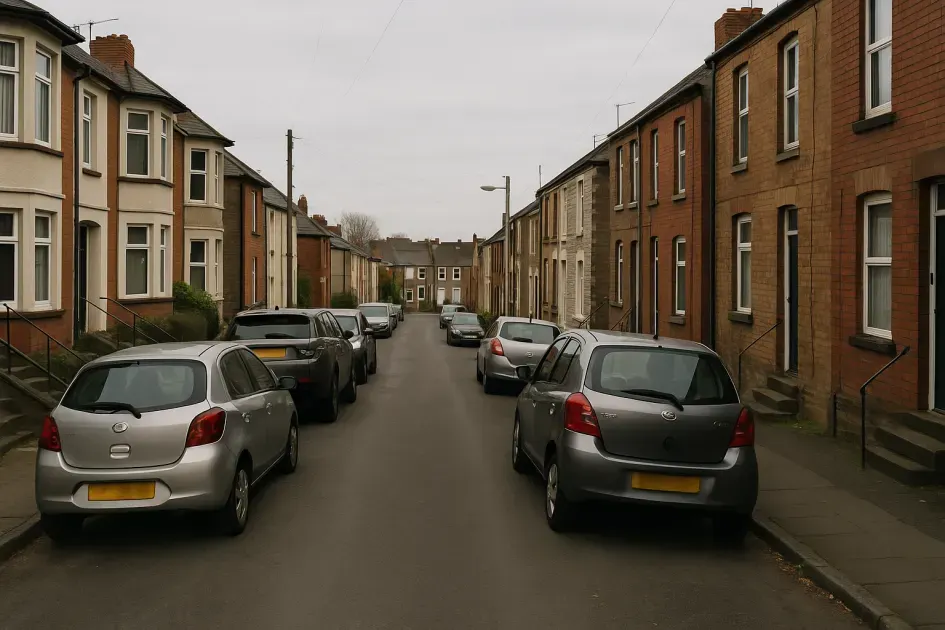
Barry's mix of seaside traffic, Victorian terraces, newer dockside developments and town-centre parking controls creates very particular operational frictions during a removal. Understanding how property type and local access interact with council rules and weekend visitor patterns helps explain where time and charges often appear.
When you are ready to move from hidden-cost checks to the main move page, start with removals in Barry.
For a broader regional view, see moving costs in Cardiff.
Waiting time can accumulate quickly in Barry. Two frequent causes are congestion on approach routes into town — A4050 and the B4267 corridor can slow heavy vehicles at peak commuter times — and event or tourist peaks on Barry Island. If the removal vehicle arrives but can't load because of congestion, no-parking zones, or because access officers need to attend, movers typically record idle hours. The result is per-hour waiting charges and cascading delays into other bookings.
Many central Barry streets and waterfront developments are covered by pay-and-display or resident-only schemes. To put a large removal vehicle on-street directly outside a terraced house or block of flats often requires a temporary parking suspension from the Vale of Glamorgan council or permission from a private estate manager at Barry Waterfront. Failure to secure the right permit can lead to parking fines or force the removal team to park further away and add substantial carry time.
You will often need to consider This issue is often linked with moving costs in Barry and property access challenges in Barry, so reviewing them together usually gives a clearer planning view. at the same time.
Barry Waterfront and several modern apartment blocks have underground or allocated parking separated from building entrances; this often means trolleys and stair descents or long corridors between the van and the flat door. In contrast, terraced houses in central Barry rarely have off-street space, so vehicles must stop on the nearest legal bay and items are carried over greater distances and across pavements. Those extra metres multiply loading time and can add extra labour or trips if staircases or narrow passages prevent trolley use.
Converted Victorian flats above shops and older terraces in Barry frequently have tight stairwells, winding flights and low ceilings. These layouts increase handling time, often require additional staff for safe manoeuvres, and sometimes mean larger items must be partially dismantled on site. New-build flats may mitigate stairs with lifts, but small lift sizes or restricted service hours in managed developments add delays and extra time to coordinate — all of which translate into higher labour costs.
Barry Island and the seafront attract heavy footfall in summer and at local events, which restricts vehicle movement and parking. The town centre and high street are also narrower in places, with loading bays limited to certain hours. These local conditions increase the chance that a job will overrun because movers must wait for permitted loading windows, reposition vehicles, or make extra trips from distant parking. Overtime, rescheduling and weekend premium hours are common results.
When access issues stack up — lack of a bay suspension, long carries from underground parking, narrow staircases or unexpected traffic — the operational result is time overruns and sometimes partial rebooking of the job. That can mean a second day for complex moves, additional labour hours, and extra vehicle mileage. For moves that must align with lease handovers or tight schedules, the risk of rebooking carries direct financial and logistical costs.
To reduce the likelihood of hidden costs in Barry, plan around the town's realities: identify whether your property is a terraced house, a converted flat without a lift, a semi-detached with a driveway, or a new build at Barry Waterfront with controlled parking. Check Vale of Glamorgan parking rules for temporary suspensions, time access windows for serviced apartment blocks, and avoid peak tourist times when the seafront and island roads are busiest. For more on how local factors change price, see moving costs in Cardiff and the parent Barry removals overview at removals in Barry. For specific cost implications in Barry, also read moving costs in Barry.
Common questions about extra charges that often appear on move day in Barry, with practical, location-specific answers.
Yes. In Barry you commonly see waiting time charges when traffic, loading restrictions or events delay access. Expect waiting time if workers cannot begin loading because permits or loading bays are not arranged, or if the vehicle is stuck on a narrow residential road. Busy periods, such as summer weekends around Barry Island or school run times, increase the risk of overruns that are measured and billed per hour.
Often. Vale of Glamorgan Council and private developments around Barry Waterfront operate controlled parking zones and resident bays. If the removal lorry needs to reserve kerb space on Holton Road or near the seafront, a temporary suspension or bay reservation may be required — without it you risk fines or having to park further away and incur extra carry time and labour.
Different property types in Barry create different operational costs. Victorian terraced houses in central Barry and many converted flats typically have narrow entrances and steep staircases, increasing manual handling time and requiring extra crew. New-builds and apartment blocks on Barry Waterfront often place parking in underground or shared car parks, which can add long internal carries from the vehicle to the flat and extra time to manoeuvre furniture through lifts or tight corridors.
Barry Waterfront's new developments frequently have basement or allocated parking and controlled access, so movers may need authorised loading times or key fobs for ramps — adding admin and potential extra trips. On Barry Island, weekend visitor parking controls and seasonal crowds can force vehicles to stop outside permitted zones, creating long carry distances over promenades and possible parking penalties during peak periods.
Narrow residential streets, one-way systems and high summer visitor volumes around Barry Island cause delays that can push a job beyond its booked slot. If delays cascade into later bookings, firms may rebook parts of the move or add overtime charges. The practical effect is extra days or hours of work and higher costs if you have tight turnaround times or time-sensitive access windows.
Because the crew spends more time walking, repositioning and waiting. In Barry, where factors such as limited on-street stopping and allocated residential bays at newer apartment developments that do not always allow loading are common, a weak stopping position becomes a tax paid in minutes.