
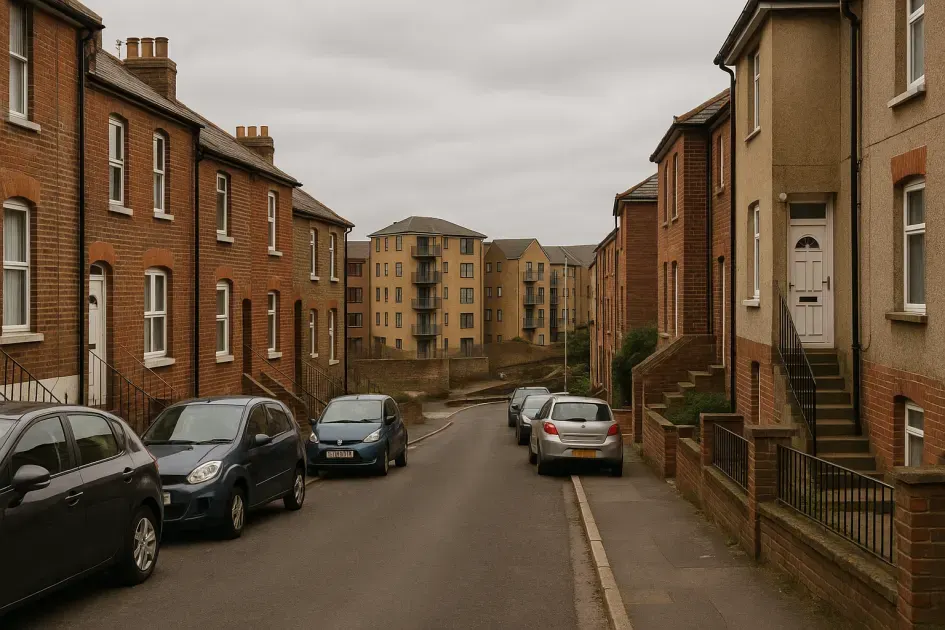
Why Newhaven’s layout creates hidden removals costs

Newhaven combines a working harbour, a compact town centre and a mixture of Victorian terraces, inter‑war semis and new build developments on former industrial land. That mix makes access and timing on moving day very location‑specific: a flat above a High Street shop, a terrace off the harbour with no fronting pavement, or a gated new build with narrow service entrances all create distinct operational frictions that drive surprise costs.

Waiting time charges — the real impact of small delays

Crews planning a two‑hour loading window can easily hit additional charges if anything slows them down. In Newhaven this often happens because: a van cannot reach the property due to parked cars on narrow streets; a permit needs to be confirmed with Lewes District Council; or traffic queues on the A259 delay arrival. Each hour of waiting or delay on site turns into extra labour and vehicle time — in practice that can add a full additional hourly charge for the vehicle plus extra crew time if the original slot overruns.

When you are ready to move from hidden-cost checks to the main move page, start with removals in Newhaven.

You will often need to consider This issue is often linked with moving costs in Newhaven and property access challenges in Newhaven, so reviewing them together usually gives a clearer planning view. at the same time.

For a broader regional view, see moving costs in Brighton.

Parking fines and permit requirements specific to Newhaven

Many streets near the harbour and the town centre have resident bays, short‑stay spaces and designated loading zones. Without a temporary suspension (sometimes handled via East Sussex Highways or the local council), movers may have to park legally several streets away. Besides the obvious fine risk, parking restrictions lengthen walking time, require more staff to carry items, and can force mid‑move reshuffles that incur extra labour. For new builds with gated entrances, you may also need advance access arrangements with site management to avoid refusal of entry on the day.

Long carries — when kerbside parking isn’t an option

Areas around the West Quay and narrow terraces running down toward the river commonly force carries of 20–60 metres between legal parking and the door. Where gardens, steps or cobbled quays prevent vehicle access, removals teams must carry by hand or use specialist equipment. Those longer carries increase loading time and physical effort, which translates into higher labour costs and a greater likelihood of requiring extra crew members for safety and speed.

Extra labour driven by stairs, narrow doors and small lifts

Many Newhaven properties are flats above shops or older terraces with tight staircases and limited turning space — lifts are often absent or too small for wardrobes and large beds. Newer developments may have lifts but narrow service corridors and low headroom. The operational consequence is predictable: items must be disassembled, negotiated by stair‑teams or carried up several flights, all of which adds time and therefore cost. Expect any move involving multiple flights or awkward entry points to require additional labour hours compared with a ground‑floor lateral move.

Traffic, restricted streets and port-related delays

Newhaven’s coastal roads and harbour approaches can be congested, especially during summer weekends, market days or ferry operations. A van delayed by port traffic or queued on the A259 loses its booking slot and may arrive outside the agreed window, forcing either an urgent extension of the day (overtime) or a break in the move requiring rebooking. Restricted streets with weight limits or one‑way systems around the harbour can also force longer routing and extra fuel/time costs.

Rebooking and overrun risks — planning to avoid extra days

If a move in Newhaven runs late because of unexpected stairs, permit issues or traffic, the final items may need to be shifted to another day. Rebooking introduces costs beyond simple hourly overruns: double attendance charges if a crew is held over, additional travel and mobilisation fees, and inconvenience costs if access at the destination is time‑limited. For office relocations in the town centre these risks are amplified where building management enforces strict delivery windows.

How these factors affect time, cost and planning

Operational realities in Newhaven mean small access constraints often scale into meaningful costs:

  • Parking suspensions or permit applications should be arranged in advance with the local council to avoid fines and delays.
  • Long carries and stair teams can turn a half‑day job into a full day — plan for extra labour hours where flats above shops or terraces are involved.
  • Allow contingency for traffic on the A259 and port activity, especially for moves scheduled on summer weekends or ferry arrival times.
  • For new builds and gated developments, confirm vehicle access and delivery bay rules with site management well before moving day.

For a full overview of how these access and time factors feed into overall pricing, see the local moving cost guidance at moving costs in Brighton and the main Newhaven removals page at removals in Newhaven. If you need specific detail about booking and likely extra costs for a particular Newhaven property, consider the moving conditions checklist on moving costs in Newhaven.