
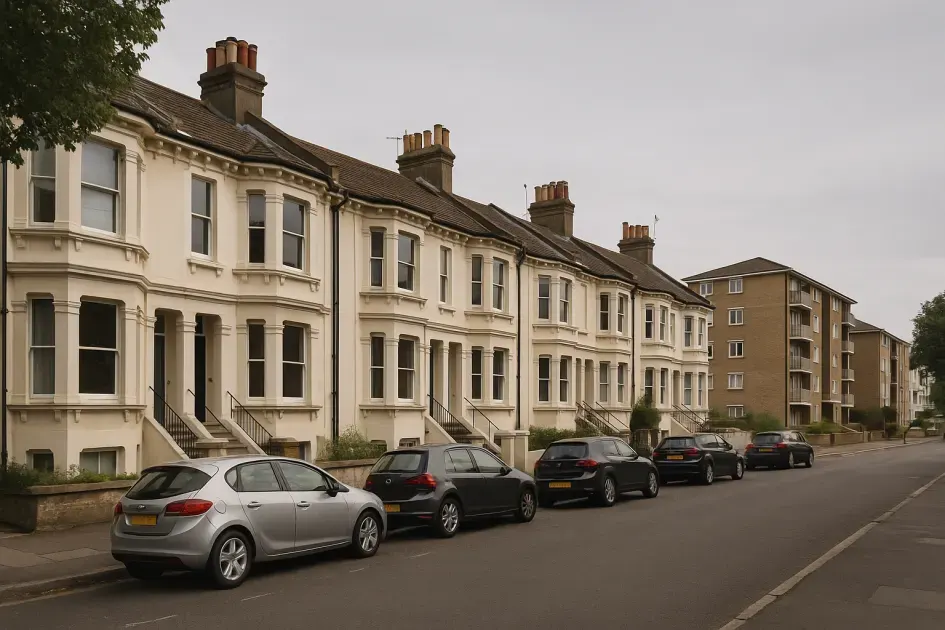
Packing with Hove property types and access in mind

Hove is a patchwork of Victorian and Edwardian terraces, purpose-built flats, semi-detached suburbs and pockets of modern new builds. Each requires different packing strategies because access and operational constraints vary street by street. Read these location-specific points before you box up anything.

Use Hove removals service first for the core service page, then see Brighton moving timing guide for the broader parent-area picture.

Terraced houses

Many Hove terraces have narrow frontages, step-up doorways and tight internal staircases. These limit the width of furniture that can be carried through doorways and down turns. Disassemble sofas, beds and large tables at home; protect banisters and skirtings with cardboard or blanket-wrap because repeated contact on narrow landings increases damage risk. Expect longer handling times: narrow doors and twisting stairs typically add 20–40% to the usual carry time for large items, and that should be reflected in your planning for labour and vehicle loading windows.

In practice, this usually connects with This topic usually works better when read alongside best time to move in Hove and moving guide for Hove..

Flats (including flats above shops on Church Road)

Flats in Hove—especially those above shops on Church Road and the seafront terraces—often sit above a commercial ground floor with only stair access. Where lifts exist they are frequently small. Measure lift dimensions and stair widths in advance; pack bulky items so they can be split down to components that fit lift sills or 90cm stair turns. For flats above busy streets, plan deliveries at quieter times (see Brighton moving timing guide) to avoid peak footfall and to reduce interference from deliveries to shops.

Semi‑detached homes

Semi‑detached properties in Hove often have more garden access and driveways than inner-terrace streets, which can reduce carry distance. Still, several semi‑detached streets sit within resident permit zones: legal parking close to the door may be limited. If your property has a driveway, use it as a staging area but protect lawns and gates—wet weather from the coast can make surfaces slippery, increasing manual handling risk.

New builds and modern blocks

Newer developments near Hove station or on redevelopment sites sometimes include goods lifts and wide entrance lobbies. However, concierge rules, lift booking windows and service yard access can restrict loading times. Pack to the lift dimensions and notify any building manager about your arrival time so lifts are freed for removals; otherwise you will face queuing delays that add cost.

Packing for stairs and flats: box sizes and techniques

In Hove flats and older terraces, keep boxes compact and balanced for safe stair carries. Large, overfilled boxes make narrow stair turns hazardous and slow down handling.

Recommended box sizing and weight

  • Keep general-purpose boxes under 20kg for stair carries; aim for 12–15kg for boxes you expect to carry up several flights in Victorian conversions.
  • Use shallow boxes for books and heavy items so weight sits lower and boxes are easier to grip around banisters.
  • Use wardrobe boxes that include hanging rails for clothes in flats without space to leave garments on rails during loading.

Stair-friendly packing techniques

Pad edges with blankets and secure items inside boxes so they do not shift on stairs. Place non-fragile, flat boxes on ends to create a steady step when moving up or down. For flats with narrow intermediate landings, pack items so each carry is short and steady rather than few massive carries that require awkward turning.

Protecting items for longer carry distances in Hove

Hove’s mix of one-way streets, resident permit zones and pedestrianised stretches means you may not be able to stop the removal vehicle at the property entrance. Where parking is restricted—on the seafront promenade, Kingsway or narrow residential lanes—anticipate longer carries across pavement surfaces, cobbles and occasional grass verges.

Packing for protection and weather

Double-wrap electronics and upholstered items to protect against sea spray and wet weather common near the coast. Use plastic mattress bags and sealed boxes for items left outside briefly. For antiques or frames typical in older Hove homes, use corner protectors and rigid backing boards — these items are more likely to catch on door frames during long, twisting carries.

Tools and aids

Use wheeled trolleys with all-terrain wheels for cobbles and grass, plus shoulder straps for heavy single-piece items when long carries are unavoidable. Consider collapsible hand trucks for access through narrower alleyways that motor vehicles cannot reach.

Efficient labelling and loading strategies

Clear labelling and a loading plan reduce turnaround time on Hove streets where parking windows are limited or metered.

Labelling that accounts for Hove access

  • Label boxes with flat/floor and room: ‘Flat 1, 2nd floor — Kitchen — HEAVY’. This helps porters prioritise boxes that need to go upstairs versus those staying at street level.
  • Use colour stickers per floor to speed identification on busy communal landings and when unloading from the pavement under time constraints.
  • Number boxes and keep a short inventory noting fragile or priority items; hand this to whoever is supervising the unload so they can place items where needed rather than searching in the van in restricted spaces.

Loading order for restricted access streets

Load the van so boxes for the highest floors and furthest carries are accessible first at the unloading end, reducing handling loops across tight pavements. For Church Road flats or terraces where the van may not stop directly outside, stage boxes for leg-short carries: heavier, ground-floor items load at the back of the van; lighter, upstairs boxes go toward the rear for quick removal.

Preparing for tight access and awkward loading positions

Tight corners, parked cars and one‑way systems around Hove’s conservation areas and shopping streets create real operational friction. These constraints increase loading time and could increase moving costs if additional labour or parking suspensions are needed.

Practical steps to reduce friction

  • Check local parking rules and apply for temporary bay suspension or loading permits from Brighton & Hove City Council well in advance if you need the vehicle to stop near your front door.
  • If access is via a communal courtyard or gated alley, coordinate gate codes and arrival times with neighbours or building managers; curating a single, known drop-off point saves repeated back-and-forth carries.
  • Measure obvious pinch points — narrow gates, side-return passages, and the width between parked cars on your street — to know what can be carried whole and what must be dismantled.
  • If the property faces a pebble beach promenade or steep ramp, plan for additional manpower and non-slip protection underfoot; wet pebbles and ramps slow carries significantly.

For more about timing your move around local restrictions and seasonal patterns in Brighton and Hove, see the Brighton moving timing guide. For Hove-specific scheduling tips, visit the Hove removals service and the local advice on the best time to move in Hove.