What matters operationally
Route predictability is the backbone of a smooth Sunderland move. Commuter surges on the A19, A690 and A1231, plus event days near the Stadium of Light, can slow approaches into the centre and across the Wearmouth and Queen Alexandra bridges. Loading access then sets the on-site pace: short, timed bays keep the van close and the carry short; distant or busy kerbspace creates extra handling and waiting. Together, these factors determine total moving duration because each restriction either compresses or stretches your loading windows and transfer time between addresses. Those access constraints feed directly into how moving costs are shaped by access and time. That is visible in areas such as man and van services in Monkwearmouth. Comparable route constraints also appear in man and van services in Southwick.
How to plan around restrictions
Check live traffic and local events to place arrivals outside peak surges. Confirm loading arrangements at both ends: bay location, timing rules, and any building loading dock or goods-lift slot. Add buffer time before booked lift windows so bridge or city-centre delays don’t cause missed slots. Coordinate with building management for security access and lift padding. Clean-air and access rules in Sunderland should be considered alongside central loading windows, bus gates and one-way systems that shape how you approach and stop near entrances.
Eight route-planning variables in Sunderland
Traffic timing patterns
Morning and late-afternoon flows on the A19, A690 Durham Road and A1231 slow entry to central Sunderland. Football or concert days tighten approach times further. Arriving outside these surges maintains steady loading and keeps the van within booked windows.
Central access constraints
Pedestrianised streets, bus gates and one-way loops channel vans into specific approaches and limit dwell time. This requires precise last-mile routing and, where needed, a brief pavement carry from a legal loading point rather than doorfront stopping.
Kerbside loading conditions
Short, timed bays favour smaller or well-positioned vehicles; overlength vans may protrude and risk penalties or require relocation mid-load. Where double yellows allow loading, enforcement windows still apply, so align arrival with permitted times to avoid forced pauses.
Building access limitations
Goods-lift bookings, keyholder availability and dock height limits dictate loading speed. A missed lift slot or a dock too tight for a tail-lift pushes crews to slower workarounds like stairs or street loading, adding handling time.
Route predictability and delays
Bridge crossings can act as pinch-points if incidents or works occur near the Wearmouth or Queen Alexandra bridges. Temporary signals near redevelopment areas add variability. Keeping an alternate crossing in the plan safeguards timing.
Vehicle suitability and access
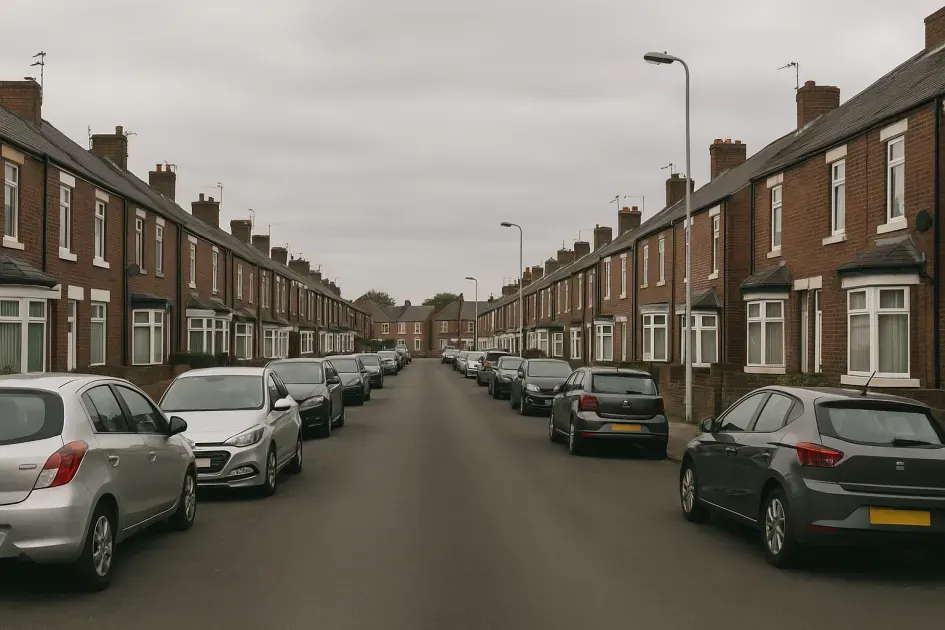
Height and weight limits near multi-storey car parks, tight back lanes around terraces, and sharp turns into courtyards can block larger vans. Choosing a shorter wheelbase or shuttling from a nearby wide street prevents time lost to repositioning.
Parking and permit constraints
Resident zones and permit-only streets near dense housing restrict where vans can wait. Securing visitor permits or arranging a temporary dispensation avoids circling and keeps the kerb-to-door carry short.
How clean-air or charge-zone rules affect moves in Sunderland
No active clean-air or charge zone currently applies in Sunderland. Even without a citywide charge, central access controls, timed loading bays and building-managed docks still determine viable approach routes and the duration of each stop. Plan for legal stopping points, keep an alternative bridge route ready, and align van size with bay length to maintain schedule reliability.
Practical route-planning examples
Example 1: City-centre flat with a timed loading bay: arrival set before the window opens, kerbside confirmed for van length, and a backup bay identified. Commuter peaks and event timings avoided to keep the slot. The timing side of that is explored further in when Sunderland moves tend to take longer.
Example 2: Terrace street with permit parking: visitor permit displayed, cones or a resident-held space arranged, and a short-wheelbase van chosen to fit between cars. Result: minimal carry and no mid-load relocation.
Example 3: Managed office to apartment move: goods-lift booked, dock clearance checked for tail-lift height, and a buffer added before the lift slot. A secondary route across the Queen Alexandra Bridge protects the timetable.
Example 4: Split drop-offs across Southwick and Silksworth: routing avoids school-run pinch points, with planned staging on wider roads rather than tight cul-de-sacs. Each stop’s carry route is mapped to reduce handling time.
Example 5: Matchday near the Stadium of Light: approach timed well before fan arrivals; alternative parking arranged outside marshalled zones; hand trolleys used to cover a slightly longer carry from a legal loading point.
Practical route-planning checklist
- Timed loading bays → Reserve a slot and match arrival to the window; pre-identify a legal overflow bay nearby.
- Permit-only streets → Secure and display visitor permits; brief the crew on exact parking location to avoid circling.
- Narrow or one-way access → Select a shorter wheelbase or plan a shuttle from a wider road; bring dollies for longer carries.
- Booked lifts or docks → Confirm slot times, dock height and access route; add a buffer before the slot to absorb traffic delays.
- Event or works near routes → Check calendars and roadworks; pre-plan an alternative bridge crossing and adjust departure to miss peaks.
Apply neighbourhood context
Street width, parking rules and event spillover vary across Sunderland. Check local constraints at both ends to set realistic timing and vehicle choice.