What matters operationally
The best route is not always the shortest route. What matters is whether the van can arrive at a time when the legal stopping point is available and the building is ready to receive the load. Early checks on one-way streets, central controls and likely congestion points help avoid loops and late turns that waste time near the destination. A close legal stop and a clean path from kerb to door nearly always matter more than saving a minute on the drive.
Traffic timing around commuter peaks and school runs can also affect unloading because full bays and busier roads make re-parking harder. Confirming permits, lift bookings or concierge access before the van sets off is often what keeps the day moving. The timing side of that is explored further in when St Albans moves tend to take longer.
How to plan around restrictions
Check the route in advance for timed loading bays, pedestrian-priority areas, height or weight limits, and whether the final approach has realistic turning space. Then match arrival to the permitted window, not just to the sat-nav estimate. In central areas, the final 100 metres often decide whether unloading starts quickly or stalls. Those access constraints feed directly into how moving costs are shaped by access and time. That is visible in areas such as man and van services in Hadley Wood. One practical example appears in man and van services in Harpenden.
Eight route-planning variables in St Albans
Traffic timing patterns
Commuter flow on routes toward the centre and surrounding junctions can narrow arrival windows quickly. Planning around quieter periods keeps the approach more stable and the first loading slot easier to hit.
Central access constraints
Pedestrian-priority streets, one-way systems and temporary town-centre adjustments all affect how the van reaches the address. The cleanest approach is usually the one that avoids last-minute manoeuvres.
Kerbside loading conditions
Timed bays, short-stay restrictions, bus stops and marked controls reduce flexible stopping space. Securing a lawful position near the entrance is often the biggest logistical win of the day.
Building access limitations
Lift bookings, concierge hours, loading-bay limits and awkward corridors can all cap unloading speed. If building access is not ready when the van arrives, the route plan has already failed.
Route predictability and delays
Temporary works, school zones and junction pressure create variability even on short journeys. A route that is slightly longer but more reliable is often the better operational choice.
Vehicle suitability and access
Tighter roads or restricted approaches can make a larger van slower overall if it cannot reach the best stopping point. Matching vehicle size to the last stretch of the route is often more important than raw capacity.
Parking and permit constraints
Controlled parking often means the best legal loading position has to be arranged rather than assumed. Without that preparation, unloading time usually stretches immediately.
How clean-air or charge-zone rules affect moves in St Albans
No active clean-air or charge zone currently applies in St Albans. Even so, timed loading, central access rules and street geometry still shape route planning in practical terms. The important task is to align the vehicle, the legal stopping point and the building window so loading can start without delay.
Practical route-planning examples
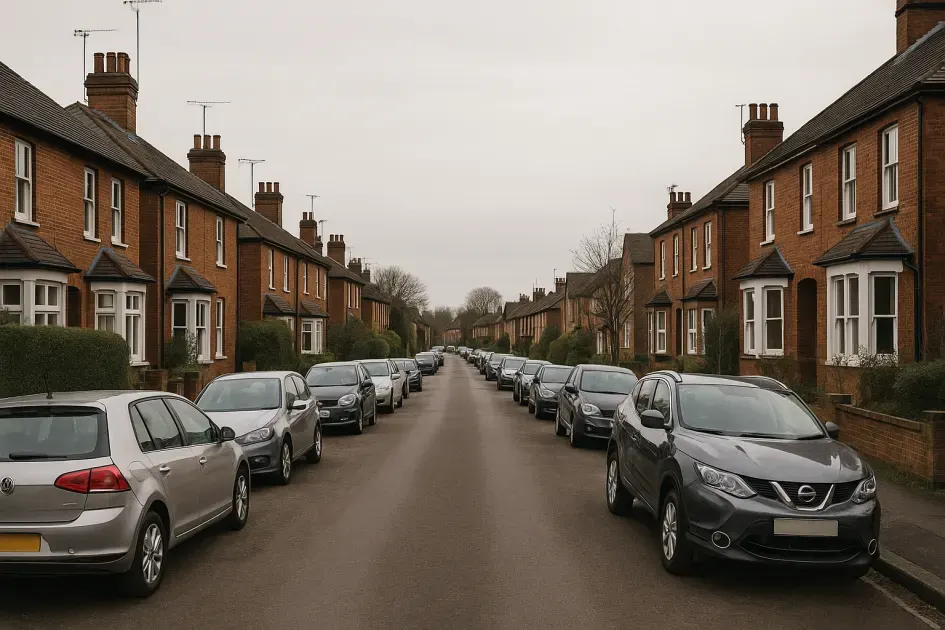
Example 1: Permit-controlled terrace near the centre. Secure a visitor permit or bay suspension, arrive before the busiest local traffic period and use the simplest approach into the street.
Example 2: City-centre flat with a managed loading bay. Book the bay and lift, confirm vehicle dimensions and arrive inside the access window so the crew can unload immediately.
Example 3: Cross-town move on a busier market or event day. Shift the collection slightly earlier and route around the busiest central sections to protect the unloading slot.
Example 4: Narrow residential lane with limited turning space. Use a shorter-wheelbase van or a shuttle plan from a wider side road to avoid losing time in awkward manoeuvres.
Example 5: Two-stop move across Harpenden and St Albans with timed bays. Confirm both windows and keep a buffer between them so one stop does not compromise the next.
Practical route-planning checklist
- Controlled Parking Zone near the door → Arrange a visitor permit or bay suspension so loading stays legal and close to the property.
- Pedestrian-priority or timed loading street → Match arrival to the permitted window and note a lawful fallback stopping point.
- Lift or dock booking required → Reserve the slot, confirm keys or fobs, and make sure unloading can start the moment the van arrives.
- Peak-hour congestion on main approaches → Use calmer approach roads and allow a buffer so late traffic does not break the building access plan.
- Long kerb-to-door distance → Request the nearest legal bay, bring trolleys or ramps, and clear internal routes in advance.
Apply neighbourhood context
Adjust route plans for local street layout, parking controls and access timing before fixing the arrival window.