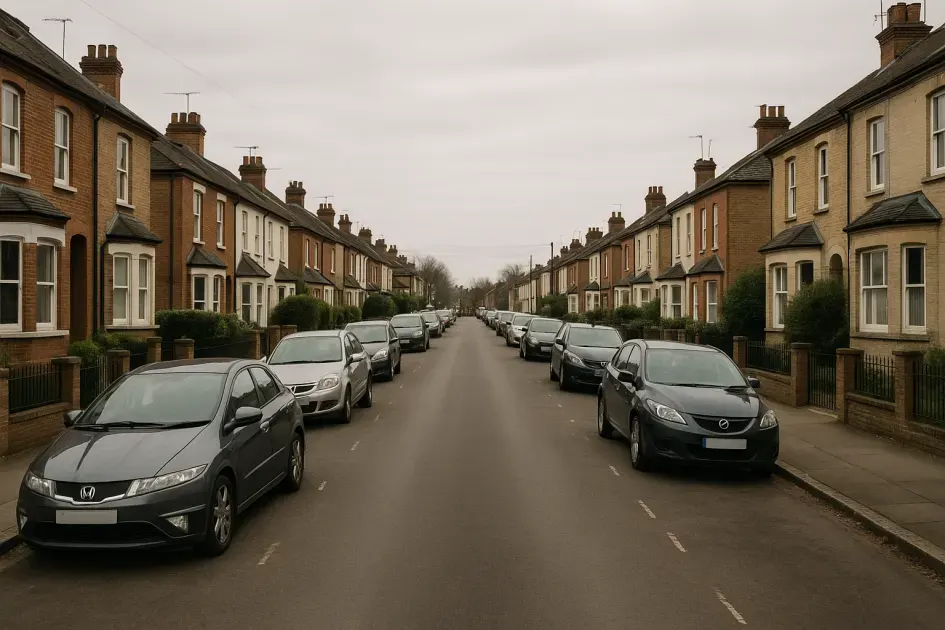
What affects cost planning for moves in St Albans
Costs rise when the crew cannot keep a steady loading rhythm. Distance still matters, but most local pricing differences come from what happens at the kerb and inside the property. A short trip can still become a slower, more expensive move if the van parks badly, if a flat has stairs and no lift, or if bulky furniture has to be turned through tight spaces. That pattern is also reflected in how neighbourhood layout changes moving time.
Stairs add cost because they slow every item, especially wardrobes, sofas and white goods. Parking restrictions add cost when a legal space is too far from the entrance or when the van has to be moved mid-job. Lift bookings, concierge rules and shared corridors also extend working time when access is not ready. Loading time usually outweighs driving time on many St Albans moves, particularly where the streets are tight and the route is otherwise short. Part of that broader picture comes from how route planning affects St Albans moves. Scheduling pressure becomes clearer when viewed alongside St Albans demand patterns at different times. Similar time pressures can also appear in man and van services in Harpenden.
What affects cost planning for moves in St Albans
| Cost driver | What changes the time | Why it affects total cost |
|---|---|---|
| Parking access | Permit zones, limited bays, or narrow roads push the van further from the door | Increases carry distance and shuttle trips, so loading and unloading take longer |
| Building layout | Stairs, tight corridors, split levels, or lift queues slow each item moved | More handling steps per item extend labour hours |
| Van size / movers | Too small a van or too few movers require extra trips or slower handling | Poor sizing extends duration; the right setup shortens the schedule |
| Route timing | School-run, commuter peaks, or roadworks add journey unpredictability | Delays arrival and compresses loading windows, increasing total hours |
| Loading distance | Long kerb-to-door walks, steps, or courtyard routes | Slows the cycle for every load, raising cumulative labour time |
Typical move price patterns in St Albans
Because labour time is the main driver, total cost rises or falls with the real pace of the job. Two moves that cover the same distance can price very differently when one has direct parking and the other depends on a long carry, a booked lift or awkward access through the building.
| Move type | Typical time range | What affects duration |
|---|---|---|
| Small local move with easy access | Short window | Driveway or close bay, ground-floor access, minimal dismantling |
| Small flat with stairs or permit parking | Short to half-day window | Stairs, longer carry from a legal bay, repeated shuttle loads |
| 1–2 bed apartment with lift booking | Half-day window | Lift timing, concierge slots, corridor length, and waiting |
| 2–3 bed house within St Albans | Long half-day to full-day | Item volume, crew match, and narrow residential parking conditions |
| Local move with town-centre delivery | Half-day to full-day | Loading bay windows, traffic timing, and restricted access geometry |
Cost examples by move type
Example 1: Studio to studio, ground-floor, driveway parking
Driveway access and a short walk to the van keep loading quick and predictable. With little dismantling and simple access at both ends, the labour time stays compact.
Example 2: Small flat, one flight of stairs, permit parking
The van has to use a legal bay further down the road. Each trip involves a longer carry and a stair lift, so the schedule stretches even though the drive itself is short.
Example 3: One-bed apartment to one-bed, lift booking window
The building needs a lift reservation and protective covering. If the lift is shared or delayed, the crew waits between trips, adding paid time without adding progress.
Example 4: Three-bed house to house, narrow residential road
A tighter road limits where the van can stop, so heavier items may need staging at the kerb. The right crew size matters here because poor access can slow even a well-planned house move.
Example 5: Apartment to town-centre apartment, loading bay and building rules
The destination requires a booked bay, lift access and an arrival outside the busiest period. If any part of that chain slips, unloading slows and the total labour time climbs quickly.
How to keep the move efficient
Most cost control comes from removing avoidable delays before the day starts. Good planning means the crew spends more time moving items and less time waiting, walking back empty-handed or solving access problems on site.
- Permit or restricted parking → Arrange a visitor permit or pre-paid bay so the van can park close to the door.
- Long carry routes → Stage items near the exit the night before to shorten the carry on the day.
- Stairs or narrow corridors → Use sealed, stackable boxes and avoid loose items that slow safe handling.
- Lift bookings or concierge rules → Reserve the lift and loading bay, and share booking details with the crew in advance.
- Large items or dismantling → Partially disassemble wardrobes or beds and keep fixings together to prevent on-site delays.
- Traffic timing → Aim for arrival outside school-run and peak periods to keep the route predictable.
- Access clarity → Send photos of entrances, stairwells and parking signs so the crew brings the right kit.
Across St Albans, parking layouts, housing density and street widths vary between terraces, cul-de-sacs and apartment blocks. These differences change loading distance, legal parking options and lift availability, which in turn alter the hours required. For broader city-wide coverage context, explore St Albans man and van services.