Islington Moving Guide: Step-by-Step Planning for Moving Day

A smoother move in Islington comes down to controlling the factors that change time: kerb access, internal handling routes, and realistic scheduling. In this borough, cost overruns rarely come from distance alone. They come from repeated carry cycles, unstable loading positions, and building friction that slows the handling rhythm. This guide breaks Islington down at street level so you can plan with the real constraints in mind.


1) Confirm loading access early

In Islington, the first planning decision is simple: where can the van realistically load? Controlled Parking Zones (CPZ), high kerb density, and mixed-use streets mean the nearest space is not always the usable space. If the van cannot load close to the entrance, carry distance increases — and repeated carry distance is one of the strongest time multipliers in the borough.

How different Islington street types change the plan

Main-road or corridor frontage: Properties on or just off busier corridors (for example near Angel, Essex Road or Holloway Road) face interruption risk. The issue is not just traffic speed — it is circulation, short stops and reposition pressure. Here, the strategy is to protect a stable loading position early and keep the heaviest items moving first.

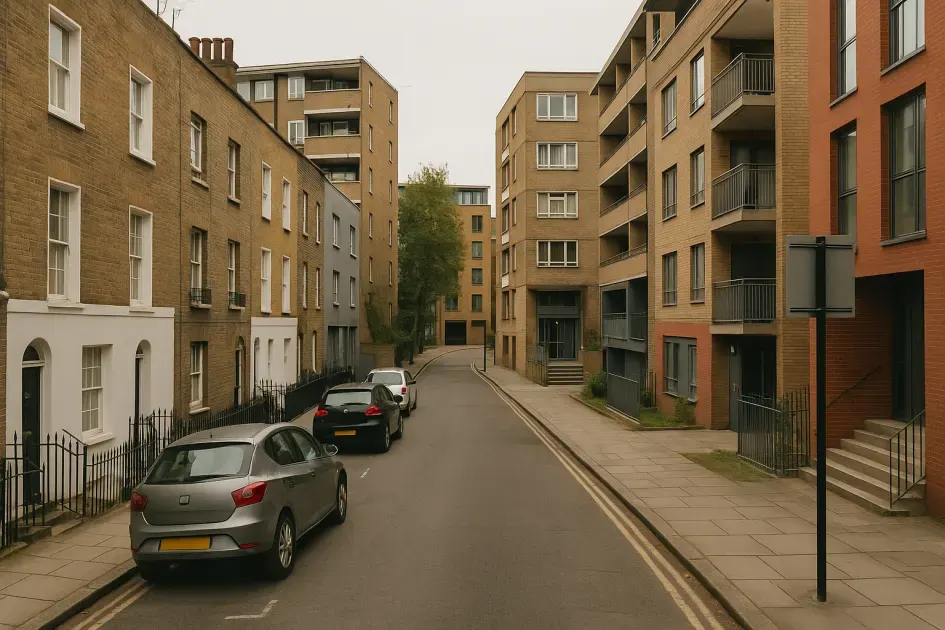
Residential grid streets (Highbury / Barnsbury-style layouts): These streets are often calmer but tightly parked. Kerb space can be physically limited, so even short carry distances become repetitive. The aim is to secure the closest workable position and avoid mid-move relocation.

Mews, gated or set-back entrances: Some Islington properties sit behind gates, down short lanes, or with raised entrances. Even when the road is easy, the entrance route adds distance and steps. Planning staging points near the exit reduces repeated internal walking time.

Managed blocks and modern developments: Kerb access may be clear, but the entrance-to-flat route can dominate the move. Long corridors, access fobs, service doors and lift rules change handling speed. In these cases, internal distance matters more than street distance.

Start with Islington parking permits and suspensions so you understand what applies on your specific street before moving day.


2) Prepare for the building layout

Once kerb access is mapped, the next major driver is internal handling time. Islington includes period terraces, flat conversions, mansion blocks and newer mid-rise developments. Narrow staircases, tight turns on landings, raised thresholds and long communal corridors can all slow the carry cycle.

Conversions often mean stairs and awkward angles. Managed blocks often mean distance: entrance door, lobby, corridor, lift, corridor again. Each segment adds seconds, and seconds repeated across dozens of trips become hours.

Measure bulky furniture in advance, plan disassembly where needed, and clear the internal route before loading begins. Removing uncertainty inside the building protects the overall schedule.

For detailed layout patterns, see property challenges in Islington.


3) Choose a sensible moving window

Timing affects both travel and loading behaviour. In Islington, busier periods increase interruption risk: more circulation, more short stops, and less tolerance for a van holding position. Midweek mornings often provide steadier conditions than weekend peaks.

If you are working around a fixed key handover or lift booking window, build in buffer. A delayed start can cost the cleanest loading window of the day, which increases carry distance and internal friction later in the move. Protecting the first hour often protects the entire schedule.

For borough-specific timing guidance, see best time to move in Islington.

For the wider context, see man and van in London.


4) On the day: keep the move flowing

The objective on moving day is to maintain a continuous loading cycle. Most overruns happen when the cycle breaks — waiting for keys, adjusting furniture that does not fit, or losing the kerb position.

  • Confirm the loading plan before starting so the van position and carry route are clear.
  • Stage items near the exit to reduce repeated internal walking time.
  • Prepare lifts and communal access so the first hour runs without interruption.
  • Keep essentials separate to avoid mid-load searching.
  • Allow buffer before handover so the final phase is not rushed.

How costs are influenced in Islington

In most Islington moves, total cost is a function of time. Parking constraints, repeated carry distance, stairs, corridor length and lift access are the most common reasons moves extend. Road distance within the borough is often less significant than handling time once on site.

For a breakdown of the key drivers, see moving costs in Islington and hidden moving costs.


London-wide trends

For broader demand and seasonal context across the capital, see the London moving trends report.


Book a man and van in Islington

When you are ready to plan your move, start here: man and van in Islington.


Islington Moving Guide FAQs

Common questions about planning and preparing for a move in Islington, where kerb access and building layout often determine total time on site.

Loading access should be confirmed first. In Islington, parking constraints and kerb practicality are often the biggest time drivers. If the van cannot load close to the entrance, carry distance increases and the handling cycle slows.

Before moving day, identify where the van can realistically stop and whether that position can be held for the first hour. Protecting a stable loading point early keeps the move on schedule.

Floor level, number of stairs, lift size and availability, entrance layout, corridor length, and any booking or concierge rules are the most important details.

In Islington conversions and mansion-style blocks, narrow staircases and tight turns can slow bulky items. In managed buildings, lift timing and internal distance often matter more than road distance.

Reduce uncertainty before the van arrives. Confirm kerb access, measure large furniture, plan disassembly where needed, and clear internal routes.

Stage boxes near the exit so the first loading cycle runs smoothly. Most overruns begin with a slow first hour, which then compounds across the rest of the move.

Yes. Timing affects both travel conditions and street behaviour. Busier periods increase interruption risk, particularly near mixed-use corridors.

Midweek mornings often provide steadier loading windows than weekend peaks. If you are working around fixed handover or lift booking times, add buffer so a small delay does not cascade into a longer overrun.

They can. Properties near busier roads may face repositioning risk, while residential grid streets can be tightly parked even if quieter.

Set-back entrances, mews access, and gated developments increase carry distance. Managed blocks introduce internal handling time through corridors and lifts. Identifying your street type helps you plan realistically.

Start from the main area page: man and van in Islington. From there, you can review local support guides and confirm the access details that affect your move.