What matters operationally
Reliable moves in Basildon begin with route predictability on the A127 and A13 and end with usable stopping points at both addresses. A journey that looks simple on a map can still run long if the destination has timed bays, limited loading rights, a busy forecourt or a long carry from the nearest legal stop. Crews lose time when the van cannot stay in the right place. Most route problems are really access problems in disguise. Those constraints feed directly into how moving costs are shaped by access and time. The timing side of that shows up in when Basildon moves tend to take longer. That is especially visible in man and van services in Benfleet. Similar route constraints also appear in man and van services in Thurrock.
How to plan around restrictions
Check traffic conditions before the day and again before departure, confirm loading arrangements at both ends, and have a fallback stopping point ready if the first option is blocked. In Basildon, town-centre access, retail park pressure, timed bays and building procedures can all cut into the schedule. A flat with a booked lift, a terrace on double yellows, or a business unit with a managed dock each needs a slightly different plan. This helps you avoid losing time to problems that were visible in advance.
Eight route-planning variables in Basildon
Traffic timing patterns
Commuter peaks on the A13 and A127, school-run traffic near residential estates, and weekend retail flows around Basildon town centre all add travel variability. Leaving earlier and sequencing addresses to avoid bottlenecks stabilises arrival windows.
Central access constraints
Basildon town centre streets can have limited vehicle access, pedestrian-priority periods, and one-way systems. These reduce approach options and may force a longer kerb-to-door carry, extending each loading cycle.
Kerbside loading conditions
Timed bays, active bus lanes, and double-yellow sections with limited loading exemptions shape where a van can stop legally and safely. When the legal stop is farther from the entrance, plan dollies and extra hands for efficient shuttling.
Building access limitations
Lifts that require booking, tight stairwells, or concierge-controlled delivery docks create fixed windows. Missed slots push work into slimmer time bands and can cause periods where the crew must wait rather than load.
Route predictability and delays
Incidents on the A13/A127 corridors or temporary roadworks turn predictable runs into slow segments. Monitoring live traffic and staging a back-up route keeps the vehicle moving even when the primary route degrades.
Vehicle suitability and access
Larger vans speed loading but may struggle with height limits, weight restrictions, or narrow residential turns. Matching vehicle size to street geometry and car-park clearances avoids re-routing or offloading to smaller shuttles.
Parking and permit constraints
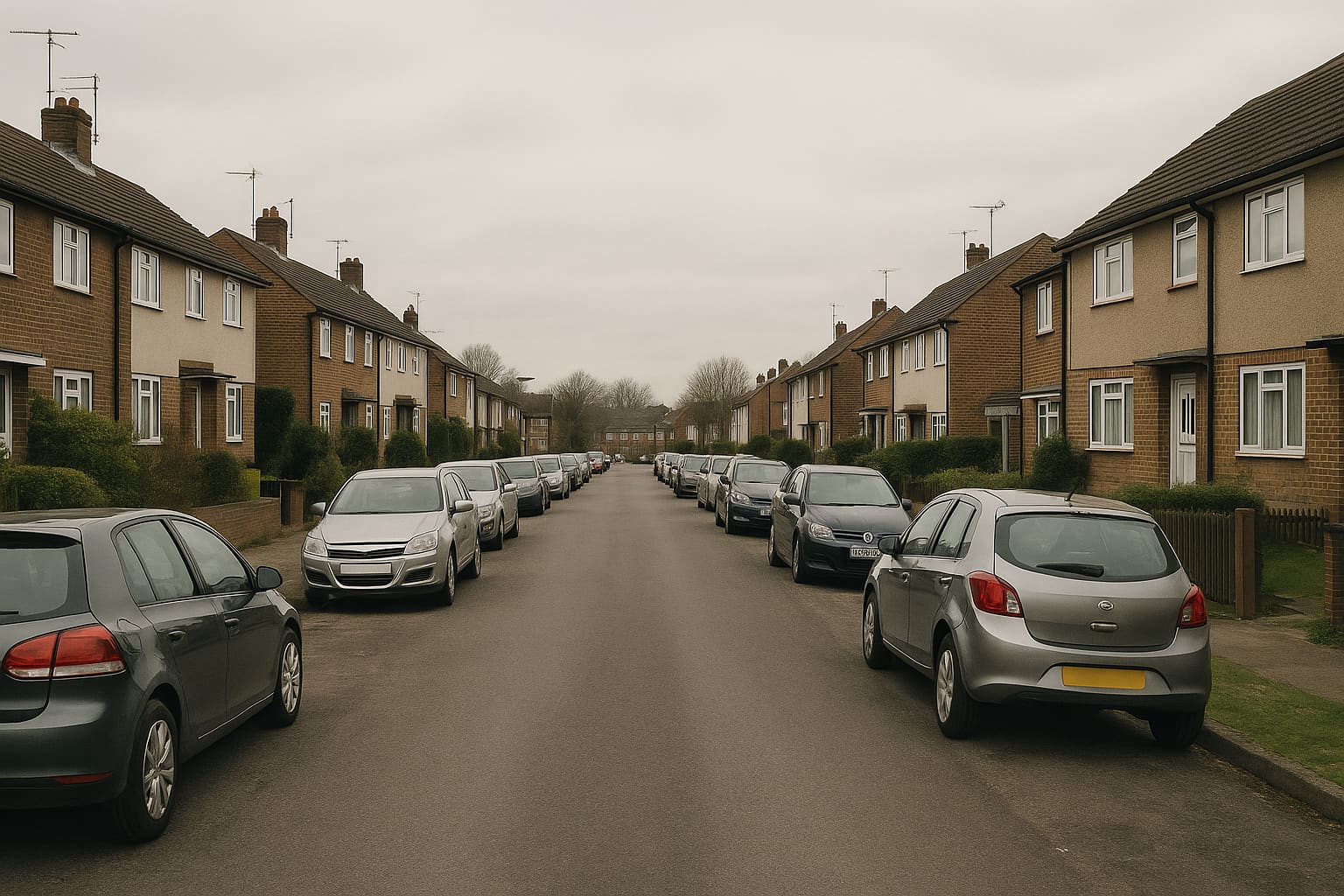
Estate-controlled bays, residents’ permit zones, and private car parks can enforce timed stays or require pre-authorisation. Without a permit or code, crews face longer carries or enforced moves to distant streets.
How clean-air or charge-zone rules affect moves in Basildon
At present, no active clean-air or charge zone currently applies in Basildon. Even so, central loading controls, height limits, and timed bays still govern access and timing, so route planning must confirm approach streets, legal stopping points, and any building-managed loading windows before departure.
Practical route-planning examples
Example 1: A flat near Basildon town centre has a timed loading bay. The crew aligns arrival with the bay window and stages items by lift; missing the slot would add a street carry and extend the schedule.
Example 2: Moving from a terraced street off the A127 during the school run, the van parks legally two houses away due to permit parking. A longer kerb-to-door carry is planned using dollies to maintain loading pace.
Example 3: An office unit with managed building access requires a goods-lift booking. The route is timed to avoid retail peaks; the goods-lift slot is protected with a 20‑minute buffer to prevent idle crew time.
Example 4: A home near a retail park faces weekend congestion. The move is sequenced for early morning, with the return leg using an alternate route to avoid queues at major junctions.
Example 5: A high-roof van cannot clear a multi-storey car park height limit. The plan switches to roadside loading with cones and a lookout, keeping the van within legal loading allowances while protecting the work area.
Practical route-planning checklist
- Timed bays at either address → Confirm slot times in writing and align departure to arrive within the loading window.
- Permit or private parking rules → Arrange a visitor permit or pre-authorisation; if unavailable, identify the nearest legal loading point.
- Narrow turns or height limits → Verify vehicle dimensions against street geometry and car-park clearances; switch vehicle or route if needed.
- Managed building procedures → Reserve lift/dock access and obtain contact details for onsite control to avoid waits at handover.
- Unpredictable corridor traffic → Monitor A13/A127 conditions; set a fallback route and depart earlier if speeds deteriorate.
Apply neighbourhood context
Neighbour conditions vary—permit controls, retail peaks, street width and property access all change the best route plan. Use these links to adjust timing and legal stopping for your addresses.
We provide man and van services across the wider area, including man and van services in Wickford, with bookings managed through one system coordinating bookings with pre-checked drivers.


