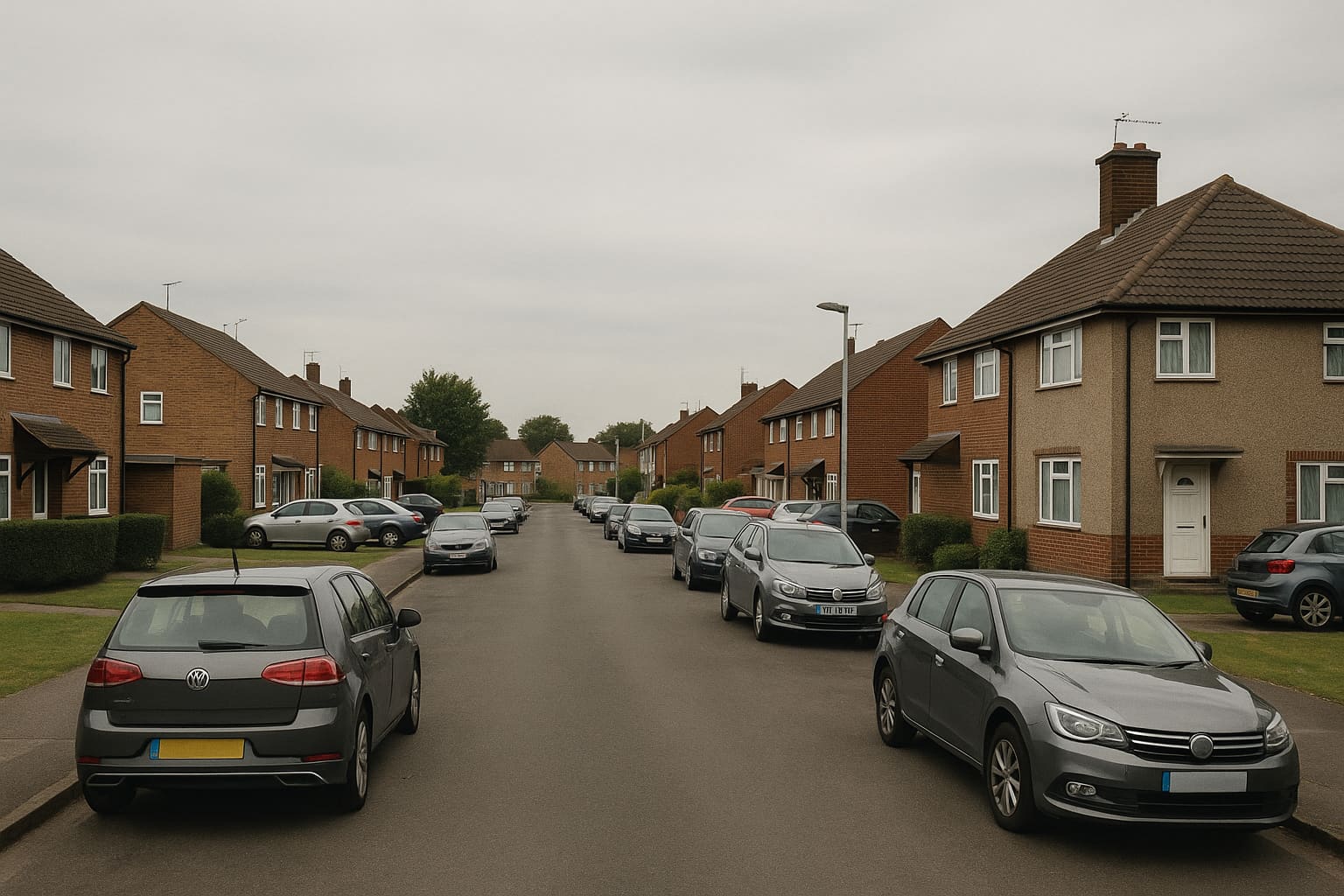
Why demand patterns matter
When move requests cluster, the first thing to disappear is flexibility. Early slots go first, loading bays get booked sooner and crews have less room to recover if the first address runs late. That compression turns a manageable delay into a knock-on problem for the rest of the day. The local conditions behind that are covered in neighbourhood-specific moving differences. A similar pattern shows up in man and van services in Rayleigh.
High-demand periods multiply operational risks. Lifts and loading bays are reserved earlier, permit streets are harder to stage on, and more vans are competing for the same kerb space outside flats, terraces and busy roads.
Availability is not just about getting a slot in the diary. It is about getting a slot that still leaves enough buffer for parking, access and travel. If you are planning a move, this is where timing usually matters most.
Typical Basildon demand cycle
| Period | Operational effect |
|---|---|
| Weekends | Reduced start-time flexibility and tighter loading windows; more vehicles near retail corridors and estates limit kerb space and extend carries from van to door. |
| End of Month | Tenancy handovers cluster; lifts and loading bays get reserved, pushing later starts and increasing knock-on delays between addresses. |
| Summer / Student Areas | Turnover spikes shrink parking access; simultaneous move-ins cause longer staging times and fewer options to reroute or re-time. |
| Midweek (Non-peak) | Broader availability of start slots, easier permit coordination, and better lift access create smoother sequencing and recovery room for setbacks. |
Eight Basildon timing drivers
1) How weekend bookings reduce start-time flexibility
Weekends attract the most enquiries, so earlier starts are usually taken first. Later arrivals then run into busier streets, tighter building windows and less forgiving parking.
2) Why end-of-month tenancy cycles cluster moves
Rentals and key handovers often line up at month-end. That means more people are trying to use the same bays, lifts and street space on the same few days.
3) How student-area turnover creates seasonal spikes
Late-summer changeovers can bunch move-ins and move-outs into a narrow period. Shared entrances become busier, kerbside space disappears faster and turnaround slows.
4) Why school-run traffic increases scheduling risk
Morning and afternoon school traffic can turn short local journeys into stop-start routes. That matters most when a later lift slot or timed bay depends on arriving within a narrow window.
5) How commuter traffic changes route predictability
Commuter pressure on the A127/A13 corridors makes planning less certain at the edges of the day. The issue is not just slower travel, but less reliable travel. One place this becomes visible is man and van services in Benfleet.
6) Why building booking rules reduce available slots
Managed blocks often require booked lifts and loading bays. On peak dates those slots fill quickly, so crews may have fewer practical options and longer waits between stages.
7) How narrow residential streets increase timing sensitivity
Terrace roads and cul‑de‑sacs can be workable on a quiet weekday but much slower when more residents, visitors and delivery vehicles are around. A small parking problem can quickly become a time problem.
8) Why mixed-density neighbourhoods produce uneven demand
Areas with both flats and houses often funnel several moves through the same short stretch of road or shared access point. Those pinch points create brief blockages that ripple through the day.
Scenario modelling
Scenario A: Midweek, flexible start from a semi‑detached to a lift‑served flat. After the school‑run window, parking is available, lift is free, and a broad arrival window preserves contingency.
Scenario B: Saturday terrace‑to‑terrace move on permit parking streets. Kerb space is contested; a longer carry and tight loading window add handling time, so a backup staging spot prevents overrun.
Scenario C: Month‑end flat‑to‑flat with lift booking, permit zones, and afternoon school‑run nearby. A delayed first address pushes into restricted lift slots, forcing split loads and route changes to avoid congestion.
Practical scheduling checklist
- Weekend slot compression → Request earliest feasible window or accept a wider arrival range to preserve buffer for overruns.
- Permit‑only streets → Arrange day permits and place advance notices to secure kerb space within safe carry distance.
- Lift/bay booking limits → Reserve lift and loading bay in writing and align van arrival 15–30 minutes before the slot opens.
- School‑run peaks → Set load‑out after the morning peak and plan approach routes that avoid school frontages and known bottlenecks.
- Long kerb‑to‑door carries → Measure distance and add a dolly/extra porter; stage items near exits the day before to shorten loading cycles.
Midweek moves usually stay easier to control because there is more room for the van, more choice in start times and less competition for shared access points. That extra slack often matters more than a slightly shorter route.
We provide man and van services across the wider area, including man and van services in Laindon, with bookings managed through a single booking system with vetted local drivers.


