
Best time to move in South Leeds

When is it easiest to move in South Leeds?

The simplest moves in South Leeds usually happen midweek (Tuesday–Thursday) and away from the end of the calendar month. These times line up with lower local demand for loading space, reduced competition for on-street parking in residential areas such as Beeston and Middleton, and fewer bank-holiday shoppers around Hunslet and Holbeck. For practical planning, choose a weekday morning start after 09:30 to miss the morning A61/M621 commuter peak, and allow extra time for inner-street manoeuvres in terraced areas.

Why weekdays work better here

Weekday mid-month moves avoid the clustering of tenants and homeowners that fills local slots at the end of each month. In South Leeds, where many streets are permit-controlled and pay‑and‑display on-street spaces are limited, moving on a weekday makes it easier to secure a short-term suspension or a nearby free parking space — which directly reduces carry distance and total loading time.

Use removal service in South Leeds first for the core service page when timing research is only one part of the plan.

For a broader regional view, see Leeds moving timing guide.

In practice, this usually connects with To balance timing with the other factors that shape the day, review moving guide for South Leeds and packing advice for moving in South Leeds as well..

When is it hardest to move in South Leeds?

Moving is hardest during end-of-month weekends, school holiday Saturdays, and during peak commuter times. These periods combine high demand for removals with heavier traffic on main routes (M621, A61, A643), busy local shopping areas and full resident parking zones. Expect longer waiting times for loading bays, potentially larger carry distances when parking further away, and slower journeys across the city.

End-of-month and rental-cycle spikes

South Leeds follows the national rental pattern: tenancy turnover and move-outs cluster around month-ends. The last three working days of each month commonly produce the most bookings, so removal vehicles, parking suspensions and lift bookings in purpose-built blocks become scarce. Operationally this means extra loading time, more porterage across stairs, and higher hourly charges to complete the job on schedule.

Property types and access constraints

South Leeds contains a mix of property types, and each brings specific timing implications:

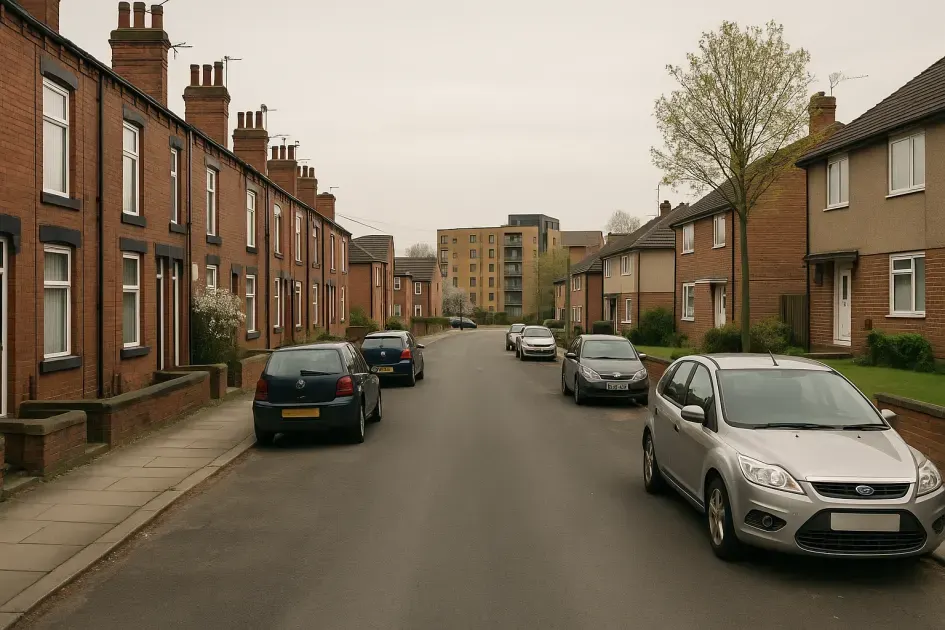
  • Terraced houses (Beeston, older Hunslet streets): narrow pavements and no drives often force parking 20–100 metres away. Long carries on stairs increase labour time and risk of weather exposure.
  • Flats (purpose-built blocks and conversions in Holbeck and Beeston): many blocks have small lifts or none at all. Goods lifts, where present, often require advance booking and have size limits that affect large wardrobes or sofas.
  • Semi-detached houses and houses with drives: offer quicker loading and shorter carry distances, reducing operating time.
  • New builds and apartment complexes: modern blocks may provide concierge, loading bays or scheduled lift slots, but those facilities are frequently booked or restricted to certain hours — failure to reserve them extends loading windows and can cost extra for out-of-hours access.

Real operational friction and its implications

Typical friction in South Leeds includes parking permits and loading time limits, narrow access that slows trolley use, and lifts with dimensional limits. Each additional 10–20 metres of carry or extra stair flights commonly adds 5–15 minutes per large item to the job and requires more manpower. In practice this increases the total move duration and therefore cost if pricing is hourly or if an extra vehicle is needed because a lift won’t take large items.

Traffic patterns and timing tips

Key arterial routes serving South Leeds are the M621 and A61. Morning inbound congestion (roughly 07:30–09:30) and evening outbound (roughly 16:00–18:30) are the busiest windows. Local bottlenecks occur around industrial estates and retail parades in Hunslet and near junctions on the M621, particularly when roadworks are active. Allow an extra 30–60 minutes for any cross-city leg during these times and avoid planning tight back-to-back jobs when crossing the city centre.

Practical time-of-day choices

Where possible, schedule loading to start after the morning peak and aim to be clear of major junctions before the evening rush. For moves entirely within South Leeds, early morning starts (pre-08:00) can beat local street parking pressures but may trigger resident complaints or require temporary loading suspensions, so check local restrictions first.

Seasonal effects and school holidays

Seasonality in South Leeds closely follows the wider market: late spring and summer (May–August) are busiest because families move around school holidays and many tenancies end in July. Bank-holiday weekends are particularly busy and often more expensive. Winter moves are quieter, but wet weather, ice and narrow stepways in older terraces make handling bulky items slower and can require protective floor coverings or additional plastic sheeting — increasing time on-site and ancillary costs.

Weather — real-world impacts

Rain is common in Leeds and has a direct operational cost in South Leeds where long carries and exposed stair runs are frequent. Wet weather increases the time to wrap and protect items, slows loading, and increases the risk of damage on narrow steps. Freezing conditions add risk on stone steps and pavements, slowing teams and sometimes requiring de-icing or additional manpower to move safely.

How to plan for the timing you choose

Decide your move date with these local realities in mind: avoid end-of-month and summer Saturday peaks if cost and speed matter; confirm lift dimensions and lift-booking windows in flat buildings; check for Residents' Parking Zones or loading bay restrictions so that parking suspensions can be requested early; and build a 20–60% time buffer into any cross-city travel that uses the M621 or A61.

For more local information about booking a move in South Leeds and what to check on the day, see the parent removals page at removal service in South Leeds. For a broader view of timing choices across Leeds, see the guide at Leeds moving timing guide. For packing details that interact with timing and access constraints in South Leeds, visit packing advice for moving in South Leeds.


South Leeds moving — quick questions

Frequently asked questions about timing removals in South Leeds, with answers based on local access, traffic patterns and seasonal demand.

Weekends are often busier and more expensive because most people choose weekends for home moves. In South Leeds this also coincides with local shopping traffic around Hunslet and Beeston. If avoiding rush-hour congestion and parking competition is a priority, midweek (Tuesday–Thursday) mid-month moves generally face less demand and fewer local parking clashes.

End-of-month days (especially the last three working days) see sharp spikes in bookings due to tenancy turnovers. In South Leeds that drives up demand for loading bays and longer wait times at the kerb, so expect higher costs and the need to book skips or suspended parking earlier if moving on these dates.

Many South Leeds neighbourhoods have Victorian terraces with narrow pavements and no off‑street parking, and mid-rise flats with small lifts or no lift. These access constraints typically increase carry distance and loading time, so confirm lift dimensions, stair widths and local parking restrictions before your move.

Yes. Summer school holidays (June–August) and the start/end of term cause higher demand from families and landlords. This inflates booking availability and can push prices up, particularly on Saturdays. Booking at least 4–6 weeks in advance for summer moves is advisable.

Morning inbound congestion on the A61 and M621 (approximately 07:30–09:30) and evening outbound peaks (16:00–18:30) add unpredictable delays. For moves that cross central Leeds or use the M621, factor in extra travel time and avoid peak commuter windows where possible.

As soon as the date is fixed. Late timing decisions are one of the easiest ways to invite avoidable friction into the move.