
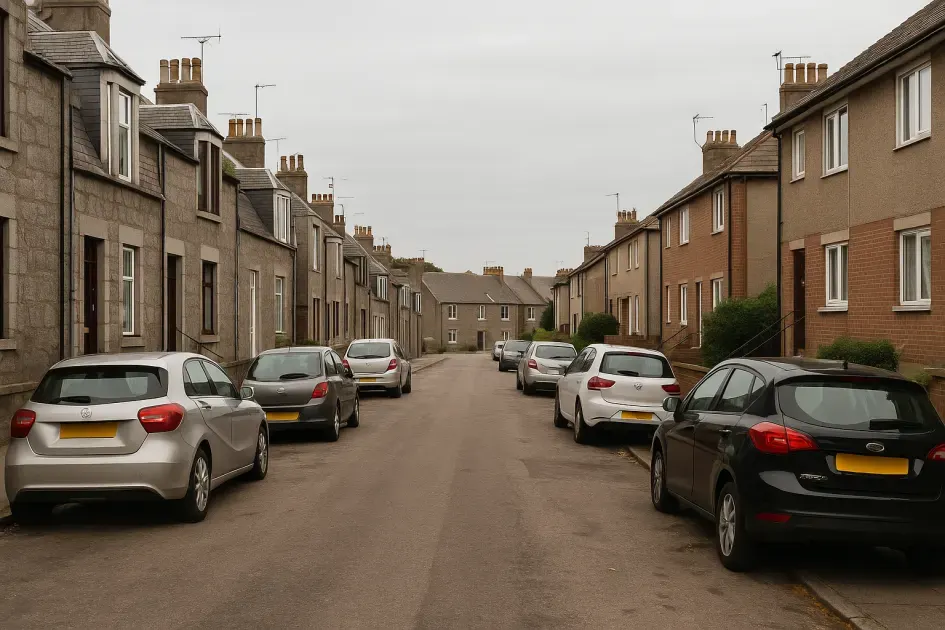
Where hidden costs come from in Torry
Torry's mix of older terraces, tenement flats, semi-detached houses and recent waterfront developments creates a variety of practical access challenges that translate directly into time and cost on removal day. For background on local pricing influences see moving costs in Aberdeen and the area overview at removals in Torry.
Use removals in Torry first for the core service page when you want the clearest route from cost checks to booking.
For a broader regional view, see moving costs in Aberdeen.
Waiting time charges: congestion and tight windows
Victoria Road (the A956) is the main spine into Torry and is frequently busy at peak periods, especially with buses and commercial traffic servicing the harbour. When van arrival is delayed by traffic, or crews must wait for a parking bay to be cleared, removals companies commonly record waiting time as extra hours. On-site delays also increase vehicle turnaround time — if a second load is scheduled on the same day, late completion may push both jobs into overtime.
Parking permits, suspended bays and fines
Some streets in Torry operate resident parking zones and have limited kerbside space; the closest legal stopping place may be a controlled bay or a single-lane street. Securing a temporary loading bay suspension from Aberdeen City Council (or arranging a dispensation) usually takes advance notice and can carry an administrative fee. Failure to arrange this results in parking fines, potential clamping or forced relocation of the vehicle — each outcome causes delays and unplanned charges, and can require paying for a new permit or paying fines directly.
To spot where extra costs usually appear before booking, look at moving costs in Torry and Aberdeen access and property guide as well.
Long carry distances from legal parking
Many Torry properties front onto narrow streets or sit above steep slopes where kerbside space is limited. Older terraced houses and tenement flats often require the crew to carry boxes and furniture across narrow pavements, through alleys or up steps from a legal parking spot. Long carries increase the number of crew-hours required and can necessitate additional equipment (longer trolleys, protective padding), all of which are charged as extra time or materials on top of the headline move cost.
Extra labour for stairs, lifts and awkward access
Tenement flats and older semi-detached homes in Torry tend to have narrow stairwells and tight landings where two- or three-person lifts are needed for bulky items. New-build apartment blocks on the waterfront may have small service lifts that require booking with a building manager or concierge; if lifts are unavailable, teams must carry items up staircases, requiring more labour and greater handling time. This operational friction often adds a per-person hourly cost or forces a larger crew allocation.
Delays from local traffic patterns and street restrictions
Torry sees concentrated commercial traffic around the harbour and school-run surges at local schools, which can affect arrival windows and loading operations. Additionally, periodic roadworks or one-off events near the riverfront can introduce last-minute diversions onto narrower residential streets, compounding parking and access problems. These local traffic realities increase the chance of a move overrunning its planned slot, with knock-on costs for overtime and rebooked services.
Rebooking, overruns and the cost ripple
If a job in Torry overruns, the practical consequences are immediate: temporary parking suspensions may expire, building manager time slots can be missed, and crews may need to be kept on-site at extra hourly rates. In the worst cases, items have to be temporarily stored and a return visit arranged — each step adds handling and transport charges. Planning for the specific access profile of your Torry property reduces this risk; for more detail on how local access affects pricing see moving costs in Torry.
Practical implications for planning and budgeting
Because these are operational, not theoretical, costs: expect to allow extra time in arrival windows on busy roads like Victoria Road; factor in the possibility of paying for a short-term loading bay suspension or booking a building-manager window for lifts in new blocks; and anticipate higher labour costs where long carries or stair carries are unavoidable. Each of these is a predictable consequence of Torry’s built environment — not a generic warning — so build contingency time and budget into the moving plan to avoid last-minute charges.
Plan your move in Torry
Check the price and availability for your addresses, moving date and loading requirements. Book through Find My Man and Van; we allocate a suitable provider after booking.
Compact removals load: £209.00 total — example for Aberdeen.
1 × luton van; Two People to Load/Unload; 5 miles, 3 hours, ground-floor access. Modelled for 2 November 2026. Your quote depends on your actual move details and date.
Providers covering the Aberdeen area
Local coverage is a guide, not a reservation of these providers. Explore local providers.