
Why moving in Dyce commonly incurs unexpected charges
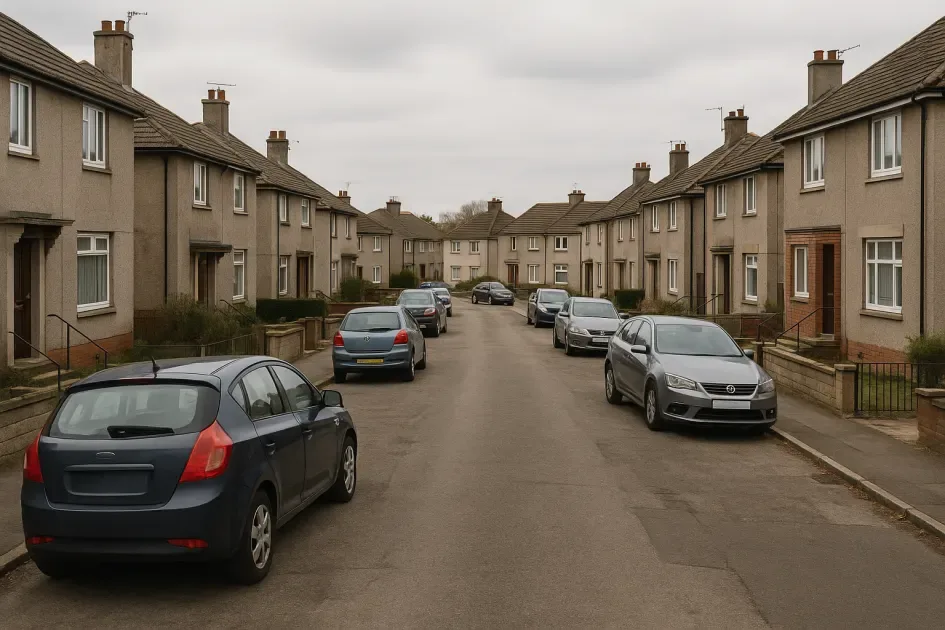
Dyce’s mix of older terraces, suburban semi‑detached houses, new‑build estates and low‑rise flats creates very specific operational challenges that directly translate into time and cost. In contrast to broad national guidance, the costs outlined here come from realities crews encounter most often in this part of Aberdeen: restricted kerb space near the village centre and station, tight estate layouts off the A96, and a high proportion of new developments with no room for commercial vehicles at the front door.
removals in Dyce is the main booking page for checking availability, pricing and move details in one place.
For a broader regional view, see moving costs in Aberdeen.
Waiting time charges: when delays become expensive
Crews are scheduled to a tight timetable. In Dyce, waiting time is triggered when vans cannot be positioned because nearby parking hasn’t been cleared, keys to lettable flats arrive late, or access from main roads like the A96 is congested at peak times. For example, a team booked from 08:00 that cannot start loading until 09:30 because of parking enforcement or delayed lift access will often bill for that wasted time rather than absorbing it. The real cost is the hourly rate for vehicle and crew that were blocked from other jobs.
Parking fines and permits: local rules and enforcement
Several Dyce streets have restricted kerbside options and resident permit controls. If a removal vehicle stops where it obstructs traffic flow or blocks resident bays, wardens can issue fines quickly. To avoid this, a temporary bay suspension or loading permit from Aberdeen City Council may be necessary for longer loading periods—particularly outside terraces near the station or on narrow estate streets in newer developments. The practical implication: budget for either a permit fee or the added time and distance of moving between the van and property if you cannot legally park at the kerb.
Use this page with moving costs in Dyce and Aberdeen access and property guide.
Long carry distances: from estate entrances to front doors
Dyce has a number of cul‑de‑sacs and recent housing pockets where large vehicles are not permitted to turn or park. New builds often place parking courts at the estate entrance, leaving a 20–50 metre carry over paving or uneven ground to many front doors. Each extra 10 metres of carry adds minutes per item and increases physical risk — which typically causes a charge for extra labour or the need to deploy additional staff. Heavy items moved across lawns or gravel may also require protective boards, another line on the bill.
Extra labour for stairs, narrow entrances and low doorways
Older Dyce terraces and some flats above shops by the station have narrow staircases and tight corners. Negotiating bulky furniture down these stairwells often requires two or more movers, disassembly on site, and additional protective materials to prevent damage. These actions extend loading time and incur extra labour costs. For example, a four‑bed semi with narrow internal doorways can easily take several additional hours Set against an equivalent single‑storey bungalow with driveway access.
Traffic, restricted streets and operational friction
Access delays on routes serving Dyce — including congestion at junctions on the A96 during peak times or local industrial shift changes near the airport and business parks — create knock‑on effects. A delayed inbound run can push a booked move into the busiest part of the day, when parking and crew availability are tighter, and this increases both waiting time and the chance of an overrun. Narrow residential streets with passing restrictions slow unloading because vehicles must be positioned to allow emergency access, slowing each trip with careful vehicle manoeuvring.
Rebooking and overrun risks: real scheduling consequences
Because heavy removal vehicles are scheduled tightly, an overrun in Dyce often forces a rebook rather than an immediate continuation. That can mean additional costs for a second day of vehicle hire, extra mileage, or interim storage if the new property is not ready. Local demand spikes — such as clusters of new‑build completions or school term starts — make finding replacement slots harder and more expensive than in less busy areas.
Planning implications and how these costs add up
When planning a move in Dyce, factor in: permit fees or parking suspensions where kerbspace is limited; increased labour time for long carries and stair work; contingency time for A96 traffic or estate access; and potential charges if a job runs beyond the scheduled window. For a realistic estimate of time and cost, reference specific details of your property type — terraced house, flat without lift, semi‑detached with driveway, or a new build in a cul‑de‑sac — and the expected carry distance from legal parking to the front door.
For more detailed cost guidance and tailored estimates that account for Dyce’s access and traffic patterns, see the local area page at removals in Dyce and general pricing factors at moving costs in Aberdeen. If you need further detail about specific estate or street constraints, the Dyce moving costs breakdown is available at moving costs in Dyce.
Plan your move in Dyce
Check the price and availability for your addresses, moving date and loading requirements. Book through Find My Man and Van; we allocate a suitable provider after booking.
Compact removals load: £209.00 total — example for Aberdeen.
1 × luton van; Two People to Load/Unload; 5 miles, 3 hours, ground-floor access. Modelled for 2 November 2026. Your quote depends on your actual move details and date.
Providers covering the Aberdeen area
Local coverage is a guide, not a reservation of these providers. Explore local providers.