Why demand patterns matter
When bookings cluster, crews have less room to absorb delays. A slightly late key handover, a blocked bay or a longer carry at one property can quickly affect the next job if the day is already stacked. High-demand periods also reduce easy workarounds, because the best early slots, lift reservations and closer stopping points are already under pressure.
Flexibility improves reliability because it restores buffer time. Midweek starts, mid-month dates and wider arrival windows make it easier to adjust for access issues, route changes or slower-than-expected loading. When demand tightens, it can change timing and pricing on York moves.
Typical York demand cycle
| Period | Scheduling effect | Operational impact |
|---|---|---|
| Weekends | Reduced booking flexibility; popular first slots fill early | Stacked timetables amplify knock-on delays and make kerbside access harder to protect. |
| End of Month | Fixed handover deadlines compress start windows | Key collections, inventories and loading slots overlap, increasing waiting time. |
| Summer / Student Areas | Turnover tied to term dates concentrates moves | Permit bays and stairwells queue, and longer carries become more common. |
| Midweek (Non-peak) | More start-time options and rescheduling room | Better route predictability, easier parking setup and smoother handovers. |
Eight York timing drivers
1) How weekend bookings reduce start-time flexibility
Most households target weekends, so first-load slots and midday arrivals stack early. With little spare room, a small parking or access issue can spill into later jobs.
2) Why end-of-month tenancy cycles cluster moves
Contracts end together, so keys and move deadlines line up. That puts more pressure on limited access windows and loading slots.
3) How student-area turnover creates seasonal spikes
Shared houses switch occupants around term boundaries. Streets near campuses see concentrated van activity and tighter access competition.
4) Why school-run traffic increases scheduling risk
Morning and afternoon peaks slow approach routes and reduce the chance of an easy stop close to the property.
5) How commuter traffic changes route predictability
Arterial roads and crossings are less reliable in rush hours, which can compress the unloading window at the destination.
6) Why building booking rules reduce available slots
Managed blocks often require lift or bay reservations. On busy days, missing a slot is harder to recover from.
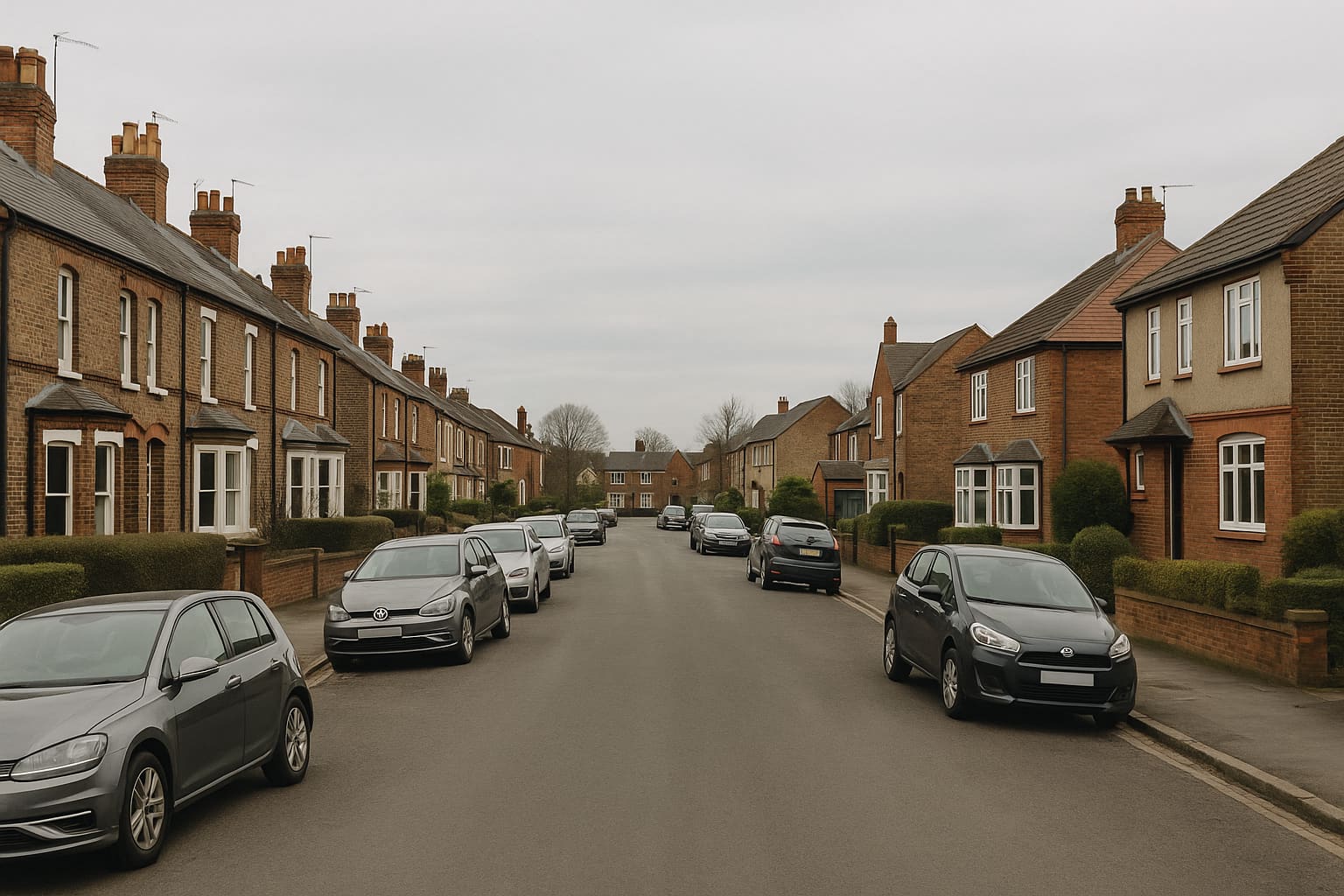
7) How narrow residential streets increase timing sensitivity
When frontage parking is gone, longer carries follow immediately, and those repeated walks quickly stretch the day.
8) Why mixed-density neighbourhoods produce uneven demand
Flats, terraces and student lets all generate different access needs, and those patterns overlap during the busiest periods.
Scenario modelling
Scenario A: Midweek morning move with driveway access in a semi-detached area. Flexible timing allows crews to avoid commuter peaks and recover from a slightly longer carry.
Scenario B: Saturday terrace-house move on a permit parking street. A saved kerb space helps, but shopper traffic and reduced slot flexibility still make overruns harder to absorb.
Scenario C: End-of-month flat-to-flat move near student housing, weekday afternoon. A booked loading bay, packed permit streets and school-run congestion tighten both loading and unloading windows.
Practical scheduling checklist
- Permit-only streets → Arrange visitor permits and reserve frontage if allowed.
- Managed blocks with loading-bay slots → Secure the earliest workable window and align key exchange with it.
- Terrace housing with long carries → Request an earlier start and stage items near the exit.
- School-run and commuter peaks → Set departures outside busy windows and add buffer before fixed handover times.
- Student-area turnover weeks → Target midweek mornings outside term-change peaks where possible.


